
Dead Bug and Bird Dog: Learning Trunk Control on the Floor
Dead bug and bird dog are two floor exercises that teach you to keep the trunk steady while the arms and legs move. We cover technique, progression, and their place in a strength program.
Dead bug ve bird dog, kuvvet antrenmanına başlayan pek çok kişinin ilk haftalarda karşılaştığı ama çoğu zaman hafife aldığı iki yer hareketidir. İkisinin de ortak amacı, kollar ve bacaklar hareket ederken gövdeyi sabit tutabilmektir. Biri sırt üstü, diğeri dört ayak üzerinde yapılır. Basit görünürler, ama doğru yapıldıklarında squat, deadlift ya da taşıma hareketlerinde gerekli olan gövde kontrolünün temelini oluştururlar.
In this article we explain how each movement is set up, the most common mistakes, ways to progress gradually, and which part of a strength program they can be placed in. The aim is to help you see them not as warm-up filler but as skills worth learning on their own terms.
Why stability exercises?
A classic sit-up or crunch bends the trunk. In daily life and in the weight room, though, we usually expect the opposite from the trunk: that it not bend, not rotate, and pass force from the arms and legs along without leaking it. When lifting a box from the floor, pushing a door, or climbing stairs, the spine stays largely steady and the movement comes from the hips and shoulders. Dead bug and bird dog train exactly this ability to stay steady.
Another advantage of these movements is that they place low load on the spine. Because no weight is used and the trunk is supported on the floor, they suit beginners learning control, people returning from a long break, and anyone who wants quality trunk work between heavy days. Still, if you have a known lower back issue, it is advisable to consult your doctor before starting.
Dead bug: the supine setup
Lie on your back, reach the arms toward the ceiling over the shoulders, and lift the legs with hips and knees bent at ninety degrees. This is the starting position, named for its resemblance to a bug flipped onto its back. The movement consists of reaching one arm back behind the head and the opposite leg toward the floor, then bringing them back. Then it is repeated with the other diagonal pair.
The key to the movement is the lower back. As the arm and leg extend, the lower back should not lift off the floor and the ribs should not flare forward. A calm exhale and a gentle bracing of the abdominal wall before moving helps with this. What matters is not how close the leg gets to the floor, but how far it can reach while the lower back stays down. The point where the lower back starts to lift is your range limit for that day.
Bird dog: balance on all fours
Come onto all fours with your hands under your shoulders and your knees under your hips. Your back should be flat like a tabletop, your neck continuing this line, your gaze toward the floor. The movement is reaching one arm forward and the opposite leg back. The reach continues until the arm and leg line up with the trunk, then you return to the start with control.
The most common problem in bird dog is the hip rotating to the side or the lower back arching as the leg lifts. To keep both sides of the pelvis parallel to the floor, you can imagine a glass of water resting on your back. Thinking of reaching the leg back rather than lifting it up also stops the lower back from arching too much. Pressing the supporting hand into the floor keeps the shoulder girdle from sinking.
Linking the two movements
Dead bug and bird dog are really two faces of the same skill. In dead bug, gravity pulls the arms and legs down while the lower back finds support on the floor; in bird dog, the trunk sits parallel to the floor and has to carry its own weight. So one movement may feel easy to you and the other hard. Someone who is comfortable in dead bug but cannot keep the hips steady in bird dog usually finds that the glutes and the supporting shoulder need more work. In the opposite case, the abdominal wall needs to learn to work independently of the lower back in the supine position. Doing both back to back in the same session is a practical way to see the weak link. Noting which movement is more demanding helps you shift the emphasis of your trunk work toward that side. Over time, as the gap between the two movements closes, your trunk control becomes more balanced.
Common mistakes
- Fast, rhythmic reps: pausing two seconds at each reach builds control
- Holding the breath: exhale as you reach, inhale as you return
- Lower back lifting in dead bug: narrow the range
- Hip rotating in bird dog: keep the leg lower
- Lifting or dropping the head: keep it in line with the spine
- Focusing on rep count: end the set when quality breaks down
All of these mistakes show that the purpose of the movement has been forgotten. In dead bug and bird dog, muscle fatigue is a secondary result; the real target is a quiet trunk while the limbs move. Finishing a set with six clean reps instead of completing ten is a far more valuable workout.
Gradual progression
Both movements can be progressed in a few steps from easy to hard. In the first step, only the leg or only the arm moves. Next, the opposite arm and leg move together. Then a hold of a few seconds is added at the end point. In the final steps, a light resistance band, a small weight, or a change in tempo can be used.
- Single limb: only the leg or only the arm
- Opposite arm and leg together
- A two to five second hold at the end point
- In dead bug, gently squeezing a light ball between the hands
- In bird dog, a slowed tempo rather than adding instability under the supporting hand
- Resistance with a band or light weight
There is no need to rush from one step to the next. Staying on the same step for a few weeks lets the movement become automatic. When you can feel the lower back staying down or the hips not rotating without thinking about it, you are ready for the next step.
Their place in a strength program
Dead bug and bird dog are most often used in the warm-up. A few clean sets before a heavy squat or deadlift day prepare the trunk for lifting and give a sense of that day's level of control. Beyond that, they can also appear as a short trunk block at the end of a strength session, done with low fatigue.
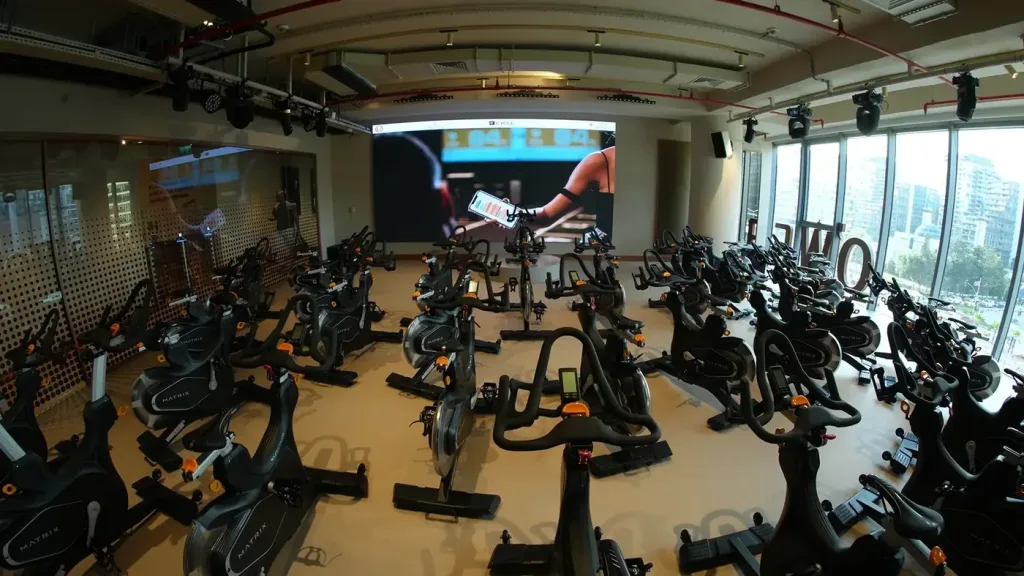
In the fitness area of O'Wellness Sky at Skyland in Sarıyer, a mat is all these movements need; they can be done comfortably between strength stations without waiting for equipment. If you take reformer pilates or yoga classes, you may already have met similar principles of trunk control. Noticing this similarity makes it easier to see different kinds of training not as disconnected but as parts that support each other.
Doing these two movements a few times a week in short sets is enough for most people. Frequent, clean repetitions contribute more to carrying trunk control over to other movements than long, exhausting sets. Paying attention to the same point every time you do the movement, such as the position of the lower back or the levelness of the hips, speeds up learning.
Frequently Asked Questions
Do dead bug and bird dog build abdominal muscle?
They work the abdominal and back muscles, but their main purpose is improving trunk control rather than building muscle size. That control lays the groundwork for safer and more efficient technique in weighted movements.
How many sets and reps should I do?
Look at quality rather than a fixed number. A few clean reps per side and two to three sets is a good start for most people; the set ends when technique breaks down.
Can I do these movements with low back pain?
If you have pain, consult your doctor first. After getting approval, start with a small range of motion and avoid any variation that increases the pain.
Related posts

What Is Progressive Overload? The Science Behind Strength Gains
What progressive overload is, how to apply it and why strength gains depend on this principle; a practical guide covering sets, repetitions, load and intensity.
Squat Technique: Knee, Hip and Spine Alignment Step by Step
A step-by-step answer to the question of how to squat; a guide to correct squat technique with knee-hip-spine alignment, common mistakes, variations and set/repetition recommendations.

Strength training for shoulder health: the rotator cuff and scapular stability
Preventing shoulder injury is possible by strengthening the rotator cuff muscles and achieving scapular stability. Practical exercises and programming recommendations for protecting shoulder health in strength training.
