
Staying in Shape in Winter: An Indoor Training Guide for Sarıyer
How do you keep your training routine through the winter months? Group classes, vitamin D, warm-ups and indoor options in Sarıyer.
Staying in shape in winteris a problem that recurs every year for people living in Istanbul who train outdoors for most of the year. Between November and March the days get shorter, temperatures fall, rain becomes more frequent and activities such as outdoor running or cycling become irregular. In this article we look at practical ways of maintaining your training routine through the winter, the indoor options around Sarıyer and Skyland, and the points to watch out for specifically in the winter months.
Why Does Winter Disrupt Your Routine?
- Hours of daylight: When it is dark by the time you leave work, outdoor activity becomes difficult for both safety and motivation.
- Temperature and rain: Cold, wet ground creates risk and comfort problems for running and cycling.
- Warm-up time: Preparing the tissues takes longer in cold weather; the same warm-up is not enough.
- Infection season: Upper respiratory infections lead to breaks in training.
- Psychological factors: Short days and low exposure to daylight can affect your energy levels.
- Changes in eating: A tendency towards calorie-dense food increases in the winter months while movement decreases.
Strategy 1: Move Your Routine Indoors
The simplest solution is to shift the main centre of your programme to an indoor facility through the winter. That does not mean never moving outdoors; it simply removes your dependence on the weather.
Indoor equivalents of outdoor activities
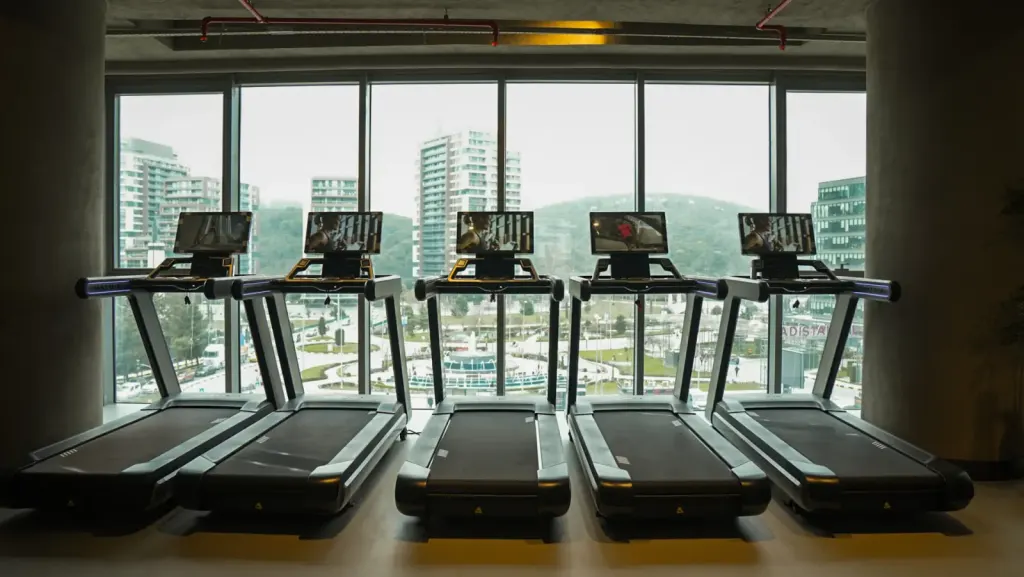
- Instead of running: A treadmill, rowing ergometer or indoor cycling. Rowing is a good winter alternative, as it covers both the upper and lower body.
- Instead of cycling: Indoor cycling classes or interval sessions on a stationary bike.
- Instead of open water swimming: An indoor semi-Olympic pool, with the water temperature controlled all year round.
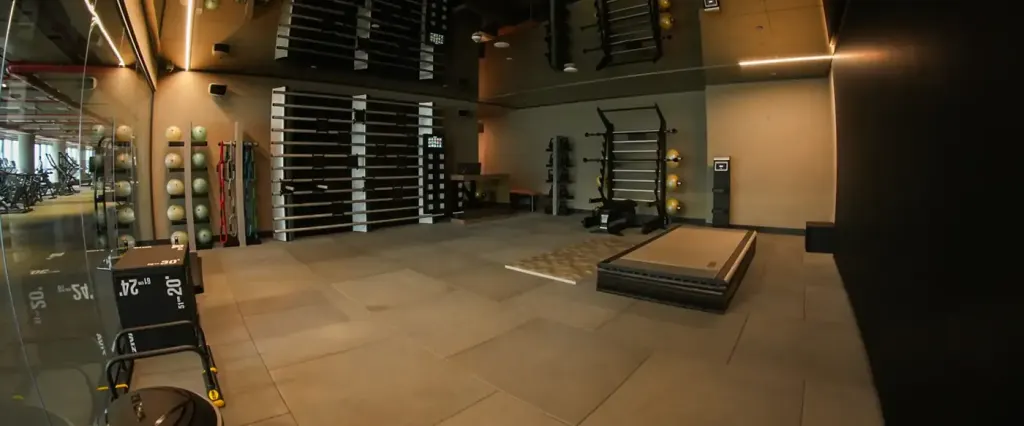
- Instead of outdoor functional training: Group classes and work in the functional area.
- Instead of hiking: Walking on an inclined treadmill or a stair climber.
- Instead of tennis/padel: Indoor courts; indoor padel court options are increasing in Istanbul.
Strategy 2: Make the Indoor Pool the Centre of Your Winter Routine
An indoor pool stands out for winter training for several reasons:
- Independence from the weather: Conditions outside have no effect on your programme at all.
- A constant temperature: Water in the 27-29 degree range provides a comfortable environment.
- Low impact: Suitable for people whose joint sensitivity increases in cold weather.
- Measurability: A 25-metre lane makes tracking distance simple.
- A full-body workout: A cardiovascular and strength component in a single session.
- Access to the sauna: Applying heat after the pool is an enjoyable way to finish in the winter months.
Two pool sessions a week through the winter largely makes up for the loss of outdoor cardio.
Strategy 3: Prioritise Strength Training
Winter is in fact an advantageous period for developing strength. As the calendar of races and outdoor events thins out, the focus of your training can shift to building basic strength.
- Three strength sessions a week is a reasonable structure for winter.
- Give weight to multi-joint movements: squat, deadlift, press, row.
- Plan a gradual increase in load; a 12-week block fits the winter period well.
- When spring comes you return to outdoor activities with a stronger base.
Strategy 4: Extend Your Warm-Up
Someone arriving at the facility in cold weather has colder tissues than in the summer months. A standard 5-minute warm-up can be inadequate in winter.
- A 10-12 minute warm-up: A reasonable duration for winter.
- A gradual structure: 4-5 minutes of light cardio, then dynamic stretching, then movement-specific preparation sets.
- Preparation sets: 2-3 sets of the main movement with a light load.
- Layered clothing: Keeping an extra layer on top for the first 10 minutes and removing it once you are warm.
- After coming in from outside: Not going straight into a heavy set.
Strategy 5: Daylight and Vitamin D
Exposure to daylight decreases in the winter months. It is known that vitamin D levels tend to fall in people who work and train indoors.
- A 15-20 minute walk outdoors at lunchtime provides both daylight and movement.
- The decision to take a vitamin D supplement should be based on a blood test; a high dose taken at random is not appropriate. Consult your doctor.
- Getting out into daylight in the morning can help support your sleep-wake rhythm.
- For those who train in the morning, this is an additional advantage in terms of using the daylight window.
Strategy 6: Making the Right Decision When Ill
The factor that most often interrupts training in the winter months is infection. A practical framework:
- Mild upper respiratory symptoms (a runny nose, a slightly sore throat): A short, low-intensity session is generally tolerated; however, listening to yourself is essential.
- Fever, body aches, chest symptoms, weakness: You should not train. Resting is the only right option in that case.
- Returning: A gradual start once the symptoms have gone; 50-60 per cent of your normal volume in the first week.
- Using the pool: Getting into the pool during an infection is not appropriate for you or for others.
- If your symptoms persist or are severe, you should see a doctor.
Strategy 7: Maintain Your Motivation with Variety
A routine repeated in the same indoor space through the winter months can produce mental fatigue. Variety is the most effective antidote.
- At least one group class a week: HIIT, indoor cycling, kickboxing or total body.
- Reformer Pilates: a suitable block for posture and core work through the winter.
- Yin yoga or mobility: a counterbalance to the increased feeling of stiffness in winter.
- The pool: a different environment for one or two days a week.
- Taking part in challenges or goal programmes at the club.
Strategy 8: Set a Winter Goal
The most powerful way of keeping your motivation up in the winter months is to frame the period not as empty waiting time but as preparation for a concrete goal.
- A strength goal: A squat or deadlift at a particular weight.
- A swimming goal: 1,500 metres without stopping, or a particular 400-metre time.
- A skill goal: Your first pull-up, learning a flip turn, a particular Pilates movement.
- An endurance goal: Preparing for a running or triathlon distance in the spring.
- A consistency goal: Not missing three sessions a week for 12 weeks.
An Example Winter Programme (4 Days a Week)
- Monday: Lower-body strength (including a 12-minute extended warm-up) + 10 minutes in the sauna.
- Wednesday: 1,000-1,200 metres in the pool + 10 minutes of mobility.
- Thursday: Upper-body strength + a core block.
- Saturday: A group class (indoor cycling or HIIT) + reformer Pilates or yin yoga.
- Sprinkled through the day: A 15-20 minute walk outdoors at lunchtime, for daylight.
Conclusion
Winter does not have to be the season for losing your fitness; designed properly, it can become the most productive period of the year for developing strength and technique. Moving the centre of your routine to an indoor facility, extending your warm-up, not neglecting daylight and recovery, and tying the period to a concrete goal are the basic strategies. If you live or work around Sarıyer and Skyland, using a broad-format indoor facility ranging from group classes to reformer Pilates offers the most practical way of maintaining an uninterrupted programme through the winter.
Related posts
What Is a Semi-Olympic Pool? The Advantages of Swimming in a 25-Metre Lane
What is a semi-Olympic pool, and why is a 25-metre lane the choice? The indoor pool experience, the logic of lanes and the training advantages.
Light Movement in Emirgan Grove and Sarıyer's Green Spaces: A Complement to the Studio Week
Sarıyer is a district surrounded by groves and green spaces. We explain how light walking, breathing, and stretching practices in these areas can be added to your studio week.

A Guide to Gyms in Sarıyer: Fitness and Reformer Pilates at Skyland Istanbul
Gym selection criteria for people living or working in Sarıyer, Maslak, Ayazağa and Zekeriyaköy: transport and parking, opening hours and the O'Wellness Sky facility at Skyland Istanbul. A local guide.
