
Is Muscle Soreness After Reformer Pilates Normal? Recovery Tips
The causes of muscle soreness after reformer Pilates, the difference between normal and worrying pain, and effective recovery methods; explained through our work in Skyland Istanbul.
If you felt an unexpected burning in your legs while going down stairs the day after your first reformer Pilates session, you are not alone. Muscle soreness after reformer Pilates is a mostly harmless reaction frequently seen particularly in beginners and those returning to classes after a long break; however, knowing which soreness is normal and in which situations care needs to be taken matters for being able to keep up your exercise habit. In this article we look at the physiological cause of that soreness, the difference between normal muscle soreness and pain that requires attention, and practical methods that will speed up your recovery.
The scientific name for that soreness: DOMS
The delayed muscle soreness appearing 24-72 hours after exercise is called “delayed onset muscle soreness” (DOMS) in sports science. That soreness is an inflammatory response linked to microscopic damage to the muscle fibres occurring when the muscle encounters a load it is not used to, particularly through eccentric contraction (the muscle producing force while lengthening). Because reformer Pilates works the muscles both while shortening and while lengthening with the controlled resistance of the springs, triggering that kind of response is to be expected, particularly in beginners.
Why does reformer Pilates lead to DOMS in particular?
Many movements on the reformer involve an eccentric phase in which the muscle is lengthened under load; the leg being brought slowly back against the spring in footwork, for example, or the platform returning in a controlled way in the long stretch. That controlled slowing creates more tension at a micro level in the muscle fibres than fast, explosive movements. In addition, because the reformer works the deep core muscles and hip stabilisers little used in everyday life in an isolated way, soreness can be felt more markedly in those areas.
In which areas is soreness expected?
| Area | Why |
|---|---|
| Inner thigh (adductors) | Continuous activation in movements such as footwork and leg circles |
| Abdomen (the rectus and oblique muscles) | Repeated isometric load in the hundred and the core series |
| Hips (the gluteal muscles) | Extension work in the bridge and side leg series |
| Upper back and shoulders | Scapular stabilisation work in the strap series |
The difference between normal soreness and pain that requires attention
Knowing that distinction matters for understanding when to continue and when to stop and get an assessment; when you are unsure, being cautious is always safer.
- Normal DOMS: A dull, diffuse ache or feeling of stiffness; felt in the body of the muscle; eases with movement; passes on its own within 24-72 hours.
- Pain that requires attention: Sharp, stabbing or electric-shock-like pain; pain concentrated at a single point; if accompanied by swelling, redness or bruising; if it worsens with movement; if it lasts more than a week.
If you encounter a symptom in the second group, it is important to stop exercising and consult your doctor; it may be a sign of injury.
Methods that speed up recovery
1. Light movement (active recovery)
Rather than staying completely still, light walking, swimming or low-intensity stretching supports recovery by increasing blood flow to the muscles. Straining the same muscle group heavily again while there is severe soreness is not recommended.
2. Hydration and nutrition
Adequate water intake and protein intake are the basic elements supporting the muscle repair process. A balanced meal after exercise eases the normal course of the inflammatory process.
3. Hot and cold applications
A hot shower or the sauna can relax tightness in the muscles and increase blood flow; a cold application, meanwhile, can be preferred for reducing a feeling of acute swelling. Both can be tried according to personal preference.
4. Gentle stretching
Stretching sore muscles gently without straining them can provide relief. Static stretches should be done below the pain threshold, in a comfortable range.
5. Sleep
Most muscle repair takes place during deep sleep. Regular, adequate sleep is one of the most important factors directly affecting the speed of your recovery.
A recovery protocol: step by step
- 0-24 hours: Light movement, plenty of water, a balanced diet. A hot shower can be tried for severe soreness.
- 24-48 hours: Light walking or swimming; gentle stretching for the sore areas.
- 48-72 hours: The soreness generally starts to decrease in this range; a return to the same muscle group at a light intensity can be tried.
- After 72 hours: If the soreness is still severe or getting worse, an assessment by a doctor is recommended.
Preventive approaches for reducing DOMS
- A gradual start: Starting with low to moderate spring resistance in your first sessions limits sudden micro-damage.
- Regular attendance: The muscles adapt to a repeated stimulus; DOMS decreases markedly over time in members who attend regularly (that adaptation is known as the “repeated bout effect”).
- Warming up before the session: Low-intensity starting movements such as footwork prepare the muscles.
- Cooling down after the session: Not skipping the stretching movements in the final part of the class reduces sudden muscle tightness.
An example case
The experience after a first session for a member trying reformer Pilates for the first time who has not exercised regularly for a long time generally goes like this: they feel no discomfort during the session but notice marked stiffness in the inner thigh and abdominal area the following morning. Going down stairs or getting up from a seated position can become difficult. That is a typical picture of DOMS and generally decreases markedly on the third day. Trainers recommend that this member continue with lower spring resistance and a shorter number of repetitions in their second session; by the third and fourth weeks the same movements cause far less soreness. That is a typical example of the adaptation called the “repeated bout effect”; when the muscle is exposed to the same stimulus again, the damage and the inflammatory response are a little less severe each time.
In whom is DOMS more severe?
- People who have been inactive for a long time: As their muscle-tendon units are not used to working under load, more marked soreness can be experienced in the first sessions.
- Those coming from a different sport: Someone who only does cardio, for example, may not be used to the isometric and eccentric loading on the reformer.
- Those returning to classes after a long break: Because the muscles have lost some of their previous adaptation, soreness can become marked again in the first sessions after a break.
- Those learning a new movement: An unfamiliar movement pattern can lead to more muscle damage at a micro level than a familiar movement.
A practical way of distinguishing DOMS from a real injury
A simple way of checking is to look at whether the soreness is symmetrical: DOMS is generally felt bilaterally and diffusely in the muscle groups worked. One-sided pain, pain concentrated around a joint or pain that sharpens suddenly with movement can indicate a soft tissue or joint problem rather than muscle soreness. In addition, while DOMS eases over time (as the days pass), in a real injury the pain can stay the same or get worse. If you have any doubt, consulting your doctor is the safest approach in order not to take a risk.
The relationship between nutrition and recovery
It is generally accepted physiological knowledge that adequate protein intake after exercise supports the muscle repair process. Adequate carbohydrate intake also contributes to the replenishment of muscle glycogen stores. The most sensible approach is to avoid exaggerated claims that a particular food or supplement “cures” DOMS and to focus on a balanced and varied diet. For a personalised nutrition plan you can get support from our dietitian.
When should you take a break from classes?
Continuing with classes while there is mild to moderate DOMS is generally safe; your trainer can lighten the spring resistance or the choice of movements for the day. However, if there is joint pain, swelling or a marked restriction in range of movement, skipping a session and, if necessary, getting a sports physiotherapist assessment is the more appropriate approach.
Supporting recovery with the other classes
Turning to a light-intensity, low-impact activity rather than staying completely still on sore days can make recovery easier. Deep Stretch Yoga Classes focused on gentle stretching such as can help maintain range of movement without straining the muscles. Once the soreness has passed completely, you can support your mobility with the Mobility & Stretching class. Attending high-intensity classes (such as O’Hiit) while you have severe DOMS is not recommended.
Not confusing chronic pain with DOMS
DOMS is by definition temporary and generally does not last more than a week. Pain lasting for months, fluctuating or re-triggered by particular movements can indicate a chronic musculoskeletal problem rather than muscle soreness; in that case you must get an assessment by a doctor or sports physiotherapist before continuing with a Pilates programme. For our members with a history of chronic lower back, knee or shoulder pain, we recommend doing their first sessions in a one-to-one format at a low intensity.
Realistic expectations for beginners
The muscle soreness felt after the first 2-3 sessions is extremely common and generally decreases markedly towards the third or fourth week. That is a sign that your body is adapting to the new movement, not an indicator of failure. Being patient and keeping up regular attendance speeds up both the adaptation to soreness and your movement quality. Many of our members notice by their fifth or sixth session that a session at the same intensity now causes far less muscle soreness; that is a concrete sign that the body has got used to the new movement pattern.
Recovery support at O’Wellness Sky
In our Reformer Pilates in our studio, our trainers increase spring resistance and repetitions gradually for new members; this approach reduces the risk of excessive DOMS. Light stretching and a calm walk after the session help the muscles release. If your soreness lasts longer than expected, sports physiotherapist assessment. You can find the basic structure of reformer Pilates in our What Is Reformer Pilates? guide.
Frequently asked questions
My soreness did not pass for 3 days after my first reformer class - is that normal?
Pain lasting more than 3 days that does not ease or that gets worse can go beyond the limits of normal DOMS. In that case we recommend consulting your doctor.
Can I go back to class while I have muscle soreness?
With mild to moderate soreness, generally yes; you can tell your trainer and lighten the spring resistance. With sharp or joint-related pain we recommend taking a break from classes.
Can I take painkillers?
Over-the-counter painkillers can be used in some cases, but regular use is not recommended and can mask an underlying problem. For ongoing pain, consult your doctor.
What amenities are there for recovery after reformer Pilates in Sarıyer?
At O’Wellness Sky in Skyland Istanbul you can get sports physiotherapist support under the same roof.
I never get muscle soreness - is that normal?
Yes - not everyone experiences DOMS at the same intensity; in members who attend regularly, the soreness decreases over time or may not be felt at all because the muscles adapt. That does not mean the class is ineffective.
To manage your recovery process correctly, enquiry form fill in the form and get personalised recommendations from our trainers.
Related posts
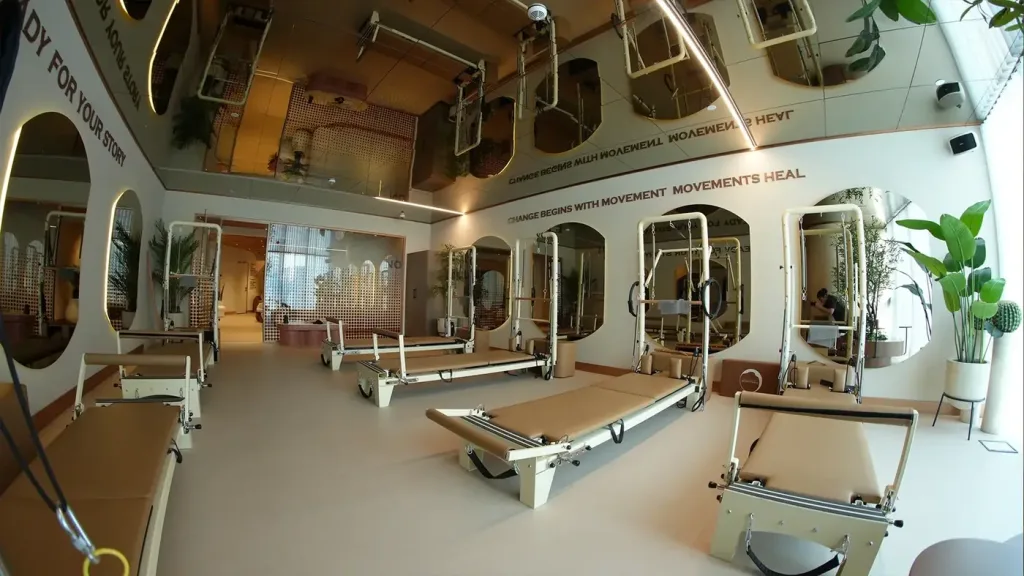
A 10-Minute Wake-Up Routine Before a Morning Reformer Session: Preparing the Spine and Hips at an Early Hour
When reformer pilates is done early in the morning, the body needs more warming up. A simple wake-up routine to do at home or in the studio before the session.
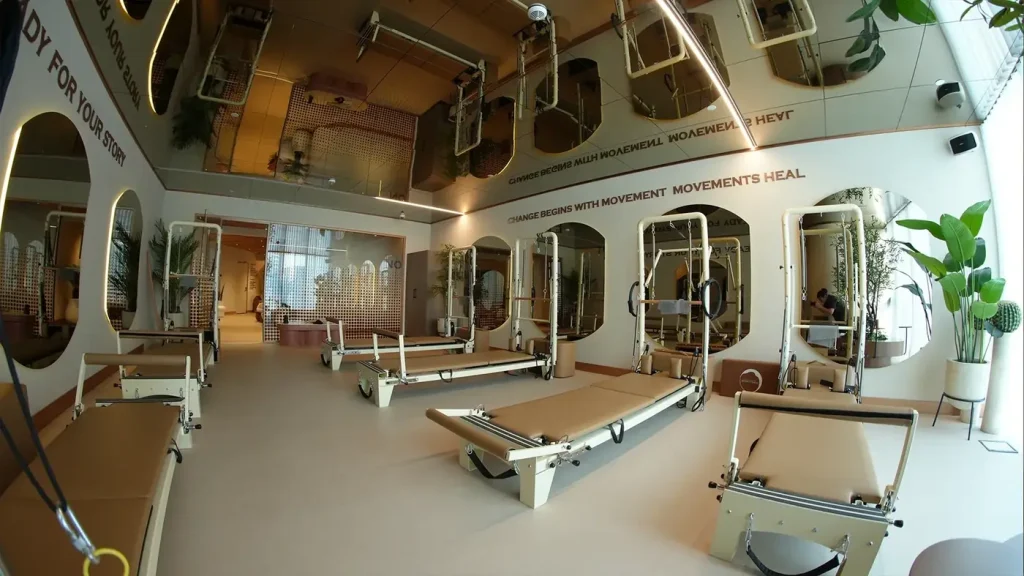
What Is Reformer Pilates? Its Benefits, Who It Suits and a First Session Guide
The working principle of the reformer Pilates machine, how it differs from mat Pilates, its scientific benefits, who it suits and what awaits you in your first session in Skyland Istanbul; a comprehensive guide written by our trainers.
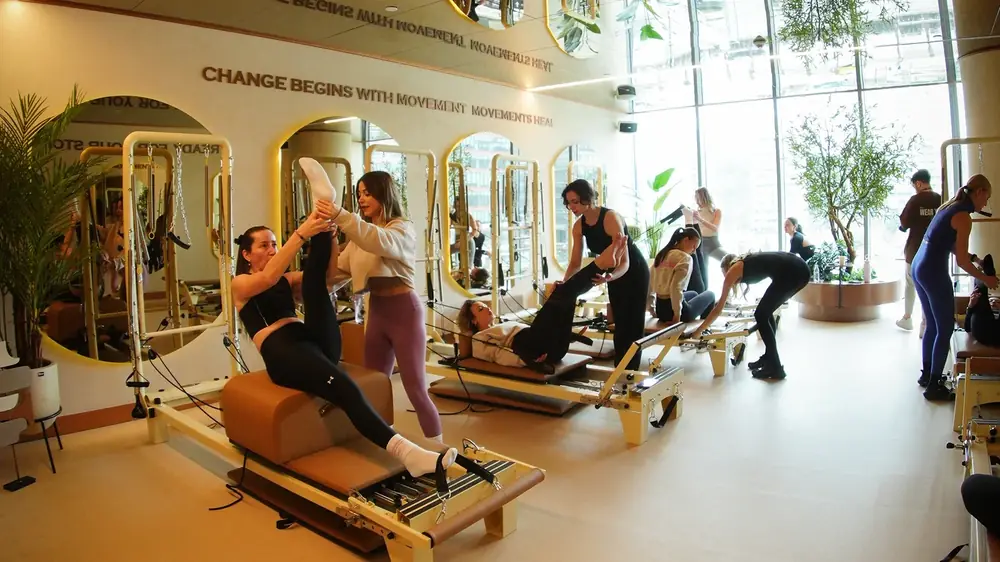
The Short Box Series on the Reformer: Trunk Control on the Box
The short box series is a classic section performed sitting on the reformer box that works the trunk in several directions. We cover the movements, the foot strap, and safe progression.
