
Balanced yoga: the balance between strength and flexibility
Balanced yoga, an approach built on balance, brings dynamic strength work together with flexibility-focused movement in the same class. We explain its structure, its benefits and who it suits.
Is it possible to leave a yoga class having both worked up a sweat and relaxed? Balanced yoga, which takes a balance-based approach, aims for exactly that: it combines dynamic strength work with flexibility-focused movement in a balanced way within the class. Neither wholly intense nor wholly calm, this format appeals to a wide range of participants. In this article we look at the structure of balanced yoga, its basic principles and who it suits.
What is balanced yoga?
As the name suggests, balanced yoga aims to balance two different goals within one class: strength and flexibility. One part of the class is given over to movements requiring muscular strength and endurance, such as warrior series, plank variations and balance postures, while the other is given over to slower, deeper postures targeting hip, shoulder and spinal flexibility. This structure aims to let participants gain both physical strength and range of motion.
The flow of a typical balanced yoga class
- Warm-up (10 min): The body is prepared with joint mobility work and light breathing exercises.
- Strength section (15-20 min): Muscular strength and endurance are worked with warrior series, plank variations and balance postures (tree, half moon).
- Transition and core work (10 min): Controlled movements targeting the deep abdominal and back muscles are added.
- Flexibility section (15-20 min): Hip openers, shoulder openers and spine-lengthening postures are held for medium to long periods.
- Relaxation (5-10 min): The class finishes with full relaxation on the back (savasana).
A comparison: balanced yoga and other types
| Feature | Balanced yoga | Vinyasa yoga | Deep stretch (yin) yoga |
|---|---|---|---|
| Pace | Moderate, variable | Moderate to high, a steady flow | Low |
| Main focus | A balance of strength and flexibility | Cardio, flow | Fascia, relaxation |
| Who it suits | A wide range of participants | Those looking for a dynamic class | Those focused on recovery |
For more information about other types of yoga, see yoga and mobility category.
The potential benefits
- Balanced development: As muscular strength and flexibility are worked in the same class, the aim is balanced physical capacity rather than one-sided development.
- Core stability: The core muscles come into play frequently in both the strength and flexibility sections.
- Joint health: While stronger muscles support the joints, flexibility work preserves range of motion; the balance between the two matters for joint health.
- Sustainability: A pace that is neither too intense nor too gentle can make regular attendance easier.
- Mental balance: The class's varying pace can support mental balance by offering an experience that is both energising and calming.
Level and modification variations
In the strength section, plank and push-up variations can be made easier by lowering the knees to the floor, and wall or chair support can be used in the balance postures. In the flexibility section, supports such as blocks and blankets can be added to make the postures accessible. For experienced participants, the number of repetitions or hold times can be increased in the strength section, and deeper variations tried in the flexibility section. Trainers ask about levels at the start of the class and guide these modifications.
Common mistakes
- Losing your form in the strength section: As fatigue builds, errors such as the lower back sagging can appear in plank or warrior postures; in that case, taking a break matters more than maintaining correct form.
- Rushing through the flexibility section: Not allowing enough time for the flexibility postures after the strength section reduces the balancing effect of the class.
- Holding your breath: Holding your breath in either the strength or the flexibility movements affects both your performance and your relaxation.
- Skipping the warm-up: Going straight into the strength section with cold muscles increases the risk of strain.
Who it is not suitable for / who should approach it carefully
People with an acute joint injury, uncontrolled high blood pressure or a heart condition should be careful in the more intense movements of the strength section and reduce the pace if necessary. During pregnancy, some plank and abdominal-focused movements should be modified or removed. If you have any of these conditions, it is important to consult your doctor and inform your trainer before starting the class.
How is progress measured?
Progress in balanced yoga can be tracked through longer holds in planks or balance postures in the strength section, increased range of motion in the flexibility section, and a general balancing of the energy level you feel at the end of the class. Assessing these indicators every few weeks helps you understand how effective your programme is.
An example 4-week adjustment plan
- When starting a new family membership, the first month matters for everyone to find their own rhythm: Attending once a week; you get a feel for the general pace and structure.
- Everyone tries the different studios with the complimentary facility tour and trial session. Attending twice a week; the focus is on the postures in the strength section.
- Each person identifies the 1-2 classes they prefer and gets into the habit of booking. Attending twice a week; the depth of the postures in the flexibility section is increased.
- Planning an activity you can all join (a weekend swim or a group class together, for example). Attending 2-3 times a week; your overall balance and endurance are assessed.
Equipment and clothing recommendations
No special equipment is needed for balanced yoga classes; supports such as a mat, blocks and blankets are provided by the studio. Breathable clothing in stretchy fabrics gives comfort in both the strength and flexibility sections. Non-slip socks or going barefoot supports safety in the balance postures.
Combining it with other classes
The balanced structure of balanced yoga makes it adaptable to both intense training days and quieter ones. After an intense reformer pilates after the session, instead of balanced yoga, a calmer deep stretch yoga may be preferable to balanced yoga; balanced yoga itself can be a day of its own or added to a moderate-intensity week. For general programme recommendations, see guide to group classes .
Getting here from Sarıyer and the surrounding area
In balance postures, external conditions matter as much as mental focus: balance work becomes markedly harder in a class you arrive at in a rush. O’Wellness Sky's location in Skyland Istanbul is a practical advantage in that respect; members coming from Maslak and Ayazağa can arrive a few minutes early and catch their breath. Seyrantepe and Sanayi Mahallesi stations on the M2 metro line also offer an alternative for anyone who would rather not drive.
The balanced yoga experience at O’Wellness Sky
O’Wellness Sky occupies 1,800 m² in the Skyland Istanbul complex in Sarıyer; balanced yoga classes are held in the O’Soul studio. For the weekly schedule, see our weekly schedule page, and for our team of trainers, our trainers page. We offer a free facility tour and a one-day trial session before membership; for membership details, take a look at our membership page.
Group class or one-to-one?
Balanced yoga is generally offered in a group format, and that format is valuable for both motivation and a sense of community. If you have a particular health condition or a very specific goal, one-to-one sessions offer more focused work; planning for needs like these can be arranged under special services .
Breathing technique: an approach that changes by section
Breathing technique in a balanced yoga class changes with which section of the class you are in. In the strength section the breath is kept more active and synchronised with the movement; you exhale as you move into a plank, for example, and keep breathing regularly while holding the position. In the flexibility section the breath is slowed and deepened; that transition helps the nervous system move from an active to a calm state. Consciously distinguishing between these two breathing modes strengthens the balancing effect of the class.
The postures used most often in the strength section
Warrior series feature frequently in the strength section: in warrior 1 you stand with the front knee bent, the back leg straight and the arms reaching up; this posture targets leg and core strength. In warrior 2 the torso turns to the side and the arms open out at shoulder height; this requires hip opening and balance. In the plank the body is held in a straight line with the shoulders aligned over the wrists; this posture develops core and shoulder strength. These postures are usually held for 30-60 seconds and repeated.
The postures used most often in the flexibility section
In the flexibility section, pigeon pose is a popular choice targeting the hip external rotators; it is performed with the front leg bent forward and the back leg extended behind. The seated forward fold supports hamstring and lower back flexibility. Shoulder openers are done with the hands clasped behind the back or with the help of a strap. These postures are held for longer than those in the strength section, usually 60-90 seconds.
Membership and the trial process
Balanced yoga is included in the group class programme in all membership categories. Before deciding which package suits you, you can try the class for yourself with a free facility tour and one-day trial session and get a sense of the trainer's teaching style and the studio environment. For the options, see our membership page.
Conclusion
In short, this approach, bringing strength and flexibility together under one roof, is a versatile option that can serve many different goals. Balanced yoga, with its balance-based approach, appeals to a wide range of participants by offering strength and flexibility in a balanced way within a single class. Neither too intense nor too gentle, it is a valuable option for anyone wanting to build a regular, sustainable practice. If you have concerns about your health, it is important to consult your doctor before starting the class. Experiencing this balance between strength and flexibility regularly can have a positive effect in the long run on both your performance and your everyday comfort in movement.
Frequently asked questions
Is balanced yoga suitable for beginners?
Yes - the class's balanced pace and its modification options make it suitable for beginners and experienced participants alike.
What is the difference between balanced yoga and vinyasa yoga?
While vinyasa focuses on a continuous flow synchronised with the breath, a balanced yoga class balances two different goals by dividing it into strength and flexibility sections.
How many times a week should you do balanced yoga?
As a general starting point, attending twice a week may be enough to support both strength and flexibility gains; you can increase that frequency according to your personal goals.
Why choose O’Wellness Sky for a balanced yoga class in Sarıyer?
Regular balanced yoga classes are offered in our O’Soul studio in Skyland Istanbul, and they can easily be combined with other types of yoga and strength training in the same weekly schedule.
I have back pain - can I do balanced yoga?
If you have an existing back problem, we recommend telling your trainer before the class and consulting your doctor if necessary; the movements can be modified to your situation.
Over time you may notice which section (strength or flexibility) you need to develop more, and by sharing that with your trainer you can tailor the class further to your personal goals. This process of mutual feedback makes your balanced yoga practice more effective, balanced and personalised over time.
To start your balanced yoga experience, plan your free trial day on our contact page.
Related posts
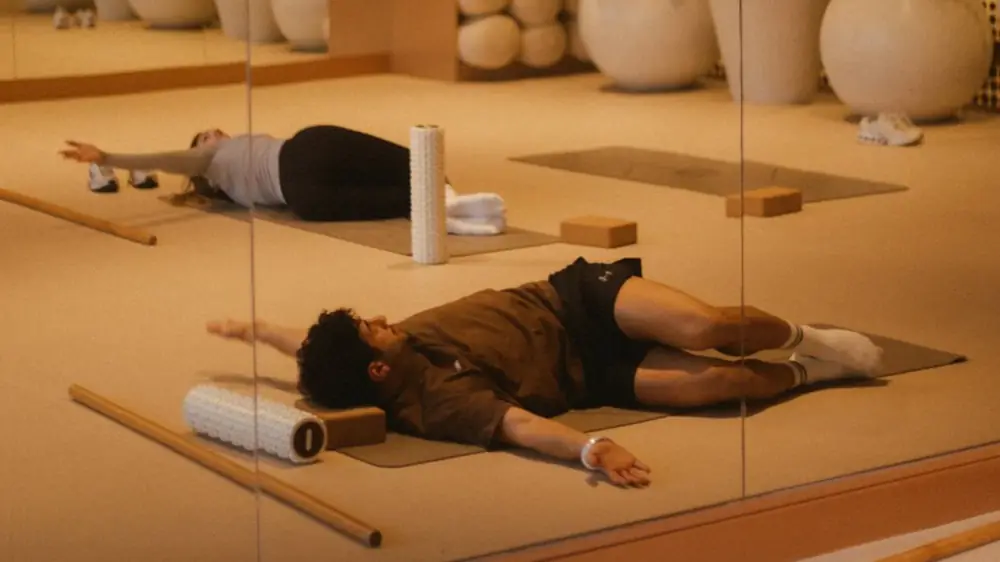
The Relationship Between Thoracic Spine Mobility and Shoulder Pain
A lack of thoracic mobility can set the stage for shoulder pain. In this article we look at the movements that increase the range of motion in the upper back and their relationship with shoulder health.
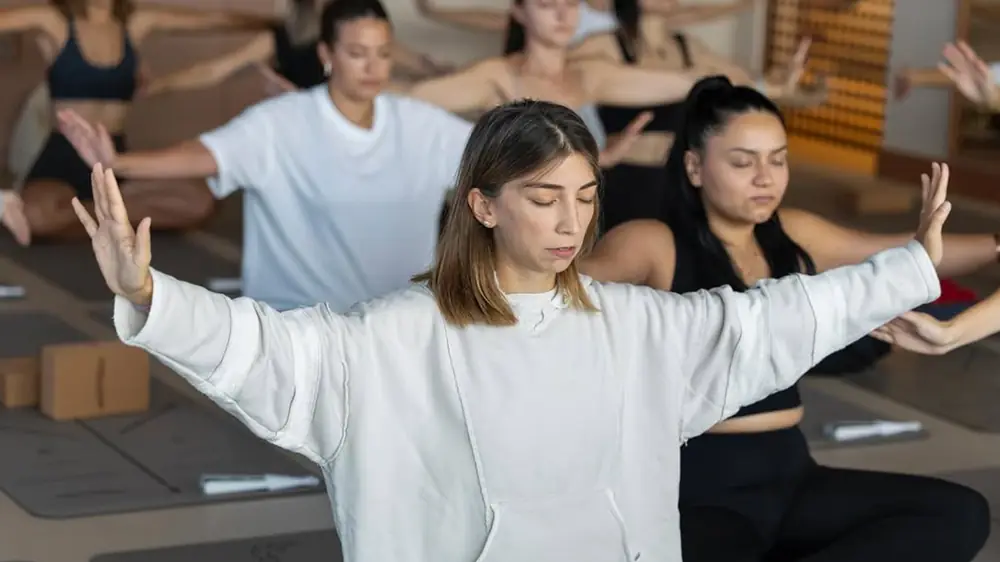
Hip-Opening Poses in Yoga: Safe Sequencing and Common Mistakes
Hip-opening poses are among the most loved yet most often forced parts of a yoga class. We explain the directions the hip moves in, a safe sequence, and the details that protect the knee.

Hip Flexor Tightness: The Hidden Problem of Desk Workers
What is hip flexor tightness and why does it happen? A comprehensive guide with symptoms, tests, stretching and strengthening exercises.
