
Dynamic vs static stretching: when to use which?
What is the difference between dynamic and static stretching, and which should you choose before and after training? We explain the science and the practical application.
Should you stretch before or after training? The difference between dynamic and static stretching is really about timing: both are valuable, but used in the wrong place they can reduce performance or increase injury risk. In this article we look step by step at what the two methods are, when to choose which, and how to fit them into your weekly training programme.
What is dynamic stretching?
Dynamic stretching is a method of warming the muscles and connective tissue by moving a joint repeatedly through its range of motion in a controlled way. Leg swings, arm circles and walking knee-to-chest pulls all fall into this category. The aim is not to stay in a position for a long time as in static stretching, but to increase muscle temperature and neuromuscular communication by repeating the movement.
What is static stretching?
Static stretching aims to increase flexibility by holding a muscle group at a certain length (usually for 15-60 seconds). A standing forward fold to stretch the hamstrings or a seated butterfly position are classic examples. This method develops the extensibility of the muscle-tendon unit over time and is effective at increasing joint range of motion.
Why does timing matter?
Research and field experience show that prolonged static stretching immediately before training can cause a temporary drop in performance in some explosive and strength-based movements. This is explained by the muscle temporarily producing less force in a stretched state. Dynamic stretching is therefore preferred in the warm-up section and static stretching in the post-workout cool-down.
| Situation | Recommended method | Why |
|---|---|---|
| Warm-up before training or a class | Dynamic stretching | Increases muscle temperature without reducing performance |
| Cool-down after training or a class | Static stretching | Develops flexibility lastingly and supports relaxation |
| A separate flexibility session | Static stretching or a yoga flow | The chance to work deeply without time pressure |
| Controlled movement after an injury | Gentle dynamic work, with doctor/physiotherapist approval | Loading needs to be gradual, according to tissue healing |
A step-by-step dynamic warm-up protocol
- General warm-up (3-5 min): Muscle temperature is raised with brisk walking on the spot or easy-paced cycling.
- Dynamic lower-body movements (3-4 min): Leg swings (forwards and backwards, sideways), walking knee raises, walking heel-to-glute kicks.
- Hip opening movements (2-3 min): Walking hip external and internal rotations, standing leg circles.
- Dynamic upper-body movements (2-3 min): Arm circles, trunk rotations, shoulder opening movements.
- Activation (2-3 min): Preparing the neuromuscular system for the class with movements such as light squats and lunges.
A step-by-step static cool-down protocol
- Transition with the breath (1-2 min): Slow diaphragmatic breathing to bring the heart rate down.
- Static stretching for the major muscle groups (5-8 min): Positions held for 20-30 seconds each for the hamstrings, hip flexors, calves, chest and back.
- Deepening with the breath: Deepening the position slightly as you exhale in every stretch supports progress without forcing.
- Closing (1-2 min): The session ends with a short relaxation position (lying on your back with the knees bent, for example).
Modifications by level and condition
Flexibility levels vary enormously from person to person, so the same movement is not expected to be done to the same depth by everyone. For beginners, the range of movement is kept small in dynamic movements and the number of repetitions reduced. In static stretching, a feeling of “mild tension” is considered enough; pushing to the point of pain is not recommended. For advanced practitioners, light resistance bands can be added to the dynamic warm-up, and PNF (contract-relax) techniques tried in static stretching under a trainer's supervision. In people with joint hypermobility, movement within a limited range focused on muscular control is preferable to going to the end of the joint's range in static stretching.
Common mistakes
- Starting deep static stretching with cold muscles: Sudden deep stretching of unwarmed muscle tissue can increase the risk of micro-tears.
- Staying in static stretches for a long time before training: This can temporarily reduce performance, particularly before explosive movements such as jumping and sprinting.
- Holding your breath: Holding your breath during a static stretch increases muscle tension; slow, regular breathing makes it easier to release.
- Pushing to the point of pain: The idea that “no pain, no real stretch” is wrong; mild tension is enough.
- Working on only one approach: Focusing only on dynamic or only on static stretching limits both your performance and your flexibility gains.
Who needs to take care
In people who have had an acute muscle or ligament injury, the type and timing of stretching should be determined with guidance from a physiotherapist or doctor. People with joint hypermobility syndrome, severe osteoporosis or recent surgery should avoid deep static stretching, and the programme should be individualised. For anyone with chronic pain, it is also important to consult your doctor before starting a stretching protocol.
A practical weekly recommendation
| Day | Focus | Duration |
|---|---|---|
| Training days | Dynamic warm-up + static cool-down | A total of 10-15 min |
| 1-2 separate days | Independent static flexibility work or Deep Stretch Yoga | 30-45 min |
| 1 day | Mobility & Stretching class | 45-50 min |
How is progress measured?
Progress in flexibility is tracked through signs such as being able to stay more comfortably in a particular position, a gradual increase in range of motion, or feeling less tension in everyday movements (bending, climbing stairs). Noting the same movement weekly (how far your fingertips are from the floor in a forward fold, for example) gives a concrete indicator. Focusing on gradual improvement through consistent practice, rather than on reaching a fixed target, gives sustainable results.
How it works at O’Wellness Sky
In group classes at O’Wellness Sky, warm-up sections are always built around dynamic movements, and classes close with static stretching or breathwork. Mobility & Stretching Our class in particular offers both methods together in a structured way. For a broader look at flexibility and mobility, see recovery guide .
Using props
In static stretching, a yoga block or strap makes it easier to reach the target position safely; for people with limited flexibility in particular, these tools bridge the gap and reduce injury risk. In a dynamic warm-up, a light resistance band can add extra activation to hip and shoulder movements. For detailed information about choosing equipment, see guide to group classes .
Example positions for the common muscle groups
For the hip flexors, walking knee raises can be used in the dynamic warm-up and a kneeling hip opener (lunge stretch) in the static cool-down. For the hamstrings, leg swings are used on the dynamic side and a standing or seated forward fold on the static side. For the shoulders and chest, a chest-opening stretch done in a doorway or against a wall is a good complement after dynamic arm circles. For the calves, a static stretch leaning against a wall is particularly useful after running or cycling. Adapting these pairings to your own training routine makes both your warm-up and your recovery more effective.
The role of the breath
In both dynamic and static stretching, the breath directly affects the quality of the movement. In dynamic movements the breath is kept natural and regular, accompanying the pace of the movement; holding the breath disrupts its flow. In static stretching, deep, slow breathing through the nose helps reduce muscle tension; deepening the position slightly on the exhale in particular supports the nervous system's relaxation response. For anyone with weak breath awareness, focusing on this for a few sessions with a trainer makes independent practice easier later on.
A suggestion for practising at home without equipment
For anyone wanting to build a short warm-up and cool-down routine at home, outside the studio, a simple structure can be suggested: 5 minutes of brisk movement on the spot, 3-4 dynamic movements (leg swings, arm circles, trunk rotations), then a 5-6 minute static stretching block after your main workout. As this routine requires no equipment, it is an advantage in terms of being able to do it regularly; however, trainer feedback in a studio is particularly valuable for beginners, as it offers the chance to have your movement quality checked by eye.
Frequently asked questions
Is static stretching before training completely off limits?
No - short (10-15 second), gentle static stretches generally cause no problems. However, leaving long, deep static stretching until after training is safer in terms of performance.
Should I stretch every day?
A short dynamic warm-up before every workout and static stretching 3-4 times a week may be enough. Regularity matters more than stretching for a long time in one go.
Is there a risk of injury in dynamic stretching?
The risk can increase if the range of movement is uncontrolled or done too fast. Done at a controlled pace and within an appropriate range, dynamic stretching is safe.
Is there a class in Sarıyer where I can learn both methods together?
Yes - our Mobility & Stretching class at O’Wellness Sky on the Skyland Istanbul campus covers both dynamic and static stretching techniques with a trainer.
Does static stretching hinder muscle development?
Short static stretches do not have a negative effect on strength training; what really needs attention is avoiding very long, deep stretching before heavy lifting.
To plan your flexibility programme with the right timing, enquiry form fill in the form and let's identify the right classes for you together.
Related posts
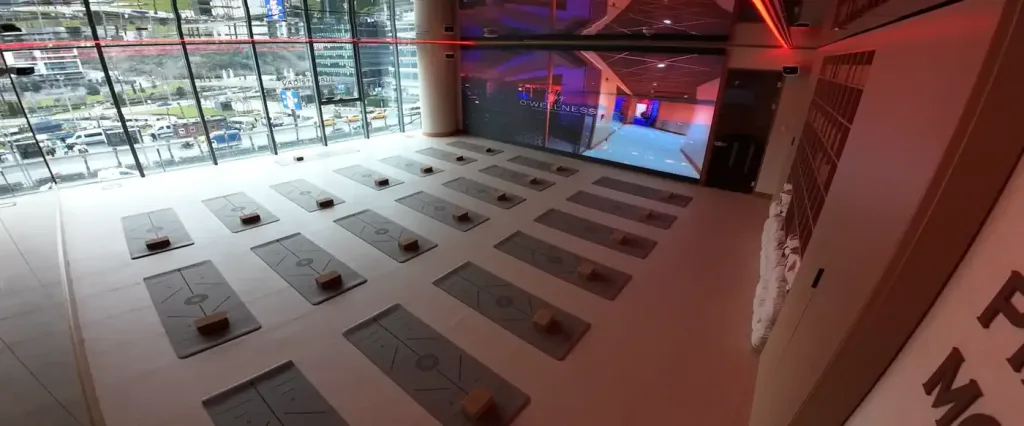
A yoga class in Sarıyer: the weekly schedule at the O’Soul Studio
For anyone looking for a yoga class in Sarıyer, we explain the weekly yoga schedule at O'Wellness Sky's O'Soul Studio, the types of class and details of the facility.
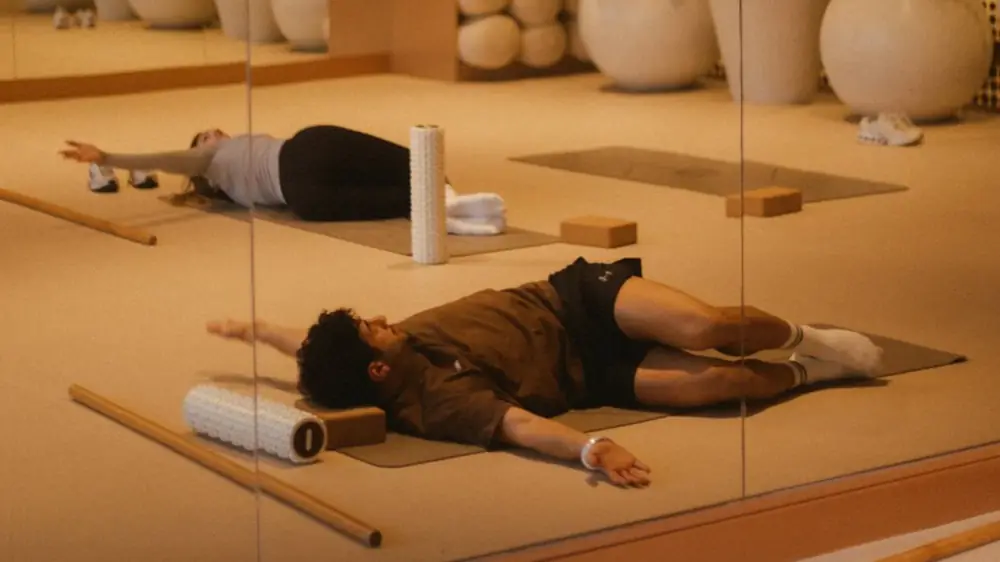
The Relationship Between Thoracic Spine Mobility and Shoulder Pain
A lack of thoracic mobility can set the stage for shoulder pain. In this article we look at the movements that increase the range of motion in the upper back and their relationship with shoulder health.
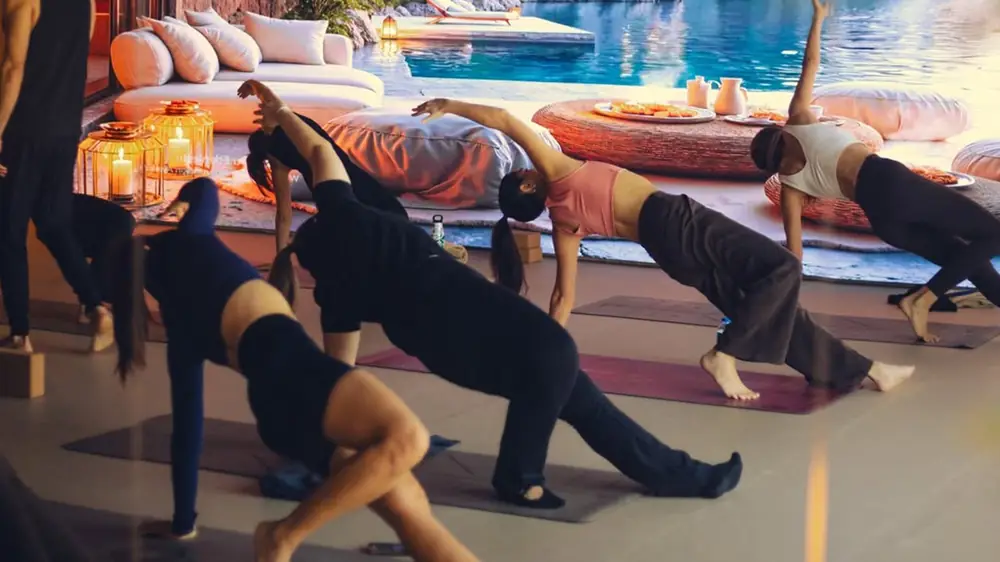
Yoga and Stress: How Is the Parasympathetic Nervous System Activated?
Yoga produces much of its stress-reducing effect through activation of the parasympathetic nervous system. We look at breathing techniques and how to put them into practice in this article.
