
Setting Measurable Fitness Goals: SMART Goals and a 90-Day Plan
How to use the SMART framework when setting fitness goals, how to build a 90-day plan and how to measure your progress; a practical step-by-step guide.
A vague intention such as “I want to get fit” usually evaporates within the first three weeks. The most critical step in setting a fitness goal is turning that intention into a measurable, time-bound target. In this article we explain step by step how to apply the SMART framework in a fitness context and how to turn it into a concrete 90-day plan.
Why do most fitness goals fail?
Research and field observation show that most New Year's resolutions are abandoned by February. The main reason is usually not a lack of motivation but a vague goal and unrealistic expectations about time. “I want to lose weight” cannot be measured; “I want to lose an average of 0.5 kg a week over 12 weeks” is a measurable, trackable and realistic commitment. Vague goals reach the point of giving up faster when no progress is felt.
What is the SMART framework?
SMART is made up of the initials of five criteria used in goal setting: Specific, Measurable, Achievable, Relevant and Time-bound. This framework turns an intention such as “I want to get stronger” into a concrete commitment.
| Criterion | What it means | A fitness example |
|---|---|---|
| Specific | Clear and definite | “Increasing my squat strength” (rather than general strength) |
| Measurable | Measurable in numbers | “Going from 40 kg to 60 kg in the squat” |
| Achievable | Reachable in your current circumstances | 3 training days a week in line with realistic capacity |
| Relevant | Matching your personal priorities | Strength specifically as the priority, rather than general health |
| Time-bound | Tied to a specific period | “Within 12 weeks” |
From a vague goal to a SMART goal: examples of the transformation
- Vague: “I want to get fit.” → SMART: “Bringing my 5 km time down from 32 minutes to 27 minutes in 12 weeks.”
- Vague: “I want to build muscle.” → SMART: “Going from 40 kg to 55 kg on the bench press in 12 weeks.”
- Vague: “I want to be healthier.” → SMART: “Keeping up a 45-minute workout three times a week for 90 days without a break.”
- Vague: “I want to improve my flexibility.” → SMART: “Reducing the distance from my fingertips to the floor in a forward fold by 15 cm in 12 weeks.”
Why is 90 days an ideal length of time?
90 days (around 12-13 weeks) is long enough for physiological adaptations to become visible but not so long that it exhausts your motivation. The first signs of increased strength appear in 2-3 weeks (nervous system adaptation), while visible changes in muscle or body composition usually emerge in 8-12 weeks. That period can also be divided into three four-week “microcycles”, which breaks the plan into manageable parts and makes it possible to assess progress at regular intervals.
The three phases of a 90-day plan
Phase 1 (weeks 1-4): Building a foundation
The aim in this phase is to build a consistent habit and solidify your technique. The target numbers (load, distance, time) are not yet pushed aggressively; the priority is completing more than 90 per cent of your planned sessions. Baseline measurements (strength tests, body composition, photos, body measurements) are taken at the start of this phase.
Phase 2 (weeks 5-8): Intensification
Once the technique is established, load, volume or intensity are increased gradually. In this phase, small weekly targets (“add 2.5 kg to the squat this week”, for example) are used as concrete steps towards the larger 90-day goal.
Phase 3 (weeks 9-12): Testing and consolidation
In the final phase, volume can be reduced somewhat (a deload) and final tests done on day 90 for comparison with the baseline measurements. That comparison objectively establishes whether the goal has been met and lays the ground for setting new goals for the next 90-day cycle.
Methods for tracking progress
| Method | Frequency | What it measures |
|---|---|---|
| A training log (load, sets, repetitions) | Every session | Progress in strength and volume |
| Body composition measurement | Every 4 weeks | Changes in the fat/muscle ratio |
| Photos (a fixed pose and lighting) | Every 4 weeks | Visual change (the scales can be misleading) |
| A performance test (5RM, running time) | Every 12 weeks | A concrete performance indicator |
| Habit tracking (the percentage of sessions completed) | Weekly | Consistency |
What to do if you do not reach your goal
Not fully reaching your goal after 90 days is not a failure; it is an opportunity to calibrate the plan. The following questions guide the review process: What percentage of sessions were completed? Did load increases progress at a realistic rate? Were sleep and nutrition in line with the goal? To what extent did external factors (workload, illness) affect the plan? As a result of that analysis, the goal is carried over to the next cycle either by extending the timeframe or by calibrating expectations.
Common mistakes
- Setting too many goals at once: Losing 10 kilos, running a marathon and breaking your bench press record in the same 90 days is not realistic; you have to set priorities.
- Ignoring process goals: Rather than focusing only on the outcome goal (“losing 10 kilos”, for example), process goals (three sessions a week, a daily protein target) feed day-to-day motivation better.
- Overloading in the first 2 weeks: Starting enthusiastically with an overly intense programme can lead to injury or burnout and derail the 90-day plan at the outset.
- Not measuring: If you do not measure how close you are to your goal, the risk of losing motivation and giving up without a plan increases.
The power of writing your goal down
Writing your goal down and putting it somewhere visible (your phone lock screen, the first page of your training log) turns an abstract intention into a concrete daily reminder. Sharing your goal with a training partner, trainer or family member can also support consistency by strengthening your sense of accountability.
Goal-focused programmes at O’Wellness Sky
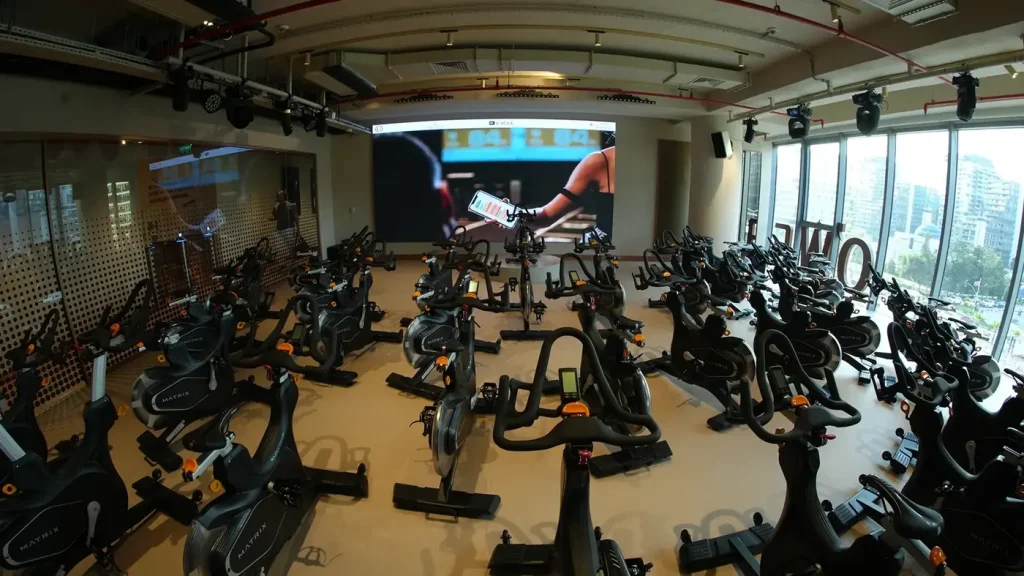
In our studio in Skyland Istanbul, the first step of the personal training process is to clarify the member's SMART goal and design a 12-week programme to match. Our strength training guide provides the basic framework for those with strength goals; those with endurance goals can consider Master of Cycle or Step Cardio classes. For body composition goals, the articles in our nutrition category and the support of our dietitian are useful. The free facility tour and trial sessionoffered before membership is a good starting point for identifying the programme that suits your goal.
After 90 days: the next cycle
Once the first 90-day cycle is complete, it is important to set a new 90-day goal straight away so as not to lose the momentum you have built. That new cycle is calibrated against the results of the previous phase: if the goal was met, the difficulty is increased; if not, the approach is reviewed. This cyclical structure turns your fitness journey from a one-off “project” into a sustainable way of life; 90-day cycles completed one after another over the years create a lasting transformation that none of them could deliver alone. Reviewing in writing the lessons learned from the previous period at the start of each new cycle prevents the same mistakes being repeated and makes the process progressively more efficient.
Example 90-day frameworks by type of goal
Different goals require different measurements and programme emphases. The three examples below show how the 90-day structure differs for common goal categories.
A strength-focused goal
Example: “A 20 kg increase in my combined squat, bench press and deadlift total in 12 weeks.” For this goal, training is built around 3 days a week focused on the key lifts, on the principle of progressive overload. Measurement is done with 3-5RM tests every 4 weeks, with a performance log kept in the intervening weeks.
A body-composition-focused goal
Example: “Reducing body fat by 3-4 per cent in 12 weeks while maintaining muscle mass.” For this goal, training (strength-based, 3-4 days a week) runs alongside a nutrition plan (calorie and protein targets). Measurement is done every 4 weeks with body composition analyses such as InBody; as looking only at the scales can be misleading, photos and body measurements are added too.
An endurance-focused goal
Example: “Cutting my 5 km time by 5 minutes in 12 weeks.” For this goal, the weekly programme consists of 3 different running workouts - a tempo run, an interval session and a long run - plus 1-2 strength sessions. Measurement is done with timed test runs every 4 weeks; if heart rate data is available, a drop in heart rate at the same pace can also be tracked as an additional indicator of improving endurance.
The personal factors to consider when setting goals
The SMART framework offers a general structure, but the “Achievable” criterion varies enormously from person to person. “Gaining 5 kg of muscle in 12 weeks” is not realistic for someone training for the first time; the same goal might be reasonable for someone with previous training experience returning after a break. Factors such as age, training history, health, workload and sleep quality determine which goals fall into the “achievable” category. Setting goals together with a trainer therefore prevents unrealistic expectations and reduces the risk of disappointment.
Coping with fluctuating motivation
A dip in motivation in the middle of a 90-day process (usually between weeks 4 and 6) is a common experience; the initial excitement has faded and the results are not yet fully apparent. In this period, focusing on process goals (completing the session you planned) is a more sustainable source of motivation than focusing on outcome goals (weight, strength numbers). Celebrating small milestones (finishing the first 4 weeks with a 90 per cent completion rate, for example) also helps keep motivation alive. Regular check-ins with a training partner or trainer are a practical way of avoiding dropping out of the programme during these fluctuations.
Frequently asked questions
Isn't 90 days too short - should I set a longer-term goal?
90 days is short enough to keep your motivation alive and long enough for physiological change to be visible; long-term goals are built by stringing these 90-day cycles together.
Should I give up training if I do not reach my goal?
No. Partly reaching a goal is progress too; you should review the process, calibrate your expectations or approach, and carry on.
Can I pursue more than one goal at the same time?
It is possible, but we recommend setting priorities; working with at most one primary and one secondary goal at a time makes it easier to focus.
How does goal setting work at O’Wellness Sky?
In our studio in Skyland Istanbul, the first session of the personal training process is given over to fitting the member's goal into the SMART framework and designing a 90-day plan to match.
Which tools should I use to measure progress?
A training log, regular body composition measurement, photos and performance tests (such as a 5RM or a running time) give the most reliable picture when used together.
To set your own 90-day fitness goal, make use of the free trial day and speak to our trainers.
Related posts

Warming Up and Cooling Down: 10-Minute Routines That Prevent Injury
Why your pre-workout warm-up should use dynamic movement rather than static stretching; a guide to reducing injury risk with 10-minute warm-up and cool-down routines.

Bench Press Technique: Building Chest Strength While Protecting Your Shoulders
From setup to bar path, grip width to spotting, a step-by-step guide to bench press technique with shoulder safety in focus.
A Guide to Strength Training: Core Principles and a 12-Week Plan for Beginners
How to start strength training, which movements are fundamental, how to apply progressive overload and how to build a weekly plan for measurable results in 12 weeks; a comprehensive guide from the O'Wellness Sky trainers.
