
How to Choose Spring Resistance in Reformer Pilates: Light Does Not Always Mean Easy
What do spring count and colour change on the reformer? Why the idea that more springs means harder can mislead, and how to choose resistance per exercise.
Reformer spring setting is one of the topics everyone curious about reformer pilates asks about the first time. Looking at the springs at the foot of the machine and concluding "more springs, harder work" is a very natural judgement, but the truth is not always so simple. In some exercises adding springs makes the work easier, in others harder. That is why our instructors at the O'Wellness Sky reformer studio in Skyland Istanbul suggest a different spring for each exercise.
How do springs work on the reformer?
At the bottom of the reformer there are springs marked with different colours. Each spring provides resistance pulling the moving platform, the carriage, toward its starting point. As spring count grows or a stiffer spring is chosen, the force needed to slide the platform increases. At the same time the pull that returns the platform also grows.
These two effects sometimes work in opposite directions. In movements where you must push the platform (for example pushing with the feet), a heavy spring is a harder stimulus. But in movements where you must slowly bring the platform back under control, or in poses where you try to hold the platform still, a heavy spring reduces platform movement and can make balance and stability work easier.
Spring colours vary from brand to brand, but a studio usually has a light-to-heavy ordering. Your instructor tells you in class which spring to use, by number or colour; in the first classes trusting that guidance is best.
Springs are also used differently for different body parts in the same class. It is not surprising to use three springs for leg work and one for arm work, because leg muscles are far larger and stronger than arm muscles. So instead of copying someone else's spring, you need to find the setting that suits your own body.
When is a light spring harder?
In movements where you stand, balance on one leg or stay balanced on the platform, a light spring lets the platform move more freely. To keep balance while the platform slides, your core muscles, hips and ankles work much harder. That is why in advanced movements instructors often choose a light spring.
Similarly, in movements that proceed at a slow, controlled tempo with the muscle loaded in a lengthened position (for example in the eccentric phase), a light spring creates tension for longer. This develops muscular endurance and control.
Beginners often assume a light spring is easy and want to add springs. Yet for beginners the right spring is the one that allows fluid movement without breaking form. Lightening the spring without enough stability, or making it excessively heavy, lowers the quality of the movement.
If your balance is not yet developed, a light spring can cause uncontrolled platform slide and unnecessary load on the knees and lower back. That is why instructors choose a slightly more supportive spring at first and lighten it as you progress. This transition is one of the signs of progress.
When is a heavy spring more suitable?
In movements where you push with the feet to strengthen the hips and legs, such as footwork, more springs give more resistance and increase strengthening. At the same time the load gives a clearer support for keeping the spine and pelvis stable; that is why a medium spring level is suggested for beginners in footwork.
Footwork is a basic movement of the whole reformer class. Foot positions (heels, toes, V position) work different muscle groups of the leg. Even if spring weight stays the same, the feel of the movement changes completely as foot position changes. So use the quality of the movement, not the spring, as your yardstick.
A heavy spring also makes the platform more stable in movements where you need to support yourself. For example, in some movements where you kneel or use your arms on the platform, a heavy spring reduces platform slide and gives confidence.
- Footwork and leg presses: a medium-heavy spring is generally suitable.
- Balance and single-leg work: a light spring is more challenging.
- Arm work: a light or medium spring allows fluid movement without losing form.
- Trunk (core) movements: the spring your instructor suggests varies by situation.
Think exercise by exercise
Choose springs by the purpose of the movement rather than a general rule. If you want to build strength, choose a resistance that challenges you without losing control. For control and stability, try a light spring. In flexibility-focused movements, releasing the platform or using light resistance helps lengthen the muscle.
It is also normal to change the spring setting as the class goes on. The instructor may ask you to increase the spring in one exercise and decrease it right after; these transitions make muscles work under different conditions. When changing springs, listen to your instructor before lifting your foot or hand off the platform; changing springs requires a safe procedure.
The same spring setting can feel different at different body weights. For a tall person the leverage effect is large; for a shorter person the same spring may feel heavier. So the setting that suits your classmate may not suit you, and that is completely normal.
Safety: care when changing springs
When adjusting a spring, the platform should be still and free, and feet or hands should not be near the spring mechanism. When a spring is attached, be careful not to trap your fingers between the spring and the frame. Ask your instructor for help when a spring change is needed; especially in your first classes, do not try to do it yourself.
When getting on and off the platform, make sure it will not move. A firm grip and slow transition reduce the risk of slipping. If you have back, knee or shoulder issues, tell your instructor about spring settings in advance.
In situations such as pregnancy, recent surgery or chronic pain, spring choice becomes even more important. In such cases sharing your doctor's recommendations with your instructor lets the class be adapted for you.
Practical tips for beginners
In the first few classes use the spring your instructor suggests and note how it feels. If the fluidity of the movement breaks down, your breath shortens or one part of your body tenses excessively, talk to your instructor about changing the spring. You should feel controlled difficulty, not pain.
A little muscle fatigue after class is normal; a sharp discomfort in the joints is a sign that the spring or movement setting needs another look. Sharing this feedback with the instructor in your next class optimises your spring choice quickly.
Over time you learn which spring suits you in which exercise. If you are confused about spring choice in reformer classes at O'Wellness Sky, our instructors guide you from your first class. The right spring turns the machine from a challenge into a helper.
Finally, measure your progress not by the spring but by the quality of the movement. If you can work more fluidly, in more control and for longer with the same spring, you are improving.
Related posts
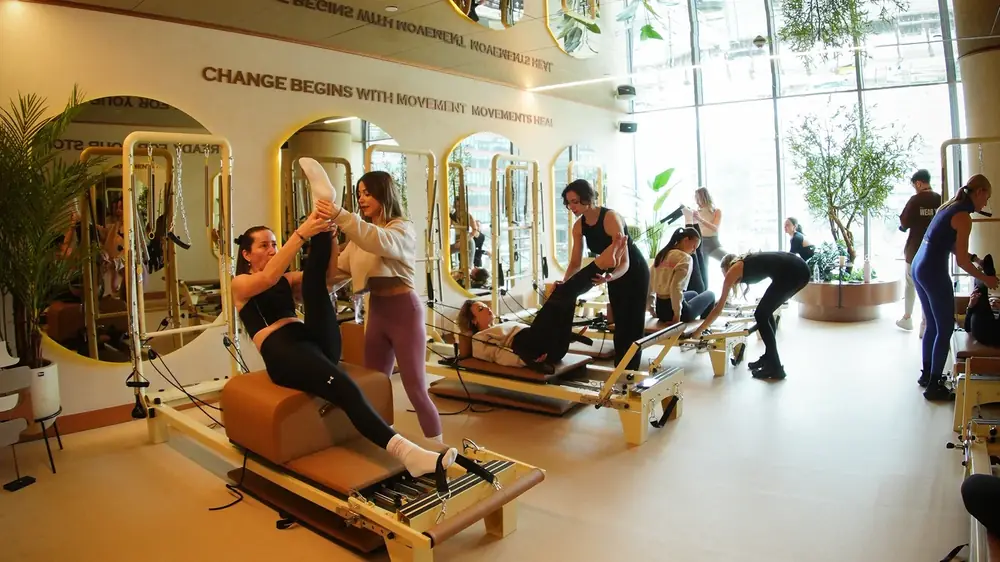
The Reformer Arm Series with Straps: Controlled Resistance for the Upper Body
The reformer arm series uses straps and springs to work the shoulders, back, and arms against controlled resistance. We cover positions, spring choice, and shoulder alignment.
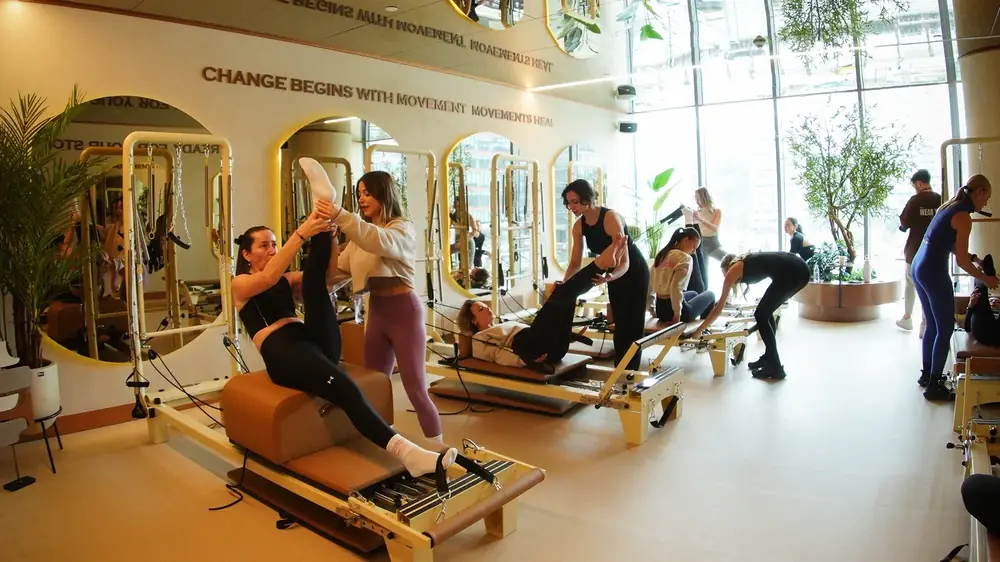
One-to-One Reformer Pilates or a Group Class? The Right Format for Your Goal
We compare the differences between one-to-one reformer Pilates and group classes, which format suits which goal and the cost-benefit balance, with examples from Skyland Istanbul.
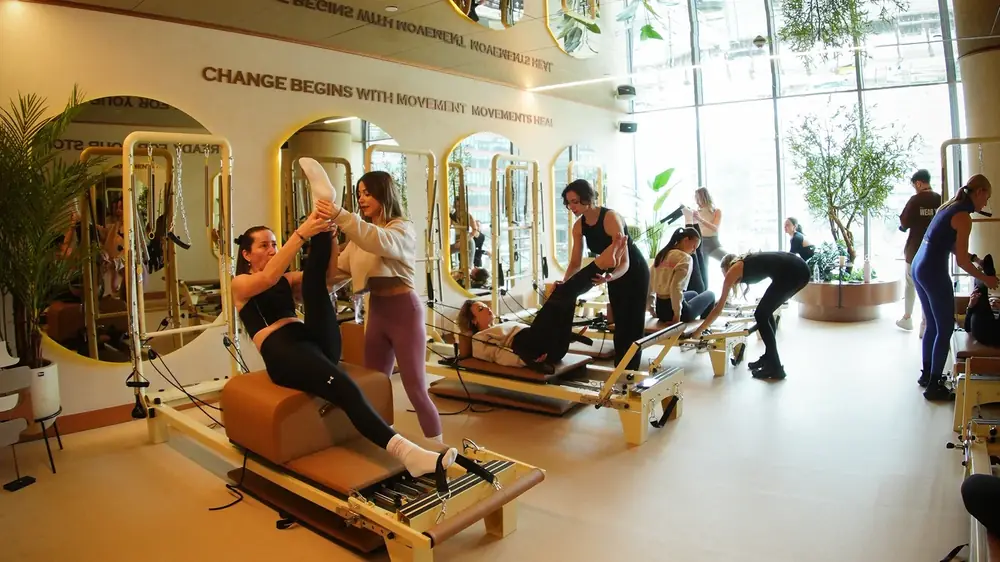
Reformer Pilates for Poor Posture: Movements for Kyphosis and Lordosis
We explain the reformer movements that target kyphosis and lordosis in the Pilates approach to poor posture, a weekly programme and the points to watch out for.
