
Jump Board Sessions on the Reformer: The Joint-Friendly Logic of Horizontal Jumping
A jump board turns the reformer into a horizontal jumping surface. We explain how a session is built, who it suits, and what to watch for on your first try.
Reformer jump board seansı, ayak barının yerine takılan dik bir panel sayesinde sıçramayı yerçekimine karşı değil, yatarak ve yay direncine karşı yapmanızı sağlar. Sırt üstü uzanırken bacaklarınızla panele itersiniz, carriage geriye kayar, sonra yaylar sizi yumuşakça panele geri getirir. Bu döngü, ayakta yapılan sıçramanın ritmini korur ama vücut ağırlığının tamamını eklemlere yüklemez.
In this article we cover the logic behind jump board work, the typical flow of a session, why spring choice matters so much, and the mistakes that show up most often on a first attempt. The goal is for you to know what to expect before you ever touch the panel.
Why does horizontal jumping feel different?
When you jump standing up, your body weight and the speed of your fall land on the ankle, knee, and hip at the same moment. On the reformer, the load is limited by the spring resistance you choose. Because your back is supported on the carriage, you do not have to work separately to hold the spine upright, so your attention can go to foot contact and the direction of your knees.
This does not make jumping easier; it simply puts it into a different shape. Once you hold the rhythm for a while, the calves, front thighs, and glutes work noticeably and your heart rate climbs. Many people notice on their first session that they sweat more than they expected.
The typical flow of a jump board session
Most instructors open the session with a classic reformer warm-up: breathing, pelvic position, and a short footwork sequence on the foot bar. Once the panel is in place, foot alignment is checked first by pressing and pushing without leaving the panel. Then low-tempo jumps begin, and the pace rises only as long as control holds.
- Setting foot alignment by pressing and pushing on the panel
- Parallel two-foot jumps at a low tempo
- A variation with heels together and knees slightly turned out
- Alternating single-leg jumps
- Rhythm changes, such as two quick and one slow
- Leaving the panel and cooling down with breath on the springs
Jumping blocks are usually kept short, with pauses in between so your breathing can settle. These pauses are a natural part of the session that protect the quality of each jump; they are not dead time.
Spring choice: lighter is not always easier
In jump board work, spring resistance decides how fast the carriage comes back. With very light springs the carriage drifts back slowly, you have to create the rhythm yourself, and trunk control becomes harder. With heavier springs the return speeds up, the landing feels more distinct, and the legs must push harder.
The right setting varies from person to person and depends on factors such as height, leg length, and experience. That is why, on your first session, the healthiest approach is to leave the setting to the instructor and say clearly what you feel. Short feedback like "the carriage is coming back too fast" or "I can't find the rhythm" lets the setting fall into place within a few minutes.
Foot contact and knee direction
The key technical point of a jump board session is how you meet the panel. Making contact with the front of the foot and lowering the heel with control softens the landing. The knees should track the direction of the toes and should not collapse inward. This alignment is hard to see in a standing jump, but on the reformer you can look straight at your knees.
Another detail is not locking the knees completely at the end of the push. Leaving a slight softness as the leg extends keeps you ready for the next landing. In the trunk, the aim is for the ribs to stay down on the carriage and the neck to stay relaxed.
Common mistakes on a first session
Most people stepping onto the panel for the first time treat the jump like a race and raise the tempo faster than they should. As speed increases, foot contact gets harsher, the hips slide side to side on the carriage, and the shoulders creep up toward the ears. That picture is the clearest sign that you have drifted away from the purpose of the session. A slower but clean rhythm works the muscles more evenly and helps you keep control right to the end.
- Slamming into the panel with the whole sole instead of landing through the forefoot
- Pushing with the knees dropping inward
- Holding the breath and jumping without breathing
- Gripping the carriage edges and tensing the shoulders
- Continuing with broken technique instead of pausing when tired
Almost all of these mistakes are fixed by shortening the block and starting again. When the instructor says "stop, breathe, start again," it is not criticism but a tool that protects the quality of the session. Listening to your own body and pausing when needed is the most reliable way to progress.
How breath and rhythm connect
In a jump board session, breath can work like a metronome for the jumps. Some instructors suggest inhaling over two jumps and exhaling over two; others leave the breath free and only ask that you not hold it. Whichever method you choose, a calm inhale through the nose and an easy exhale through the mouth keep your heart rate from rising out of control. When you feel your breath shortening to the point where you could not speak, lowering the tempo is the right choice.
Who it suits and who should check first
The jump board is an appealing option for people looking for a cardio effect in a low-impact setting, for those who have paused running but want to keep rhythmic leg work, and for anyone who wants to add variety to a reformer routine. Being comfortable with basic reformer movements makes the session far more enjoyable.
- If you have had a recent ankle, knee, or hip injury
- If you are pregnant or in the postpartum period
- If you have pelvic floor sensitivity
- If you are being monitored for a heart or circulation issue
In these situations it is important to consult your doctor before starting and to let your instructor know. The jump board is an optional tool; the foundations of reformer work progress fully without it.
Once you learn to regulate your breath without breaking the rhythm, the mental side of the jump board session becomes clearer as well. The repeating loop between panel, carriage, and springs pulls attention into the present and makes room for the day's preoccupations to step back for a while.
Where the jump board fits in a weekly program
Because jump board sessions put a clear load on the legs, it makes sense to leave a day between them and a heavy leg strength day rather than placing them right after. Starting once a week, as a short block inside a classic reformer session, is a sufficient introduction for most people.
At O'Wellness Sky in the Skyland complex in Sarıyer, reformer sessions take place in a studio setting, so an addition like the jump board can be planned into your program with an instructor. Deciding together which day and in what order it fits, based on your goals, is the best approach.
To measure progress, look at quality rather than the number of jumps. If after a few weeks you can land more quietly on the same spring setting, feel less difference between sides in single-leg blocks, and recover your breath faster at the end of a block, the work is doing its job. Recording these observations in short notes gives you solid ground when you discuss the next step with your instructor. Decisions such as adding spring resistance or lengthening blocks should only come up once this foundation is in place.
Frequently Asked Questions
Do I need prior reformer experience for the jump board?
It is not required, but a few basic reformer sessions help you get used to the carriage movement and breathing pattern. That way, on the panel, your attention can go entirely to the jump.
How long does a jump board session last?
It usually appears as short blocks inside a full reformer session. Jumping durations depend on the instructor's plan and on your ability to keep control.
My knees are sensitive; can I still try it?
You should consult your doctor first. If you get approval, the instructor can adjust spring resistance and jumping style to your situation, or you can progress with pressing and pushing on the panel instead of jumping.
Related posts
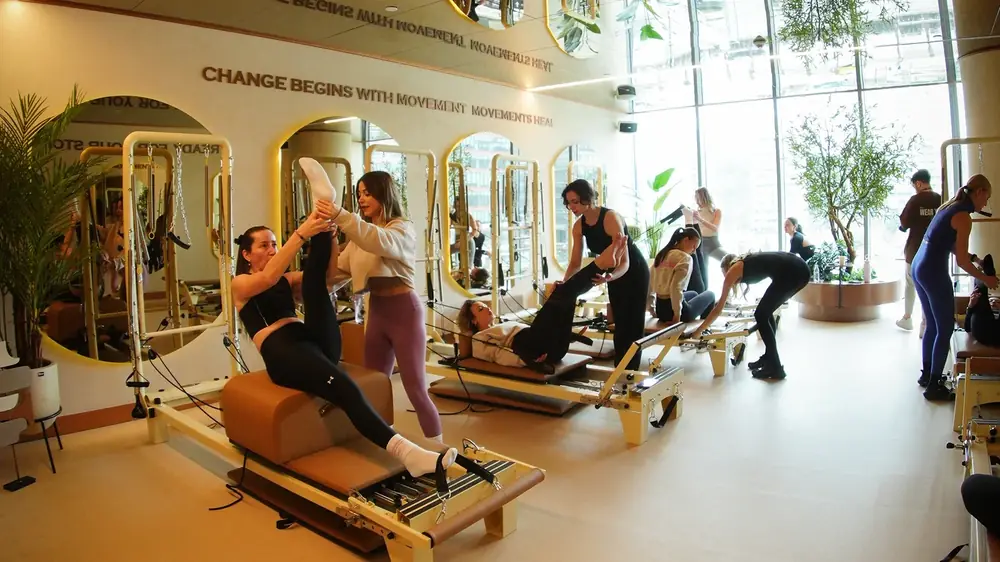
Reformer Pilates for Men: Why Are Strength Athletes Turning to the Reformer?
For men, reformer Pilates provides mobility, core control and injury prevention as a complement to strength training. We explain why strength athletes are turning to the reformer.
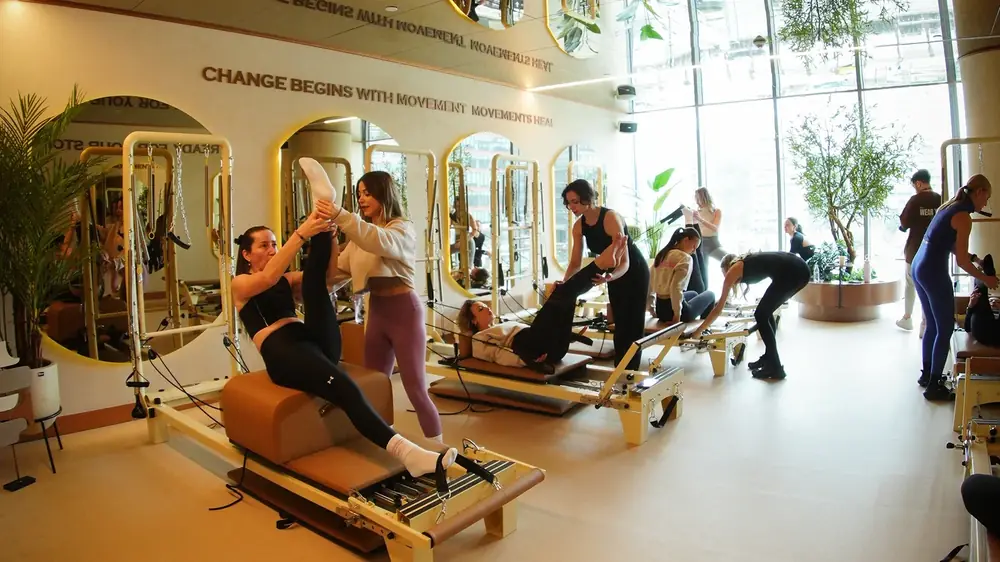
Reformer pilates after 50: bone density, balance and joint health
How does pilates after 50 support bone density, balance and joint health? A safe start, how spring resistance works, and weekly frequency recommendations.

Does Reformer Pilates Help You Lose Weight? The Facts About Calories, Muscle Mass and Body Composition
A realistic answer to the question of whether reformer Pilates helps you lose weight, looking at calorie burn, muscle mass, metabolism and body composition, plus recommended combinations for weight management.
