
Does Reformer Pilates Help You Lose Weight? The Facts About Calories, Muscle Mass and Body Composition
A realistic answer to the question of whether reformer Pilates helps you lose weight, looking at calorie burn, muscle mass, metabolism and body composition, plus recommended combinations for weight management.
The question “does reformer Pilates help you lose weight?” is one of the subjects members new to our studio most often wonder about. The short answer: it is not a magic method providing rapid weight loss on its own, but when done regularly it is a powerful tool that changes body composition in the right direction and in a lasting way. In this article we explain the subject in detail in terms of calorie burn, muscle mass, metabolic rate and realistic expectations.
How many calories are burned in a reformer Pilates session?
Reformer Pilates is a moderate-intensity resistance workout; it does not burn as many calories as fast-paced cardio. Although it varies with the intensity of the session, the pace and the person's body weight, in general an energy expenditure between a moderate-intensity walk and light cardio can be expected. For those wanting to increase their calorie burn, classes in a fast-paced flow format expend more energy than static repetitions.
The relationship between muscle mass and metabolism
The most lasting route to losing weight is preserving or increasing muscle mass, because muscle tissue consumes more energy at rest than fat tissue. Because reformer Pilates works with spring resistance, it builds endurance and tone particularly in the core, hip and leg muscles. That is an effect that supports your basal metabolic rate in the long run; however, rather than giving a definitive statistic such as “the more reformer you do the faster your metabolism”, it is more accurate to say that the contribution of preserving muscle mass to metabolic health is generally accepted physiological knowledge.
Why is body composition a better indicator than weight?
The number on the scales is the sum of muscle, fat, water and bone mass. Someone starting reformer Pilates may gain muscle and lose fat within a month; in that case the scales barely change but clothes fit more comfortably, posture improves and the waist gets slimmer. We therefore recommend tracking your progress not only by weight but with measurements (waist and hip circumference), photographs and how your clothes fit.
Is reformer Pilates enough on its own?
Weight management is fundamentally about calorie balance: you need to take in fewer calories than you expend. Reformer Pilates contributes to that balance but its cardio component is limited. For an effective weight management programme we recommend supporting the reformer with classes such as the following:
- O’Ride Cycle - a cardio class providing a high calorie burn
- O’Hiit - high-intensity interval training in a short time
- Tabata - short, intensive interval work
- Cardio Kickbox - enjoyable, fast-paced cardio
An example weekly combination
| Day | Activity | Goal |
|---|---|---|
| Monday | Reformer Pilates | Muscular strength, core control |
| Tuesday | O’Ride Cycle | Cardio, calorie burn |
| Wednesday | Reformer Pilates | Muscular strength, posture |
| Thursday | O’Hiit | High-intensity intervals |
| Friday | Mat Pilates or Yoga | Flexibility, recovery |
Planning a programme of this kind together with our dietitian makes it easier to establish the calorie and macronutrient balance suited to your goal; for the details you can look at dietitian support on our special services page.
The role of nutrition
No exercise method can entirely compensate for the effect of an unbalanced diet. In weight management, protein intake, meal patterns and total calorie balance are decisive. By supporting appetite control and energy levels after exercise, reformer Pilates can also indirectly have a positive effect on eating habits. If you have an underlying metabolic or hormonal condition, be sure to consult your doctor when building your weight management plan.
A realistic timetable
Our members who attend regularly generally report a difference in posture and muscle tone within 4-6 weeks; marked change in weight and body composition, meanwhile, generally becomes clear over a process of 8-12 weeks alongside a proper diet. A patient and consistent approach is far more valuable than quick but short-lived results; building sustainable habits rather than short-term strict diets means you both keep the weight off and keep your motivation high in the long run.
For more information about the general benefits and working principle of reformer Pilates you can look at our What Is Reformer Pilates? guide. If you are curious about how the reformer differs from mat Pilates, you can also look at our Reformer Pilates service page.
Common misconceptions
- “If the reformer doesn't make you sweat it isn't effective”: The amount you sweat is not a direct indicator of calorie burn. Even controlled, slow movements on the reformer work the deep muscles intensively.
- “Pilates alone is enough to lose weight”: Reformer Pilates is powerful for preserving muscle mass and correcting posture, but because its cardio component is limited it does not provide rapid weight loss on its own.
- “The reformer is for women and makes you gain weight”: The reformer can build muscle mass, which is a denser tissue than fat mass; although that sometimes shows as a small increase on the scales, it means an improvement in body composition.
- “Doing it fasted burns more fat”: There is no strong evidence to support that claim; working after a light meal is safer for most people in terms of performance and focus.
Which muscle groups does reformer Pilates target?
Knowing which muscles work in the context of weight management helps you set your expectations correctly. Reformer exercises particularly target the core (the deep muscles of the abdomen and around the lower back), the hip and glute area, the inner and outer leg muscles and the shoulder girdle. Increased muscle tone in those areas creates a feeling of “firming up” in appearance; that is generally the first change noticed before weight loss.
The difference in calories and intensity by level
| Level | Pace | The approximate relative intensity |
|---|---|---|
| Beginner | Slow, controlled | Low-moderate |
| Intermediate | Fluid transitions | Intermediate |
| Advanced level / flow format | Continuous movement, short rests | Moderate-high |
As you move to an advanced level, both the spring resistance and the speed of transition between movements increase, which raises the energy expended per session. Increasing the intensity gradually is the safest way of optimising calorie expenditure while keeping the risk of injury low.
An example member's process
Let us look at a member who joined our studio with a weight management goal: in the first month they start with 2 reformer sessions a week, and from the third week a cycle class is added one day. In the second month, as their core control has improved markedly, the reformer sessions are increased to 3 and their daily protein intake is organised with dietitian support. At the end of the third month the member reports that, although there is no great change on the scales, their waist is slimmer, their clothes fit more comfortably and their energy levels have increased. That example makes concrete why a body composition-focused approach is a more reliable indicator than weight.
How should you track your progress?
- Monthly measurement: Measure your waist, hip and leg circumference under the same conditions.
- Photographic tracking: Take a photograph once a month in the same light and pose; look at the general trend rather than short-term fluctuations.
- Performance indicators: An increase over time in the spring resistance you use and the number of repetitions you complete shows your development in muscular strength.
- Energy and sleep quality: General wellbeing is also an indirect indicator that the weight management process is progressing healthily.
- How your clothes fit: Regularly observing how a particular item of clothing fits offers a concrete reference point independent of the scales.
For whom is a cautious approach needed?
For people with a history of an eating disorder, focusing excessively on weight or body measurements can create an unhealthy cycle; in that case framing the goal as performance and health, and following it alongside a specialist, is recommended. People with a thyroid condition, hormonal imbalance or a metabolic condition need to build their weight management plan under medical supervision. During pregnancy and the postpartum period, weight management goals should be addressed in a one-to-one format with a doctor's approval and appropriate modifications.
Combining the reformer with a strengthening programme
For those wanting to increase muscle mass and support their metabolism, combining reformer sessions with a strength class such as Total Body 1-2 days a week is an effective strategy. For more information about general strength training planning, Strength Training Guide article.
The relationship between sleep, stress and weight management
Weight management is not only about exercise and nutrition; sleep quality and stress levels also directly affect appetite hormones and energy balance. Because reformer Pilates sessions require controlled breathwork and focus, they have a calming effect on the nervous system, which makes an indirect contribution to stress management particularly for our members working at a busy pace. For more comprehensive information on sleep and recovery, Recovery Guide article.
Getting through plateaus
It is normal to feel your progress slowing after a few months of regular training; that is called a plateau. When the body gets used to the existing stimulus, the same rate of progress cannot be achieved with the same exercises. In that period, increasing the spring resistance, changing the class format (moving to a flow tempo, for example) or adding a new class to your weekly programme offers the body a new stimulus. Telling your trainer that you have hit a plateau means your programme can be reassessed.
Choosing the right environment for weight management with the reformer in Sarıyer
When deciding on a studio for the long term with a weight management goal, it is necessary to look not only at the number of machines but also at group size, the quality of the trainers and the complementary services the facility offers. At O’Wellness Sky in Skyland Istanbul, alongside the reformer studio there are cycle and HIIT classes, a sports physiotherapist and a dietitian all under the same roof, which means you can run your programme in a coordinated way in one place without splitting it up. Thanks to its proximity to areas such as Maslak, Ayazağa and Levent, attending regularly after work also becomes easier.
Frequently asked questions
In how many weeks do you get results with reformer Pilates?
The first changes in posture and muscle tone are generally felt within 4-6 weeks; marked change in body composition can take 8-12 weeks alongside a proper diet.
Does reformer Pilates burn fat or build muscle?
It supports both: muscular strength and tone increase with the spring resistance, while a reduction in fat mass can also be seen with regular attendance and a proper diet.
Can I lose weight by doing reformer Pilates alone?
It is possible but slower. Supporting it with classes involving cardio and with a calorie balance speeds up the process.
Why should I choose O’Wellness Sky in Sarıyer for a weight loss goal?
Reformer, cycle and HIIT classes and dietitian support are all under the same roof, which means you can run your weight management programme in a coordinated way at one facility.
How many reformer sessions a week are enough to lose weight?
2-3 reformer sessions a week, supported by cardio classes, is an effective starting point; your trainers will personalise the programme to your needs.
For a personalised weight management programme suited to your goals, contact book your free trial day on our page.
Related posts
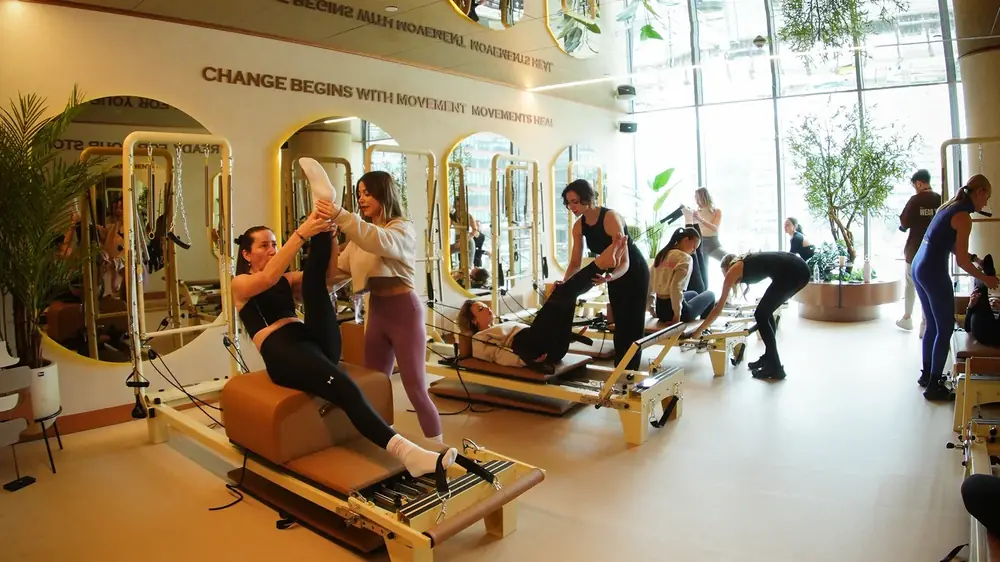
A Glossary of Reformer Pilates Terms: Footwork, the Hundred, Long Stretch and More
A comprehensive glossary covering the meanings of terms you will often hear in a reformer Pilates class, such as footwork, the hundred and long stretch, which muscles they work and tips for performing them correctly.

How Many Days a Week Should You Do Reformer Pilates? Programme Recommendations by Level
Concrete programme recommendations for beginner, intermediate and advanced levels on how many days a week to do reformer pilates, with tips on recovery, goals and weekly planning.
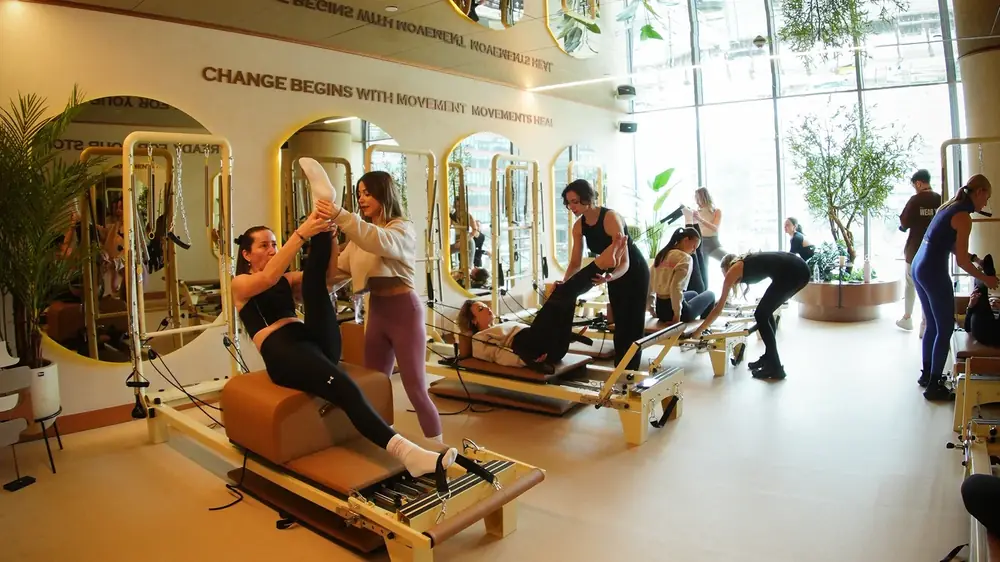
Reformer Pilates for Poor Posture: Movements for Kyphosis and Lordosis
We explain the reformer movements that target kyphosis and lordosis in the Pilates approach to poor posture, a weekly programme and the points to watch out for.
