
What is vinyasa yoga? The basics of linking breath and movement
The answer to the question of what vinyasa yoga is lies in flowing sequences of movement synchronised with the breath. We explain the basic principles, an example class and who it suits.
If you have been invited to a yoga class with the word “flow”, you are most likely faced with vinyasa yoga. The shortest answer to the question of what vinyasa yoga is runs as follows: a dynamic yoga practice in which every movement is matched to a breath and the poses are linked by uninterrupted transitions. In this article we cover in detail the basic principles of vinyasa yoga, the flow of a typical class, the breathing technique and who this style suits.
The meaning of the word vinyasa
The word “vinyasa”, of Sanskrit origin, roughly means “to place in a special order”. In the context of yoga, this refers to the movements being arranged not at random but in a particular order and flow in harmony with the breath. While there may be longer pauses between poses in classical hatha yoga classes, in vinyasa classes the transition from one pose to the next itself becomes part of the class. For this reason, vinyasa can be described as “a moving meditation” rather than a set of static poses.
Synchronising breath with movement
The most distinctive feature of vinyasa yoga is that breath and movement are matched one to one. The general rule can be summarised as follows: you breathe in as the body opens or moves upwards, and out as the body closes or folds forward. This matching both gives the movements a natural rhythm and makes it easier to focus the mind on the movement at hand. The breathing technique used is generally called “ujjayi breath”; this form of breathing, taken in and out through the nose with the throat slightly narrowed, producing a soft friction sound, both supports warming up and helps maintain focus throughout the practice.
The structure of a typical vinyasa class
Vinyasa classes are generally built on a similar skeleton, although the details may vary from trainer to trainer:
- Centring (5 min): A few minutes focusing on the breath in a seated or supine position, with the intention of the class being set.
- Warm-up (10 min): The spine is mobilised with the cat-cow movement, hip circles and light waist rotations.
- Sun salutation series (10-15 min): The body is warmed by repeating standing forward folds, plank, chaturanga (low push-up position) and upward and downward facing dog poses.
- Main section (15-20 min): Warrior series, balance poses (tree, half moon), waist rotations and, if appropriate, movements entering inversions are added.
- Cool-down and relaxation (10-15 min): The class is completed with seated forward folds, hip-opening poses and full supine relaxation (savasana).
A comparison: vinyasa and other types of yoga
| Feature | Vinyasa yoga | Deep stretch (yin) yoga | Budokon yoga |
|---|---|---|---|
| Pace | Medium to high, flowing | Low, long holds | Moderate to high |
| Main focus | Cardio, strength, coordination | Fascia, relaxation | Agility, floor movements |
| Breath emphasis | Active, leads the movement | Passive, in the background | Active, variable |
For a more comprehensive comparison of the general types of yoga, yoga and mobility you can browse the articles in our category.
The possible benefits of vinyasa yoga
- Cardiovascular stimulus: Continuous movement can raise the heart rate moderately and support endurance.
- Muscular endurance: Transition movements such as plank and chaturanga work the upper body and core muscles again and again.
- Coordination: Matching breath and movement develops timing and body awareness.
- Flexibility: Repeated transitions can gradually increase joint range of motion.
- Mental focus: The constantly changing sequence makes it harder for the mind to wander and so supports focus on the present moment.
Level and modification variations
Vinyasa classes generally maintain the “flow” tempo while also allowing individual modifications. For example, if the chaturanga (low push-up) movement is challenging, an easier version can be done by lowering the knees to the floor. If the upward facing dog pose feels uncomfortable for the lower back, it can be replaced with the cobra pose. Using wall support in balance poses (tree, half moon) increases confidence for beginners. For experienced participants, meanwhile, difficulty can be increased by adding jumps to the transitions (jump-back, jump-through). Trainers ask about levels at the start of the class and suggest these modifications.
Common mistakes
- Breathing out before or after the movement: Breath and movement not being synchronised disrupts the rhythm of the flow and can increase fatigue.
- Letting the shoulders drop in chaturanga: This can cause unnecessary stress in the shoulder joint; the elbows should be kept close to the body.
- Skipping the warm-up: Starting intense transitions directly with cold muscles increases the risk of strain.
- Forcing the pace: Losing the correct alignment of a pose while trying to keep up with the flow can lead to joint problems in the long run.
Who it is not suitable for / who should approach it carefully
People with wrist, shoulder or elbow problems should be careful in weight-bearing transitions such as chaturanga and plank and should prefer modified versions on the knees if necessary. Those with high blood pressure or a heart condition should know to take a break in high-tempo classes and should consult their physician. During pregnancy, movements that put pressure on the abdomen and deep waist rotations should be modified or removed; in this case it is important to consult your physician.
How is progress measured?
Progress in vinyasa yoga can be tracked through functional indicators such as being able to complete the sun salutation series with less fatigue, the time held steady in balance poses lengthening, and increased shoulder and core control in the chaturanga transition. In addition, the breath being interrupted less throughout the movement is a sign of the depth of your practice. Observing these indicators every few weeks helps you understand in which areas you are developing.
An example 4-week adjustment plan
- When starting a new family membership, the first month matters for everyone to find their own rhythm: Attending once a week; the focus is on the basic sun salutation sequence.
- Everyone tries the different studios with the complimentary facility tour and trial session. Attending twice a week; attention is paid to the balance poses.
- Each person identifies the 1-2 classes they prefer and gets into the habit of booking. Attending twice a week; breath-movement synchronisation is observed consciously.
- Planning an activity you can all join (a weekend swim or a group class together, for example). Attending 2-3 times a week; fluency and endurance in the transitions are assessed.
Equipment and clothing recommendations
No special equipment is needed for vinyasa classes; the mat is provided by the studio. Since it is a class with a high rate of sweating, breathable clothes in flexible fabrics are recommended. Non-slip socks or taking part barefoot supports balance and safety in plank and transition movements. Having your water bottle with you will be useful during short breaks in class.
Combining it with other classes
Because of the cardiovascular and muscular fatigue effect of vinyasa yoga, it is generally more comfortable to plan it on a separate day rather than combining it on the same day with an intense reformer pilates or strength session. Adding a class after the vinyasa class deep stretch yoga or stretching can contribute to the muscles' recovery. For recovery strategies, recovery guide you can take a look. For more information about the general types of yoga, our category page .
The vinyasa yoga experience at O’Wellness Sky
O’Wellness Sky operates over an area of 1,800 m² in the Skyland Istanbul complex in Sarıyer; the vinyasa yoga classes take place in the O’Soul studio. For the weekly programme and class times, weekly schedule our page, and for information about our trainer team, trainers you can review our page. We offer a free facility tour and a one-day trial session before membership; this way you can experience the vinyasa class before joining. For information about the general types of yoga, our guides .
The basic poses used most often in class
Getting to know some of the basic poses repeated in a vinyasa class makes it easier to follow the flow. In the downward facing dog pose the hands and feet press into the floor and the hips are pushed upwards so that the body takes an inverted V shape; this pose supports shoulder and calf flexibility. In the warrior poses the front knee bends to close to 90 degrees while the back leg is kept straight, which requires leg strength and balance. In the upward facing dog pose the chest opens forward and upward while the legs lift off the floor; this movement supports lengthening of the spine. Performing these poses with correct alignment both increases their effectiveness and reduces the risk of injury.
Vinyasa yoga and stress management
Despite being in constant movement, vinyasa yoga can also have a mentally calming effect thanks to the continuous attention given to the breath. Synchronising the movements with the breath makes it easier for the mind to move away from daily worries and focus on the movement at hand. The savasana (full relaxation) section at the end of the class is a special period of time set aside for the nervous system to calm down, and not skipping this part is important in completing the overall benefit of the class.
Suggestions for home practice
For those who want to do a short vinyasa practice at home between studio classes, we can share a few suggestions: a short sun salutation series of five to ten minutes can be added to a morning routine. A flat, non-slip surface should be chosen and a mat used. Having learned the correct alignment under a trainer's supervision in the studio before repeating a newly learned movement at home increases the safety of home practice. If shoulder or wrist pain is felt, the movement should be stopped immediately and shared with the trainer in the next class if necessary.
Frequently asked questions
Is vinyasa yoga suitable for beginners?
Yes, although the tempo is faster than in some other types of yoga. Beginners can take part in the class using modified versions and taking breaks when needed; trainers give guidance on this.
What is the difference between vinyasa yoga and hatha yoga?
In hatha yoga, poses are generally held for longer and the transitions are slower. Vinyasa, on the other hand, links poses with flowing transitions synchronised with the breath, which creates a more dynamic tempo.
Does vinyasa yoga help with weight loss?
Vinyasa yoga can provide a moderate level of calorie expenditure and contribute to a generally active lifestyle, but it should not be regarded as a weight loss method on its own; it should be considered together with nutrition and your overall activity level.
Why should O’Wellness Sky be chosen for a vinyasa yoga class in Sarıyer?
Regular vinyasa yoga classes are offered in our O’Soul studio at Skyland Istanbul; with certified trainers and the other types of yoga in the weekly programme, you have the chance to vary your practice.
What should I eat before vinyasa yoga?
Eating a light meal 1.5-2 hours before the class can reduce any feeling of discomfort during the dynamic movements. Taking part on an empty or very full stomach can cause dizziness or discomfort in some participants.
Conclusion
The answer to the question of what vinyasa yoga is can be summarised briefly as follows: a type of yoga made up of flowing transitions synchronised with the breath that engages both body and mind. With the right modifications it can be adapted to participants of almost any level and, with regular practice, can offer both physical and mental benefits. The soundest approach is to try a few classes, observe how your own body responds to this flow and ask your trainer for feedback when needed.
To begin your vinyasa yoga experience, plan your free trial day on our contact page.
Related posts

Breathwork and Training Performance
What is breathwork and how does it affect performance? Diaphragmatic breathing, nasal breathing, box breathing and use before and after training.
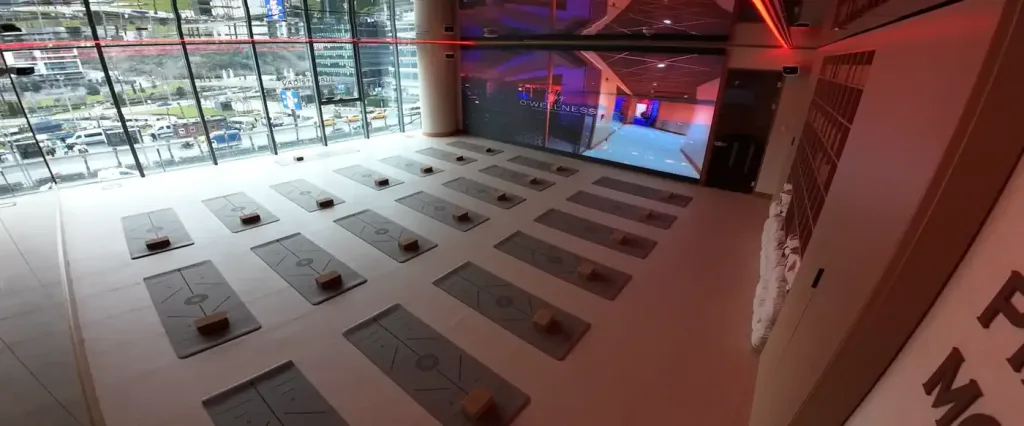
A yoga class in Sarıyer: the weekly schedule at the O’Soul Studio
For anyone looking for a yoga class in Sarıyer, we explain the weekly yoga schedule at O'Wellness Sky's O'Soul Studio, the types of class and details of the facility.
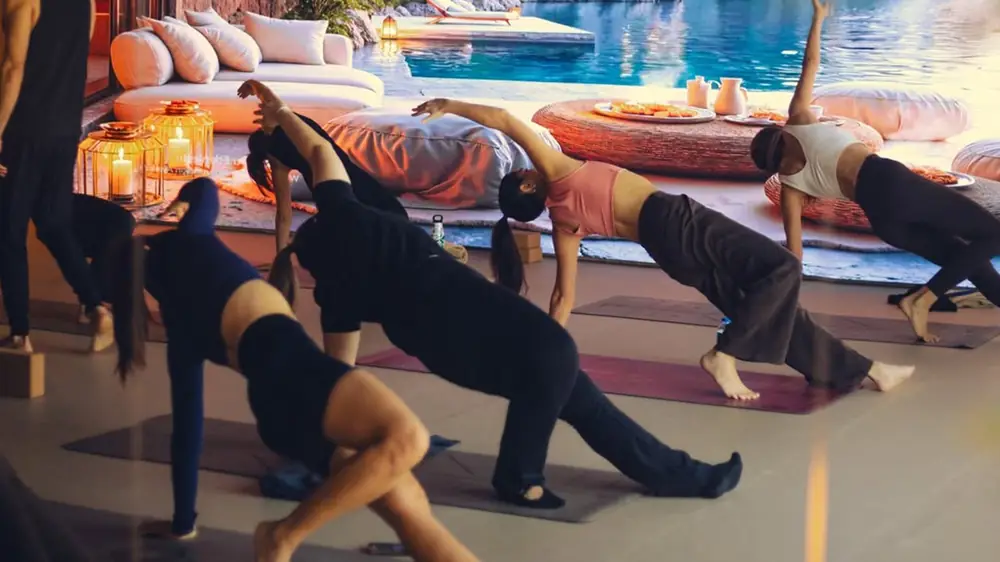
Breathing Techniques (Pranayama): A Guide to Performance and Calm
Breathing exercises (pranayama) support both athletic performance and everyday calm. We explain the basic techniques step by step, their benefits and what to watch out for.
