
Breathing Techniques (Pranayama): A Guide to Performance and Calm
Breathing exercises (pranayama) support both athletic performance and everyday calm. We explain the basic techniques step by step, their benefits and what to watch out for.
Breathing is an automatic act, but how you breathe directly affects your performance and your stress levels. Breathing exercises (pranayama) are techniques coming from the yoga tradition but providing benefits across a wide range, from athletic performance to everyday calm. In this article we explain the four most commonly used techniques step by step and look at which to choose in which situation and the points to watch for.
The physiological basis of breathing techniques
The rate and depth of breathing affect heart rate, blood pressure and the overall level of arousal through the autonomic nervous system. While rapid and shallow chest breathing generally activates the sympathetic (fight-or-flight) system, slow and deep diaphragmatic breathing brings the parasympathetic (rest-and-digest) system into play. Most breathing techniques aim to steer that mechanism consciously. This general physiological information does not mean the treatment of any medical condition; if you have a respiratory condition it is important to consult your doctor.
1. Diaphragmatic breathing (belly breathing)
Diaphragmatic breathing, which forms the basis of all breathing techniques, is deep breathing done with the abdomen expanding and contracting rather than the chest.
- Lie on your back or sit upright, with one hand on your chest and the other on your abdomen.
- Breathe in slowly through the nose; feel the hand on your abdomen rise and the hand on your chest stay relatively still.
- Breathe out slowly through the mouth or nose and feel the abdomen soften gently inwards.
- Continue at that rhythm for 5-10 minutes.
When to use it: At any moment of the day, particularly before stressful situations or while falling asleep.
2. Box breathing
Box breathing, also popular in military and athletic circles, is a simple but effective technique consisting of four equal phases.
- Breathe in through the nose for a count of 4.
- Hold the breath for a count of 4.
- Breathe out slowly for a count of 4.
- Stay without breath for a count of 4 (lungs empty).
- Repeat that cycle 4-8 times.
When to use it: To increase mental focus before an intense workout, a presentation or a stressful task.
Modification: If the breath-holding phases feel uncomfortable, reduce the count to 3 or remove the holding phases entirely and focus only on the rhythm of 4 in and 4 out.
3. Nadi shodhana (alternate nostril breathing)
This technique is a traditional yoga practice aimed at balancing the nervous system.
- Take a comfortable seated position and fold the index and middle fingers of the right hand into the palm.
- Close the right nostril with the right thumb and breathe in through the left nostril.
- Close the left nostril with the ring finger, release the right thumb and breathe out through the right nostril.
- Breathe in through the right nostril, then close the right nostril and breathe out through the left.
- Repeat that cycle 5-10 times.
When to use it: In situations where mental clarity and a sense of balance are sought, generally at the start of a yoga class or before meditation.
4. Extended exhalation (the 4-7-8 technique)
This technique, frequently recommended before sleep and in moments of acute stress, makes the exhalation markedly longer than the inhalation.
- Breathe in through the nose for a count of 4.
- Hold the breath for a count of 7.
- Breathe out slowly through the mouth for a count of 8.
- You can start with 4 repetitions and build up to 8 over time.
Modification: If the holding phase creates dizziness, halve the counts (2-3.5-4) or skip the holding phase and focus only on a long exhalation.
A comparison of the techniques
| Technique | The main effect | The suitable time |
|---|---|---|
| Diaphragmatic breathing | General calming, a basic skill | Any moment |
| Box breathing | Focus, performance preparation | Before a workout/presentation |
| Nadi shodhana | Mental balance | Meditation, the start of a class |
| The 4-7-8 technique | Deep relaxation | Before sleep, acute stress |
Breathing for performance: use in athletes
Breath control is a skill critical not only for calming down but also for performance. Breathing out at the right moment while lifting a heavy set (generally at the moment of strain) helps manage intra-abdominal pressure. Breathing rhythmically in cardio-weighted classes can delay tiring early. Breathwork is therefore practised directly alongside movement in classes such as vinyasa yoga and budokon yoga it is practised directly along with the movement in classes such as these.
Common mistakes
- Breathing only with the chest: Shallow chest breathing limits the calming effect on the nervous system; pay attention to the movement of the abdominal area.
- Forcing the technique too much: Trying to hold the breath for longer than necessary can create dizziness or discomfort; progress gradually.
- Choosing the wrong technique at the wrong time: Extended exhalation should be preferred over techniques that can be stimulating, such as box breathing before sleep.
- Irregular practice: Short daily repetitions (5 minutes) give a more lasting result than one long session a week.
Who needs to take care?
In cases of respiratory conditions such as asthma or COPD, a history of panic attacks or uncontrolled high blood pressure, techniques involving breath holding (such as box breathing and 4-7-8) should be practised with care or tried with a doctor's approval. Avoiding long breath-holding phases during pregnancy is generally recommended; in such cases it is safer to practise the technique with the holding phases removed, after consulting your doctor.
A 4-week breathwork plan
| Week | The focus technique | Duration |
|---|---|---|
| 1 | Diaphragmatic breathing | 5 min a day |
| 2 | Diaphragmatic + box breathing | 5-8 min a day |
| 3 | Adding nadi shodhana | 8-10 min a day |
| 4 | Choosing the technique by situation (performance/sleep) | 10 min a day |
How do you measure progress?
Progress in breathwork generally shows itself in a decrease in your breaths per minute, in being able to lengthen your breath hold comfortably and in being able to remember and apply the technique spontaneously in stressful everyday moments. Some people track their progress concretely by noting their comfortable breath-hold times each week with a stopwatch.
Breathwork inside and outside class
Breathing techniques are best learned alongside movement in a guided setting. Breath-movement coordination is covered regularly in the balanced yoga and deep stretch yoga classes at O’Wellness Sky. For general recovery and calming strategies, recovery guideand for the class schedule see guide to group classes .
Breath-focused practice in Sarıyer
The O’Soul studio at O’Wellness Sky in Skyland Istanbul offers a calm atmosphere suited to yoga and breathwork. For employees in the Maslak and Ayazağa area with a busy work schedule, a short breathing and yoga session at lunchtime is a practical option for getting through the rest of the day with a calmer mind.
The relationship between breath and posture
The quality of your breathing is directly connected to your posture. Rounded shoulders and a collapsed rib cage can physically limit the diaphragm from working at full capacity, which can make shallow chest breathing a habit. That pattern is frequently seen in people who work sitting at a desk for long periods. Shoulder-opening and chest-stretching movements are a complementary step that increases the effectiveness of breathing techniques; it can therefore be useful to do a few minutes of movements opening the shoulder and chest area before starting breathwork.
Being practicable anywhere, without equipment
One of the greatest advantages of breathing techniques is that they require no equipment at all; they can be done unnoticed in the office, on public transport, even during a meeting. Box breathing, for example, requires no visible movement and so can be done quietly even while sitting at your desk before a stressful presentation. That accessibility makes breathwork easier to integrate into everyday life than many other types of exercise.
Keeping a breathing journal
A simple journal can be useful for those who want to see the effect of their breathwork concretely. You can note down each day which technique you practised, for how many minutes, and the level of tension or calm you felt before and afterwards on a scale of 1-10. Looking back at those records after a few weeks helps you clarify which technique is most effective for you and maintains your motivation.
Common misconceptions
| The misconception | The reality |
|---|---|
| “Breathing exercises are only needed for meditation” | They have a wide range of uses, from athletic performance to sleep quality. |
| “The longer I hold it the more effective it is” | Forcing it provides no benefit and can on the contrary create dizziness and discomfort; gradual progression is essential. |
| “There is one correct technique” | Different techniques serve different purposes; choosing the technique to suit the situation matters. |
| “Results come immediately” | Conditioning the nervous system takes time; marked benefits are seen within weeks with regular practice. |
The difference between a group class and individual practice
Although breathwork done individually at home is practical and accessible, learning it alongside a trainer in a guided group class is valuable in terms of consolidating the correct technique. The trainer can notice the moments at which your breathing stays shallow or creates tension and give immediate feedback, which makes it easier to correct habits that are hard to notice alone at home. We therefore recommend that beginners learn the basic techniques in a yoga class first and then repeat them independently at home. Over time, breathing practice in class and individual work at home turn into a complementary cycle that feeds itself, and the techniques start to become a natural habit rather than a conscious effort.
Long-term expectations
Those who benefit most from breathing techniques are generally the ones who keep up short daily practices for at least eight to twelve weeks. Over that period, a gradual easing is observed in both your resting breathing rate and your response to stressful situations. A patient and regular approach provides far more lasting results than one-off long sessions.
Frequently asked questions
How many times a day should I do breathing exercises?
Short sessions of 5-10 minutes once or twice a day are generally more effective than a single session at long intervals; regularity matters more than duration.
I feel dizzy while holding my breath - is that normal?
Mild dizziness can occur in beginners; in that case shorten the holding times or remove the holding phase entirely. If it is severe, stop the technique and return to normal breathing.
Does pranayama replace meditation?
Breathwork is an important component of meditation but on its own does not cover all the dimensions of meditation; the two are generally practised together.
Which class can I learn breathwork in in Sarıyer?
Breathing techniques are covered alongside movement in all the yoga classes at O’Wellness Sky; the balanced yoga and deep stretch yoga classes in particular set aside more time for breath awareness.
I have a respiratory condition - can I do breathing exercises?
If you have a condition such as asthma or COPD, it is important to consult your doctor before trying techniques involving breath holding in particular; many techniques can be modified and practised safely.
To try a yoga programme including breathwork, enquiry form fill in the form and let us plan the class times that suit you.
Related posts
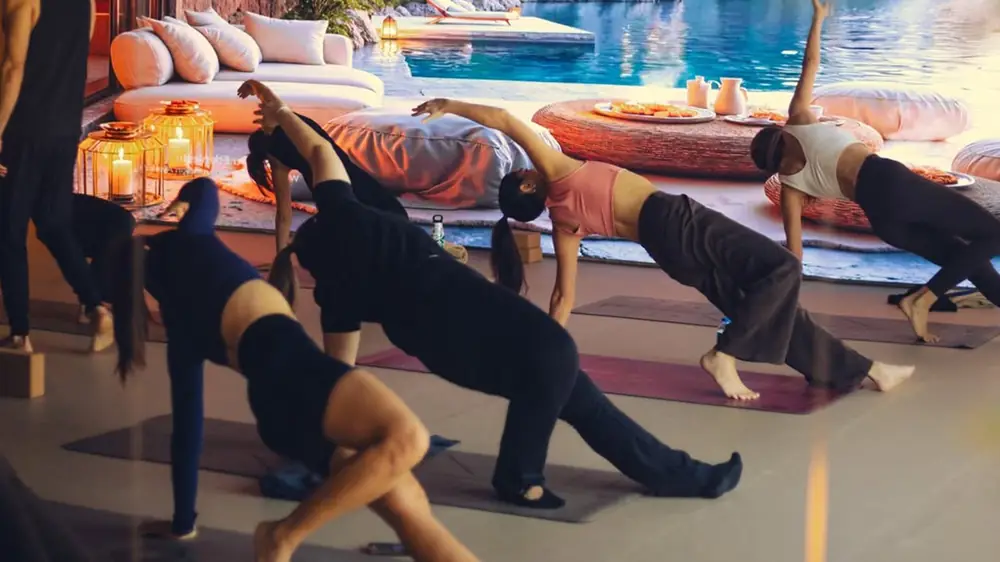
What is vinyasa yoga? The basics of linking breath and movement
The answer to the question of what vinyasa yoga is lies in flowing sequences of movement synchronised with the breath. We explain the basic principles, an example class and who it suits.
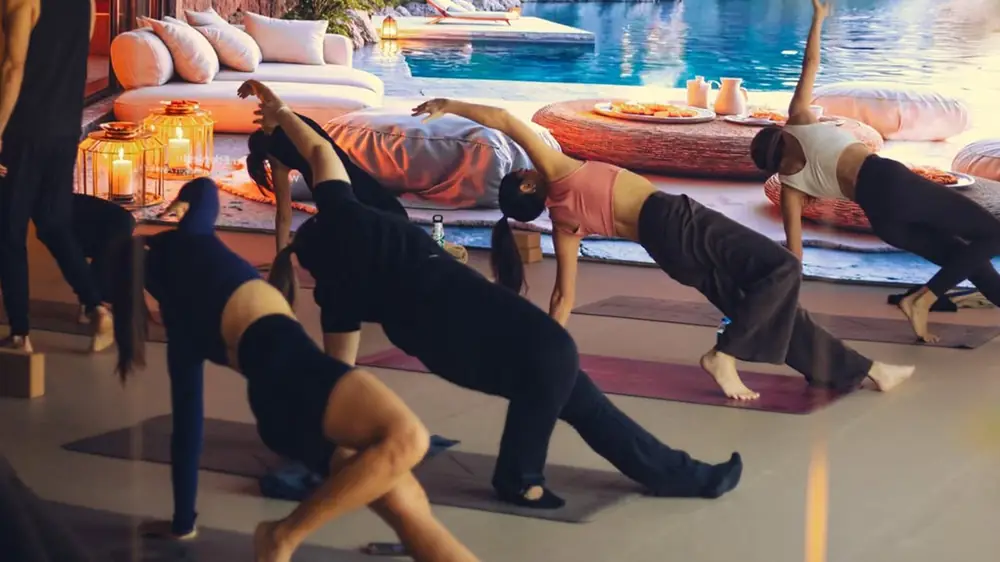
Side Bends in Yoga: The Forgotten Side Line of the Trunk
In daily life we bend forward and lean back, but we rarely reach to the side. We explain what side bends add to the trunk, the basic poses, and how to reach without crushing the ribs.

Hammock (aerial) yoga: the benefits of inversions, and safety
The benefits of hammock yoga lie in the inversions and spine-lengthening movements performed with the support of fabric suspended from the ceiling. We explain the basic principles, the safety rules and who it suits.
