
Deep stretch (yin) yoga: fascia, connective tissue and long holds
The answer to the question of what yin yoga is: a calm practice focused on the fascia and connective tissue rather than the muscles, in which postures are held still for minutes. We explain the benefits and the principles of practice.
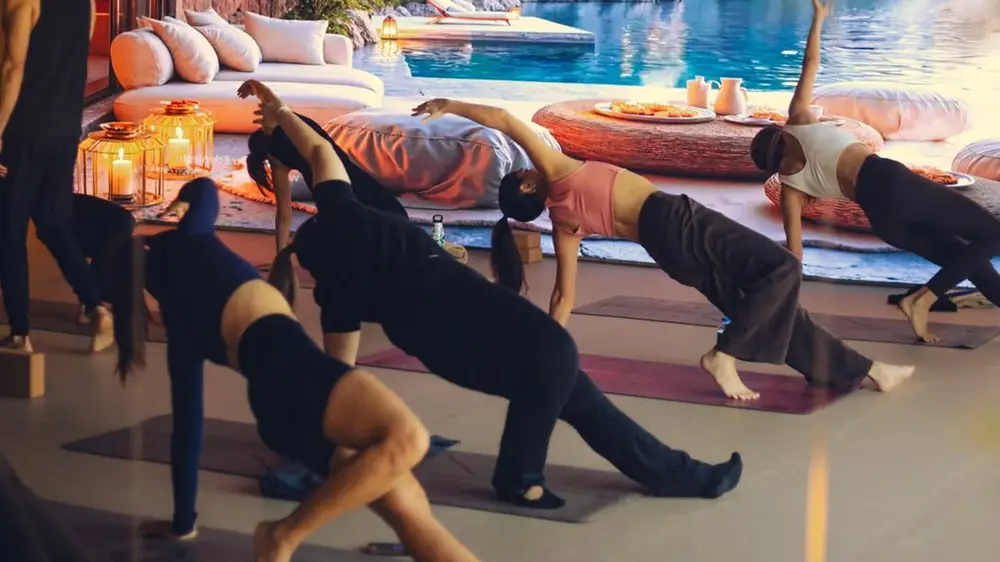
The room is dimly lit, and participants stay motionless for minutes at a time on the floor in positions supported by blankets and blocks; the scene looks more like a rest session than a fast-paced exercise class. This is exactly where the answer to the question of what yin yoga is lies: a calm practice that focuses not on muscle strength but on fascia and connective tissue, in which postures are gently held for long periods of 2-5 minutes. In this article, we cover how deep stretch (yin) yoga works, its physiological rationale, its benefits and who it is suitable for.
What is yin yoga, and how does it differ from other types of yoga?
“Yang” classes such as vinyasa or budokon actively work the muscles, generate heat and involve dynamic movements. Yin yoga takes the exact opposite approach: the muscles are relaxed as much as possible, and the posture is deepened passively with the help of body weight and gravity. The aim is to work not so much the muscle tissue as the ligaments, tendons and fascia (the network of connective tissue that surrounds the muscles and organs) around the joints. These tissues respond much more slowly than muscles; for this reason, the posture needs to be held for a long time for an effective stretch.
Basic information on fascia and connective tissue
Fascia is a network of connective tissue that surrounds and links the muscles, bones and organs in the body. Regular inactivity, repeated postural problems or injuries can over time lead to stiffening and adhesions in the fascia. Yin yoga postures, by stretching these tissues gently and over long periods, are thought to contribute to an increase in range of motion over time. This effect follows a different mechanism from muscle stretching and therefore calls for a different hold time and approach.
The flow of a typical yin yoga class
- Centring (5 min): Seated or lying on your back, you settle into the tempo of the class by focusing on the breath.
- First series of postures (15-20 min): Lower-body-focused postures such as butterfly pose and seated forward fold are each held for 2-4 minutes.
- Hip-opening postures (15 min): Postures targeting the hip area, such as thread the needle and pigeon, are practiced.
- Back and spine postures (10-15 min): Gentle spinal twists and back-lengthening postures are added.
- Full relaxation (10 min): The class ends with a long relaxation on your back, supported with blankets and cushions.
Comparison: yin yoga and yang-style classes
| Feature | Yin yoga (deep stretch) | Vinyasa / Budokon yoga |
|---|---|---|
| Muscle condition | Loose, passive | Active, engaged |
| Hold time | 2-5 minutes | A few seconds to minutes |
| Main target tissue | Fascia, ligaments, tendons | Muscles, cardiovascular system |
| Heat generation | Low | Moderate to high |
The potential benefits
- Fascia and connective tissue flexibility: Long holds may contribute to an increase in joint range of motion over time.
- Deep relaxation: Passive postures may help activate the parasympathetic nervous system and create a general sense of calm.
- Support for recovery: It may help reduce tension around the muscles and joints after intense workouts.
- Awareness: Paying attention to bodily sensations during long holds may improve overall body awareness.
- Sleep quality: A yin yoga practice in the evening hours may help some participants fall asleep more easily.
Level and modification variations
There is no single “correct” form in yin yoga postures; every body feels a comfortable stretch at a different distance. For participants with limited flexibility, the posture can be raised or shortened by adding supports such as a blanket, block or cushion. For example, placing a cushion under the knees in butterfly pose provides comfort for those with limited hip opening. For more flexible participants, the depth of the posture can be increased by reducing the supports. What matters is that the tension stays at an “intense but tolerable” level; you should never be pushed to a point where you feel sharp pain.
Common mistakes
- Trying to keep the muscles active: Yin yoga is a passive practice; tensing the muscles in order to stretch them keeps the stretch from reaching the tissue it is meant for.
- Leaving the posture too early: Because fascia and connective tissue take time to respond, leaving the posture after 30 seconds may not provide enough effect.
- Pushing your pain threshold: The sensation you should feel in yin yoga is an intense but not uncomfortable stretch; sharp pain is a warning sign.
- Holding your breath: Letting the breath flow slowly and evenly during long holds helps the tissues relax; holding your breath interferes with this process.
Who it is not suitable for / who should approach it carefully
People with joint hypermobility (excessive flexibility) should be careful in the deep stretches of yin yoga so as not to lose joint stability, and should keep their range of motion limited. People with an acute joint injury, severe osteoporosis or recent joint surgery should consult their physicians before starting classes. During pregnancy, some deep hip-opening postures should be modified or omitted; it is important to consult your physician about this.
How is progress measured?
In yin yoga, progress is measured not by increases in strength or speed but by comfort and range of motion: indicators you can track include intense tension felt earlier in a posture easing over time, being able to move into a deeper version of the same posture, or the sense of relief after the posture deepening. This progress is usually noticed gradually over weeks or months.
Using props
Yin yoga classes make extensive use of supportive equipment such as blocks, blankets and cushions. A block closes the distance that the hand or trunk cannot reach, making the posture safe. A blanket placed under the knee or hip reduces pressure on the joint. A cushion in lying postures gently supports the rib cage and helps relax the shoulder and neck area. This equipment is provided to participants in our studio.
Combining it with other classes
The recovery-focused nature of yin yoga makes it well suited to practice after an intense reformer pilates, vinyasa yoga or is very well suited to follow a strength training day. Hammock yoga when planned together with it, a comprehensive recovery day can be created that targets both fascia and spinal ease. For detailed information on recovery strategies, recovery guide .
A sample 4-week usage plan
- When starting a new family membership, the first month matters for everyone to find their own rhythm: Once a week, focusing mainly on lower-body postures.
- Everyone tries the different studios with the complimentary facility tour and trial session. 1-2 times a week; hip-opening postures are added and hold time is gradually increased.
- Each person identifies the 1-2 classes they prefer and gets into the habit of booking. Twice a week; the program is expanded by adding back and spine postures.
- Planning an activity you can all join (a weekend swim or a group class together, for example). Twice a week; scheduled right after intense training days to observe the recovery effect.
Getting here from Sarıyer and the surrounding area
Yin yoga is one of the classes that benefits you most in the evening hours; because it calms the nervous system, it is preferred by those who want to shed the tension of the workday. Since our facility in Skyland Istanbul is open until 23:00 on weekdays, members leaving offices in and around Maslak can attend class without waiting out rush hour.
The deep stretch (yin) yoga experience at O’Wellness Sky
O’Wellness Sky serves members in a 1,800 m² space in the Skyland Istanbul complex in Sarıyer; deep stretch yoga classes are held in the O’Soul studio. For the weekly schedule, weekly schedule page, and for our team of trainers, our trainers page. We offer a free facility tour and a one-day trial session before membership; for membership details, take a look at our membership page.
Breathing technique and mental approach
During yin yoga, the breath is kept as slow, deep diaphragmatic breathing. The first 30-60 seconds of each posture are usually when the tension is felt most intensely; focusing on the breath during this time helps the mind move away from the sensation of discomfort and allow relaxation. Over time, a stretch of the same intensity starts to feel less uncomfortable; this is a sign of both physical adaptation and mental tolerance. For some participants, long holds may feel boring or unsettling at first; this reaction is normal and tends to fade with regular practice.
Group class or one-to-one?
Yin yoga is practiced mostly in a group format, which offers a shared relaxation experience in a calm environment. If you have a particular joint problem or injury history, it can be helpful to take the first few classes one-on-one to learn modifications specific to you. For individual needs, special services one-to-one sessions can be planned within it.
Membership and the trial process
No special package is needed to attend deep stretch yoga classes; group classes are included in all memberships. The quickest way to find out whether the yin practice suits you is to attend the free trial session we offer before membership. Package details are on our membership page.
Conclusion
The answer to the question of what yin yoga is can be summed up briefly as follows: a calm type of yoga that focuses on fascia and connective tissue, in which postures are held still for minutes, aiming at deep relaxation and range of motion. It can be considered a complement to intense training programs or a stand-alone stress management tool. Practiced with a patient and regular approach, it can provide noticeable relaxation both physically and mentally; for this reason, you may want to seriously consider adding it regularly to your weekly training program.
Frequently asked questions
What is the difference between yin yoga and classic stretching?
Classic stretching generally focuses on the muscles and is held for shorter periods. Yin yoga targets fascia and connective tissue and requires postures to be held passively for much longer periods, around 2-5 minutes.
Is it normal to feel pain during yin yoga?
An intense but tolerable sensation of stretching is normal; however, sharp, stabbing pain is not normal, and in that case you should come out of the posture right away.
How long does yin yoga last?
Classes usually last 60-75 minutes; within this time each posture is held for 2-5 minutes, with short transition breaks between postures.
Why choose O’Wellness Sky for a deep stretch yoga class in Sarıyer?
Regular deep stretch (yin) yoga classes are offered in our O’Soul studio in Skyland Istanbul; you can complete the recovery component of your intense training program in the same facility.
I have joint hypermobility; can I do yin yoga?
People with joint hypermobility should be careful in the deep stretches of yin yoga and keep their range of motion limited; it is important to let your instructor know about this before class.
After a busy week, giving your body and mind this kind of slowing-down space is an important part of building a sustainable training routine in the long run. We recommend trying a few classes to find your own rhythm.
To begin your deep stretch (yin) yoga experience, plan your free trial day on our contact page.
Related posts

Yoga and sleep quality: evening practices and a 20-minute routine before bed
Yoga for sleep supports sleep quality through gentle movement and breathing techniques that calm the nervous system. We explain a 20-minute practice suited to an evening routine and the points to watch out for.
Monday Morning Mobility: A 15-Minute Flow for Starting the Week Gently Instead of Abruptly
After a sedentary or busy weekend, Monday morning can find the body stiff and the mind scattered. A simple mobility flow for an easy start to the week.

A guide to yoga: types, benefits and choosing the right class
Different types of yoga serve very different goals. We explain the differences between vinyasa, budokon, hammock, deep stretch and balanced yoga, their benefits and how to choose the class that suits you.
