
Reformer Pilates for Runners: Hip Stability and Injury Prevention
We look at the role of reformer Pilates for runners in hip stability, core control and preventing common running injuries, with examples of how it is applied in Skyland Istanbul.
A beginner runner and a marathoner who has run regularly for years both face a similar reality: as the miles mount up, the body's weak points come to the fore. In a single running stride, several times your body weight is transferred to the ground through one leg, and that cycle repeats for kilometres. If the stabilising muscles around the hip are not strong enough, the knee drops inwards, the pelvis shifts sideways, and those small deviations turn over time into overuse injuries in the knee, hip or lower leg. The Pilates approach for runners aims precisely at closing that stability gap. In this article we explain how reformer Pilates contributes to running performance and injury prevention, which movements stand out and how to integrate the programme into your running training.
The weak links most commonly seen in runners
Because running is a repetitive forward-and-back movement, the lateral and rotational stabilisers around the hip generally do not get worked enough. Weakness in the gluteus medius leads to the pelvis dropping on the opposite side while running (the Trendelenburg pattern), which results in increased valgus (inward collapse) load on the knee. Likewise, a weak core causes the trunk to rotate slightly with every stride and energy to be used inefficiently. Reformer Pilates plays a complementary role precisely by targeting the lateral and rotational muscles that fall outside the single-plane movement of running.
Why is hip stability so critical?
As you read this section, think about your own running history: an injury you have had in the past usually stemmed not from a single event but from a small imbalance built up over months.
The hip is the joint at the centre of the running chain. The gluteus medius and the deep hip rotators keep the pelvis balanced during the single-leg stance phase. If those muscles are not strong enough, the body develops compensation mechanisms: the lumbar spine moves excessively, the iliotibial band tightens, and pain can develop around the kneecap (patellofemoral pain syndrome). Side-lying leg series on the reformer, standing single-leg squats and footwork variations all strengthen those stabilisers in an isolated, controlled way.
The standout reformer movements for runners
- The side-lying leg series: Targets the gluteus medius and minimus directly and increases pelvic stability.
- Single-leg footwork: Trains ankle-knee-hip alignment on one side at a time and reveals asymmetries.
- Long stretch and plank variations: Develop core and shoulder girdle endurance in a way that supports your running posture.
- Bridge variations with the springs: Strengthen the hip extensors, particularly for the toe-off phase.
Flexibility and tissue quality
Runners often have shortened hip flexors and hamstrings, which limits stride length and places extra load on the lower back. Controlled stretching under load on the reformer (eccentric stretching) is reported to produce more lasting gains in flexibility than static stretching. Longer muscle-tendon units store and return energy more efficiently while running.
Injury prevention: which areas come first?
| A common problem | A possible cause | The reformer focus |
|---|---|---|
| Anterior knee pain (PFPS) | Weak gluteus medius, knee valgus | Side-lying leg series, single-leg footwork |
| Iliotibial band syndrome | Weak hip abductors | Side-lying leg work, bridge variations |
| Achilles tendinopathy | Low calf and ankle load capacity | Tendon range in footwork, controlled extension |
| Lower back pain | Inadequate core control | The hundred, spinal articulation series |
Integrating the reformer into your running programme
Not scheduling reformer Pilates on the same day as your running makes recovery easier. Placing it the day after a long run or on a rest day is a common approach. Two reformer sessions a week are enough to close the stability gap without changing most of your running volume.
- Monday: An easy run
- Tuesday: Reformer Pilates (hip stability focused)
- Wednesday: A tempo run
- Thursday: Rest or Deep Stretch Yoga
- Friday: Reformer Pilates (core and flexibility focused)
- Saturday: A long run
The periods before and after a race
In race week, reformer sessions should be lightened, with the focus on range of motion and relaxation rather than heavy spring resistance. In the recovery week after a race, low-intensity reformer sessions are useful for gently lengthening stiff muscles and supporting blood flow. If fatigue or pain persists, it is important to consult your doctor before continuing to train.
Different priorities by distance
In short-distance runners (5-10 km), the priority is generally speed and power production; the reformer programme can work the hip extensors and core with a focus on explosive power. In middle-distance runners (half marathon), endurance and tissue tolerance to repeated loading come to the fore; in this group the number of repetitions in the footwork and bridge series can be increased. In long-distance runners (marathon and ultra), the most critical factor is maintaining form as it deteriorates over the kilometres, so more emphasis is placed on core endurance and alignment under fatigue. The basic principle is the same in all three groups: hip stability and core control form the foundation of running economy regardless of distance.
The role of footwear and running surface
Reformer work does not change your choice of running shoes or surface, but it can reduce the effect of those factors. In athletes who use minimalist shoes or often run on different surfaces (asphalt, dirt, track), for example, ankle and hip stability becomes more critical; the reformer can help increase that capacity to adapt. Even so, it is important to follow your running coach's recommendations on footwear and rotating surfaces.
How is progress measured?
When working with runners, tracking progress with concrete indicators is the most reliable way of seeing whether the programme is working:
- Single-leg balance time: A longer time standing on one leg with the eyes closed shows that hip and ankle stability are improving.
- Single-leg squat quality: Maintaining knee alignment without inward collapse is a sign that gluteus medius activation has improved.
- The feeling of tightness after running: A reduction in the tightness felt in the iliotibial band or around the front of the knee after running is a practical and noticeable indicator of progress.
- Stride symmetry: Where possible, a reduction in the difference between your right and left stride pattern can be tracked through video analysis or trainer observation.
When these indicators are compared at 6-8 week intervals, the direction the programme is heading in becomes clear.
An example case
For a member who runs 4 days a week and complains of mild pain in the right knee after running, the programme might be built as follows: in the first session, hip abductor strength and single-leg balance capacity are assessed, and a marked difference between the right and left sides is usually observed. For the first four weeks the emphasis is on the side-lying leg series and single-leg footwork with low resistance, with running volume kept steady. After the fifth week, bridge and single-leg squat variations are added. By the eighth week, a reduction in anterior knee pain and a marked increase in single-leg balance time are typically reported; individual results can vary, and a medical assessment is needed if the pain persists.
Equipment and technical details
In the side-lying leg series, keeping the platform still and maintaining a neutral spine is the key to isolating the gluteus medius; when the hip rotates forward or back, the muscle group working changes. In single-leg footwork, the point of contact on the footbar (heel, whole foot or toes) can be changed to load the calf and ankle from different angles; this mimics the phases of the foot contacting the ground while running and brings the small stabilising muscles around the ankle into play too. In bridge variations, keeping the spring at a medium resistance lets the hip extensors work with the right pattern without over-fatiguing.
Who is it not suitable for, or who needs to take care?
In runners with an active stress fracture, an acute hamstring tear or severe joint pain, an exercise programme should not be started directly; a medical assessment should be obtained first. If you feel sharp, stabbing pain during exercise, the movement should be stopped immediately and the trainer informed.
Combining it with other classes
Supporting reformer Pilates with complementary classes rather than leaving it on its own strengthens the results. Mobility & Stretchingfor hip and ankle mobility, O’Ride Cyclefor cardiovascular endurance and Total Body classes balance out your running programme.
Who should take a careful approach?
Runners with a history of stress fracture, an acute tendon injury or ongoing joint pain should have a sports physiotherapist assessment before starting a reformer programme. Where there is pain, range of motion and load should be increased gradually.
Common mistakes
- Only working the core: Runners generally focus on the abdominal muscles and neglect the lateral hip stabilisers, yet most running injuries originate in the hip.
- Using reformer sessions as an excuse to increase running volume: The reformer does not compensate for running volume one for one; it should be planned in a balanced way within your total training load.
- Ignoring pain: Carrying on with a feeling of mild discomfort can turn a small problem into a chronic injury; early intervention is always easier.
The runner's programme at O’Wellness Sky
In our Reformer Pilates In our studio, when working with runners we first assess hip and ankle mobility and then core and glute strength. That assessment lets the programme be built around the individual; two runners rarely have exactly the same weak link. You can build a balanced weekly programme by combining reformer sessions with Mobility & Stretching or O’Ride Cycle classes. You can find the basic principles of the reformer in our What Is Reformer Pilates? article.
Frequently asked questions
Will reformer Pilates increase my running speed?
It is not speed training as such; however, by increasing hip strength and core control it supports stride efficiency, which can indirectly contribute to your performance.
Should I do the reformer before or after running?
If you are going to do it on the same day as a run, choose after the run; ideally, spread your reformer sessions and long runs across different days.
I have knee pain - can I do the reformer while running?
That depends on the cause of the pain. Consult your doctor; it is generally safe to start within a pain-free range of motion and with low resistance.
Why choose O’Wellness Sky for reformer Pilates for runners in Sarıyer?
With certified trainers, small group sizes and sports physiotherapist support under the same roof, we offer runner-specific assessments and programmes. Skyland Istanbul is easy to reach along the Maslak-Sarıyer corridor.
When should reformer Pilates be added to marathon preparation?
Ideally at the start of your race preparation, while your volume is still low. That way hip stability is strengthened before your running volume increases, and injury risk is reduced.
To prevent running injuries, enquiry form fill in the form and have your hip stability assessment done with a free trial session.
Related posts
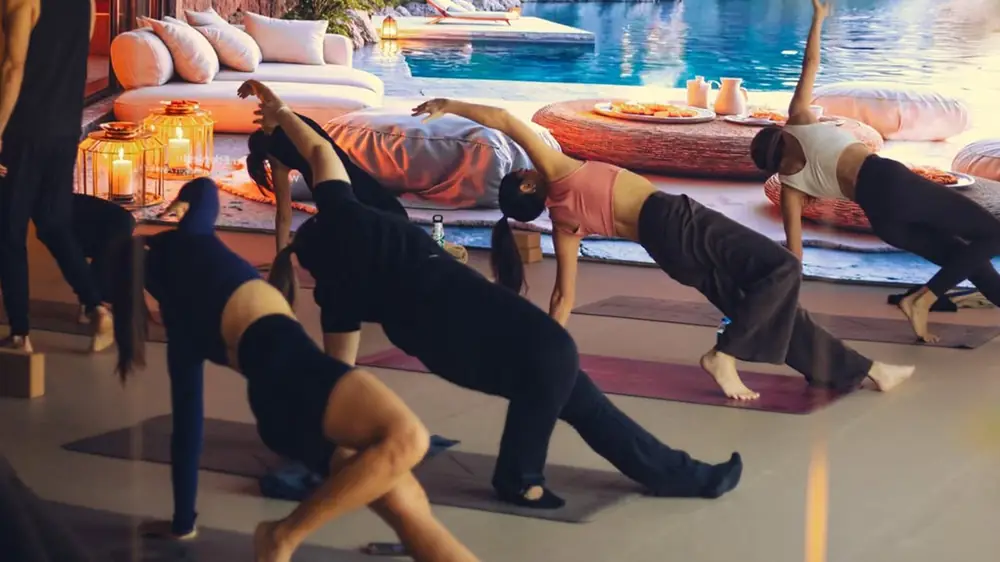
Can reformer Pilates and yoga be done together? An example balanced weekly programme
The answer to the question of whether Pilates and yoga can be done together is yes; you can find an example of a balanced weekly programme combining the different benefits of the two in this article.
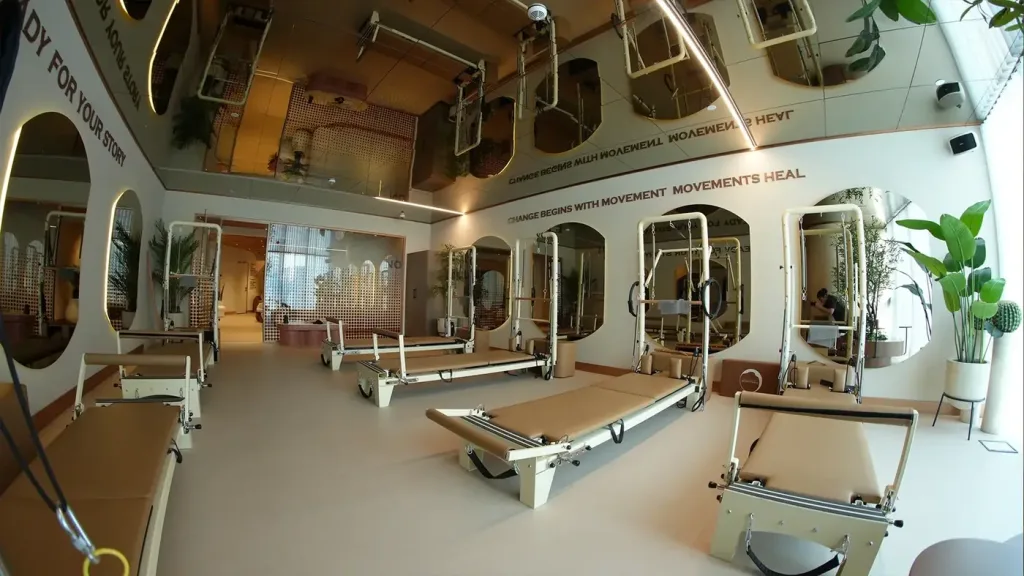
Ten criteria to consider when choosing a reformer pilates studio in Sarıyer
When looking for a reformer pilates studio in Sarıyer, review 10 critical criteria — the number of machines, group size, trainer certification and more — in a comparison table.
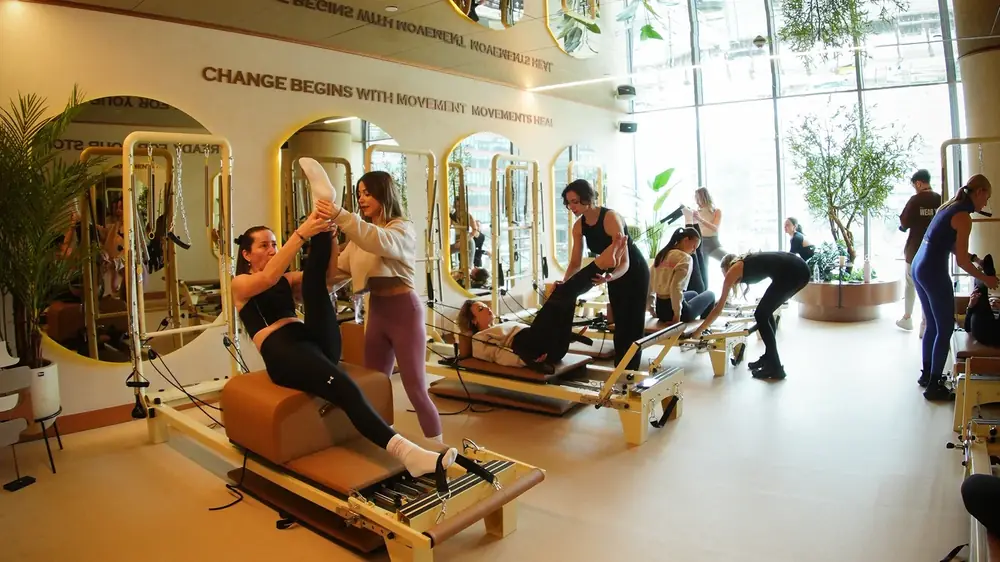
Reformer Pilates for Poor Posture: Movements for Kyphosis and Lordosis
We explain the reformer movements that target kyphosis and lordosis in the Pilates approach to poor posture, a weekly programme and the points to watch out for.
