
Yoga for runners: the hip flexors and hamstrings
Yoga for runners supports performance by increasing hip flexor and hamstring flexibility. We explain which postures to use and when.
Running is a repetitive movement taking place in a single plane, and that can over time lead to shortening in the hip flexors and a build-up of tightness in the hamstring and calf muscles. Yoga for runners balances out that one-directional loading and supports both flexibility and hip-spine coordination. In this article we look at the poses focused on the areas runners most need, when to practise them and how to integrate them into a weekly programme.
The effect of running on the musculoskeletal system
The hip flexors (particularly the iliopsoas) contract with every stride while running and can shorten over time, which makes it harder for the hip to reach full extension and can affect stride length and efficiency. The hamstrings are also exposed to repeated eccentric loading and can become tight. The calf muscles, the Achilles tendon and the plantar fascia, meanwhile, work actively and continuously during the push-off phase. Those three areas are the main points of focus in a runner's yoga programme.
Before running or after?
Dynamic movements should be preferred over long static stretches before running; leg swings, walking hip openers and light lunge transitions raise muscle temperature while also preparing range of motion. Static, deep stretches should be left for after the run and done while the muscle is still warm. A separate yoga session (on a day away from running) is ideal for deeper work with longer holds.
The basic poses for the hip flexors
1. Low lunge (Anjaneyasana)
With the front knee bent at 90 degrees and the back leg extended behind, the hips are pushed gently forward and down. This movement provides an effective stretch for the iliopsoas and quadriceps. Hold for 30-45 seconds on each side.
2. Pigeon pose - modified
With the front leg bent on the floor and the back leg extended behind, the trunk folds forward. It offers a deep stretch for the hip external rotators and flexors. Those with knee sensitivity can practise it with cushion support or in the “threaded strap” variation.
3. Lizard pose
From the low lunge position, the front hand is brought to the inside and the trunk is lowered. This pose targets the hip flexors and the inner thigh muscles together.
The basic poses for the hamstrings
1. Standing forward fold (Uttanasana)
Start with the knees slightly bent and, as the trunk folds forward, gradually straighten the knees according to hamstring tightness. Take care to hinge from the hip without rounding the lower back.
2. Supine leg stretch (with a strap)
In a supine position one leg is lifted with a strap while the other stays extended on the floor. This isolates the hamstring by removing the risk of the lower back rounding.
3. Half standing forward fold (an Ardha Uttanasana variation)
With one foot forward and the other open behind, the trunk folds towards the front leg. This is useful for targeting one-sided hamstring tightness.
For the calves and the soles of the feet
1. Downward-facing dog (Adho Mukha Svanasana)
Lowering the heels gently towards the floor stretches the calf muscles and the Achilles tendon. It can also be done with the knees slightly bent, particularly for those with a lot of calf tightness.
2. Calf stretch against a wall
With one foot forward and the other extended behind, the heel is kept on the floor and the trunk leans towards the wall. This classic stretch is widely used in both yoga and general training routines.
A 20-minute flexibility routine for runners
- Breathing and preparation (2 min): Seated diaphragmatic breathing.
- Low lunge (4 min): 45 seconds on each side, 2 repetitions.
- Modified pigeon pose (4 min): 45-60 seconds each side.
- Standing forward fold (2 min): 45-60 seconds, deepening with the breath.
- Supine leg stretch with a strap (4 min): 45 seconds on each leg.
- Downward-facing dog (2 min): Calf stretch with a heel-pumping movement.
- Closing (2 min): A supine relaxation position.
Modifications by level and condition
| Situation | Modification |
|---|---|
| A beginner runner | Short holds (20-30 sec), supported lunge (a cushion under the knee) |
| An experienced/long-distance runner | Long holds (45-60 sec), a short daily routine |
| Knee sensitivity | A strap-assisted hip opening variation instead of pigeon pose |
| Before a race (24-48 hours) | Light dynamic movement is preferred over deep static stretching |
Common mistakes
- Doing deep static stretching before a race or a fast tempo session: This can lead to a temporary loss of power; a dynamic warm-up should be preferred.
- Stretching only the hamstrings and neglecting the hip flexors: In runners both areas are usually imbalanced; the two should be worked together.
- Pushing to the point of pain: Going too deep, particularly in pigeon pose, can harm the knee joint.
- Trying to gain flexibility all at once: Tissue adaptation takes weeks; patient and consistent practice is essential.
- Going straight into deep stretching without warming up: Deep stretching done on a cold muscle can increase the risk of micro-tears.
Who needs to take care
Runners with Achilles tendinitis, a hamstring muscle-tendon injury or a hip joint problem should avoid deep stretching in the acute period and progress under physiotherapist guidance. In overuse injuries such as iliotibial band syndrome the stretching programme should also be individualised; a target-specific assessment is recommended rather than a general routine.
How is progress measured?
Progress can be tracked through the depth reached in a particular stretching position (the distance to your toes while folding forward, for example), how long the tightness felt after running lasts, and a feeling of ease in your stride length. Keeping short weekly notes makes it easier to see which areas need more work. Focusing on movement quality rather than performance tests (time, distance) is an approach better suited to the real purpose of a flexibility programme.
An example 6-week integration plan
| Week | Focus |
|---|---|
| 1-2 | 10 min of basic stretching after running, 3-4 times a week |
| 3-4 | Adding a separate 20 min yoga session, 1-2 times a week |
| 5-6 | Combining a dynamic pre-run and static post-run routine, with regular tracking |
Balance with strengthening
Flexibility on its own is not enough; hip and core strengthening support running economy and resistance to injury. Total Body or Crunch & Core classes offer strengthening work complementing a yoga routine. For runners looking for cardiovascular variety, O’Ride Cycle can be a low-impact alternative.
How it works at O’Wellness Sky
In the Deep Stretch Yoga and Mobility & Stretching classes include work directed at the hip and hamstring areas runners most need. Our Athletic Performance studio, meanwhile, also features work on running technique and strengthening. For a general mobility approach, see recovery guide .
How hip range of motion relates to running mechanics
The hip joint being able to reach full extension directly affects stride length and push-off power. When the hip flexors shorten, the body may try to compensate for that shortfall with excessive lordosis in the lower back or by shortening the stride, which can both reduce efficiency and increase the load on the lower back and knee. Regular hip flexor stretching can get ahead of that compensation mechanism and support more natural running mechanics. These effects vary from person to person, and it should be remembered that a single stretching routine will not produce the same result in everyone.
Noticing one-sided imbalances
In most runners there is a difference in flexibility between the dominant leg and the other, usually related to everyday postural habits or small past injuries. The difference felt while doing the same stretch on both sides shows which side needs more work. When a marked asymmetry is noticed, setting aside extra time for the tighter side can help prevent the imbalance growing over time. If there is a severe or painful asymmetry, it should be remembered that this may be a sign of injury and a physiotherapist should be consulted.
Fatigue and the timing of a flexibility session
After a long run the muscles are both warm and fatigued; in that period controlled movements of moderate intensity should be preferred over very aggressive stretching. Over-straining a fatigued muscle can delay the recovery process. Instead, a separate yoga session done a few hours after the run or the following day can offer the chance of deeper, safer work while the muscles are less tired.
Breath and mental focus
While the breath during running is generally shaped by pace and effort, in yoga practice it is kept conscious and slow. That transition offers runners both a physical and a mental benefit: slow diaphragmatic breathing activates the parasympathetic nervous system and supports recovery. Deepening the position slightly on the exhale during a stretch both increases the effectiveness of the movement and offers a short rest break by separating the mind from the rest of the day.
Using props
A strap allows safe and effective work, particularly in the supine hamstring stretch, by preventing the lower back lifting off the floor. A yoga block can be placed under the hip in deep hip-opening movements such as pigeon pose to reduce instability. For runners with knee sensitivity, a thin cushion or a folded towel provides extra comfort in kneeling positions.
Preparing for the race season, and flexibility
As the race season approaches, training volume generally increases, and that can lead to a build-up of tightness in the muscles too. In that period, adjusting the duration and intensity according to your level of fatigue is a more sustainable approach than dropping flexibility work altogether. In the days immediately before a race, preparing the body with light dynamic movements rather than deep static stretches is safer in terms of protecting performance. After a race, a gradual, gentle recovery routine can help the muscles return to normal. While building that balance, sharing your training calendar with your trainer makes it easier for the flexibility programme to be intensified at the right times and prevents unnecessary overloading, letting you progress in a more balanced way through the season.
Frequently asked questions
Should I do yoga before running?
Short, dynamic movements are recommended before running; deep static stretches should be left for after the run.
How many days a week should I do flexibility work?
Short stretching after every run plus a separate yoga session 1-2 times a week can be enough.
Will yoga really improve my running performance?
By developing flexibility and hip-spine coordination it can contribute to stride efficiency, but on its own it is no guarantee of performance; it should be considered alongside strengthening and proper training planning.
Where can I take a yoga class for runners in Sarıyer?
At O’Wellness Sky’s O’Soul studio in Skyland Istanbul, Deep Stretch Yoga and Mobility & Stretching classes offer a focus specific to runners.
Can I do yoga while I have an injury?
In the acute injury period, movement selection should be made under physiotherapist or doctor guidance; a general routine may not be suitable.
For a flexibility programme to support your running performance, enquiry form fill in the form and let us plan the right classes for you together.
Related posts
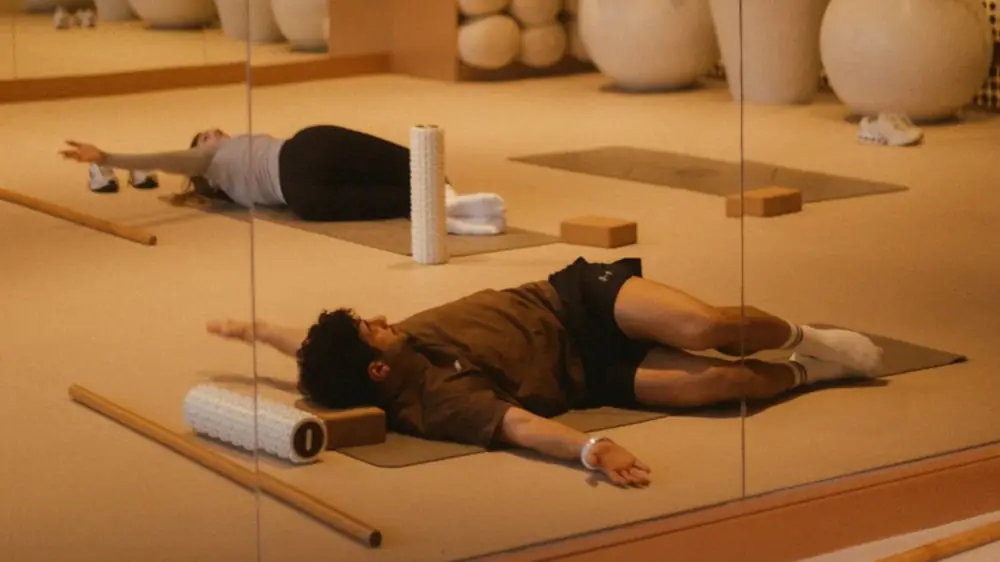
Wrist and Forearm Mobility: From Keyboard Fatigue to Yoga Pose Preparation
A simple mobility routine to ease the wrist tension common in desk workers and to prepare for weight-bearing movements such as yoga, pilates or push-ups.
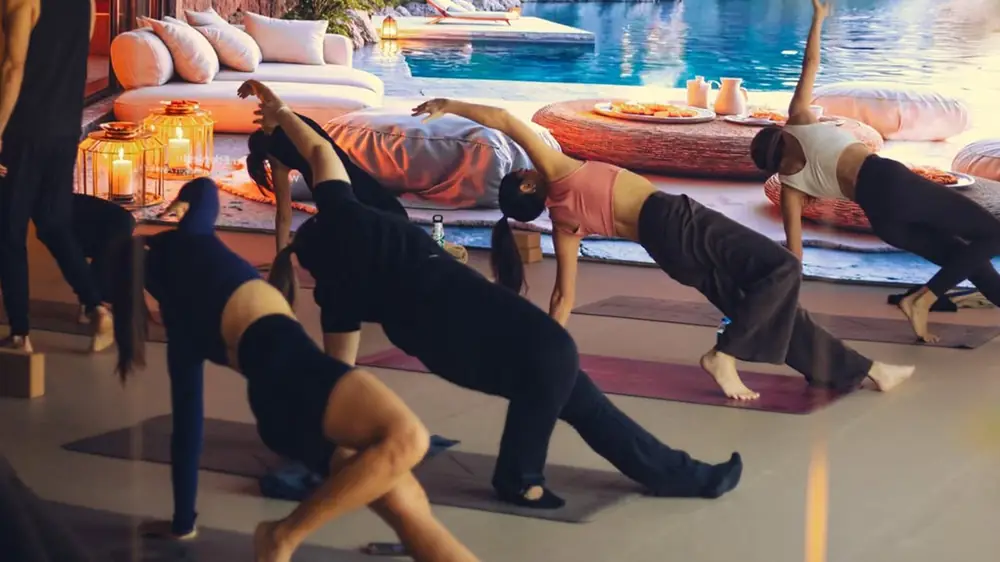
12 Things to Know Before Your First Class as a Yoga Beginner
12 practical things to know before your first class as a yoga beginner: clothing, equipment, breathing, common mistakes and studio etiquette all in one place.

Breathwork and Training Performance
What is breathwork and how does it affect performance? Diaphragmatic breathing, nasal breathing, box breathing and use before and after training.
