
Yoga and Strength Training: How Do They Complement Each Other?
Practised together, yoga and fitness support each other in terms of mobility, strength and recovery. We share how to integrate the two into your weekly programme, plus an example plan.
For someone who lifts weights, is yoga unnecessary, or is it a hidden performance tool? Although yoga and fitness may look like two distant disciplines at first glance, they actually feed each other directly: yoga provides mobility and breath control, while strength training strengthens the muscular and skeletal systems. In this article, we cover how the two disciplines work together, how to integrate them into a weekly program and when to prioritize which.
Why consider them together?
Strength training strengthens the muscles by loading them repeatedly in particular planes of movement; however, this repetitive pattern can over time narrow some joint ranges of motion. Yoga, on the contrary, balances this narrowing by working the joints in a wide range of motion in a controlled way. An athlete who trains with a focus only on strength or only on flexibility may, over the long run, hit a performance plateau or face injury risk; a balanced combination of the two allows more sustainable progress.
The concrete contributions of yoga to strength training
- Range of motion: Hip, shoulder and spinal mobility are needed to maintain full form in movements such as the deep squat and overhead press.
- Core stabilization: Plank and balance postures strengthen the deep abdominal and back muscles that protect the spine while lifting weights.
- Breath control: Well-timed exhalation during challenging sets helps manage intra-abdominal pressure.
- Body awareness: Yoga makes it easier to notice muscle asymmetries and imbalances; this awareness can reduce form errors in weight training.
What strength training contributes to yoga
The relationship is not one-way. People who do regular strength training generally progress more comfortably in yoga classes in positions that demand strength, such as plank, chaturanga and balance postures. A strong musculoskeletal system also provides the support needed to perform advanced yoga postures safely. When planning your strength training program, strength training guide you can explore the core principles.
Which type of yoga suits which training day?
| Training day | Recommended type of yoga | Goal |
|---|---|---|
| After a heavy strength day | Deep stretch yoga | Muscle recovery, deep stretching |
| A rest day | Balanced yoga | Active recovery, general mobility |
| Combined with cardio | Vinyasa yoga | Cardiovascular stimulus + flexibility |
| Pre-workout warm-up | Mobility & stretching | Preparing the joints |
Step by step: a hip-opening movement before squats
A simple yoga-derived mobility movement done before weight training can directly improve squat form.
- Move into a deep squat (malasana) position with your feet slightly wider than hip-width.
- Place your elbows on the inside of your knees and gently press the knees outward.
- Try to keep the spine as long as possible and relax the shoulders.
- Stay in the position for 5-8 deep breaths, trying to sink slightly deeper with each exhale.
Modification: If your heels lift off the floor, you can place a folded towel or a small raised surface under them. Those with knee sensitivity should keep the movement shallow.
A sample weekly program
| Day | Training |
|---|---|
| Monday | Lower-body strength training |
| Tuesday | Deep stretch yoga (recovery) |
| Wednesday | Upper-body strength training |
| Thursday | Balanced yoga |
| Friday | Full body strength + cardio |
| Saturday | Vinyasa yoga or active rest |
| Sunday | Complete rest |
Common mistakes
- Adding advanced yoga on a heavy training day: Adding an intense yoga flow to already tired muscles can delay recovery; on these days, gentle, low-tempo classes should be preferred.
- Using yoga in place of a warm-up: Static deep stretches before training can temporarily reduce muscle performance; dynamic mobility before training and static stretching afterward is more appropriate.
- Seeing the two as separate worlds: Planning yoga and strength training independently of each other keeps you from benefiting from the synergy.
- Expecting results too quickly: Mobility improves more slowly than strength; a patient and consistent approach is needed.
Who needs to take care?
People with an acute muscle or joint injury should plan both their strength training and yoga program under the supervision of a sports physiotherapist or physician until the injury has fully healed. For those with chronic lower back or shoulder conditions, some yoga postures (deep back bends, positions that bear weight on the shoulders) should be modified or omitted entirely.
How do you measure progress?
To track the two disciplines together, it is useful to monitor both strength measures (weight lifted, number of reps) and mobility measures (heels staying on the floor in a deep squat, shoulder range of motion). When you feel you have hit a plateau in strength training, the underlying cause is often a mobility restriction; in that case, increasing your yoga work can get your performance moving again.
Differences in equipment and environment
Strength training generally requires weights and machine equipment, while yoga practice can be done with minimal equipment (mat, block, strap). At O’Wellness Sky, the O’Rise studio is dedicated to strength and core work and the O’Soul studio to yoga and pilates; this separation makes it possible to practice each discipline most effectively in its own environment.
The role of yoga in recovery
After intense strength training, sleep, nutrition and active rest play a critical role in muscle repair. Of this trio, yoga is a low-impact but effective tool that supports the active rest component. For more comprehensive information on general recovery strategies, recovery guide .
Practicing both disciplines together in Sarıyer
Because O’Wellness Sky at Skyland Istanbul houses both strength and yoga studios under one roof, with a single membership you can easily integrate both disciplines into your weekly program. For general class times, see our weekly schedule page, and for class variety, our group classes guide .
Common movement restrictions and yoga solutions
| Strength movement | Common restriction | Supportive yoga movement |
|---|---|---|
| Deep squat | Insufficient hip and ankle mobility | Malasana (squat pose) |
| Overhead press | Restricted shoulder flexion | Downward-facing dog, thread the needle |
| Deadlift | Hamstring and lower back flexibility | Forward fold, bridge pose |
| Bench press | Chest and shoulder tightness | Fish pose, chest-opening twists |
Approach by experience level
For a beginner athlete, the priority should be to establish the form of the basic strength movements first, and yoga should be added 1-2 times a week in a way that supports this form. For intermediate and advanced athletes, mobility restriction generally comes into play when a performance plateau is reached; at this point, raising yoga frequency to 2-3 times a week can reaccelerate strength development. Advanced athletes should also take care in the periods before a race or competition to apply yoga in shorter, lighter doses so that it does not lead to strength loss.
The mental focus dimension
Most technical errors in strength training come from momentary lapses in attention rather than physical restriction. The skill of focusing on the “present moment” developed in yoga practice is also useful when lifting a heavy set; the athlete can pay more conscious attention to every phase of the movement. This is a skill that can make a difference especially in movements requiring complex technique (such as Olympic lifts), one that is not immediately visible to the eye but whose effect on training quality is clearly felt.
Differences between female and male athletes
Because of hormonal differences, joint laxity (connective tissue flexibility) is generally higher in female athletes; this allows easier adaptation to yoga postures but can also bring a risk of insufficient stabilization in hyper-flexible joints. For athletes with this profile, yoga practice should emphasize not only passive stretching but also the ability to support that wide range of motion with muscle control (active flexibility); otherwise, range of motion can widen before the muscles around the joint are strong enough, which can increase the risk of joint instability in the long run. In male athletes, more limited natural flexibility is generally seen; in this group, introducing yoga gradually and patiently prevents disappointment and improves sustainability. For both profiles, adapting the program to the individual gives better results than applying a general template to everyone as is.
Integration with nutrition and rest
The effectiveness of a training program depends not only on the correctness of the movements but also on overall lifestyle. The benefits that yoga and strength training provide together remain limited when they are not supported by basic recovery elements such as adequate protein intake, hydration and sleep. Not getting enough calories and protein, especially on heavy strength training days, can make it harder for the muscles to benefit enough from both the training and the deep stretching during yoga. For this reason, a program that combines the two disciplines should not be evaluated independently of overall lifestyle habits; nutrition and sleep patterns are as important as the training program, because muscles do their real repair during rest.
Long-term gains
In athletes who have kept up yoga and strength training together over the years, it is generally observed that joint health and functional movement capacity are better preserved in later life. This is a valuable investment not only for competitive performance but also for quality of everyday life; ordinary movements such as climbing stairs, picking something up from the floor or standing for long periods benefit from such a balanced training history as we age. From this perspective, keeping up yoga and strength training together should be seen less as a short-term performance tactic and more as a long-term health and movement capacity strategy.
Frequently asked questions
Can yoga replace strength training?
No; although yoga works some muscle groups isometrically, it does not replace strength training, which is based on the principle of progressive overload; the two are different disciplines that complement each other.
Can I do both strength training and yoga on the same day?
Yes, but the order matters; doing strength training first and low-tempo yoga afterward is generally more effective.
How many days a week is enough to add yoga?
Even added regularly just 2 days a week, it provides a noticeable benefit for mobility and recovery; this frequency can be increased according to personal goals.
Can I do yoga and strength training with the same membership in Sarıyer?
Yes, the Fitness + Reformer or Full Access membership packages at O’Wellness Sky provide access to all group classes and studios, allowing you to combine yoga and strength training in the same program.
Does yoga replace a pre-workout warm-up?
Static yoga postures do not replace a classic warm-up; dynamic mobility movements before training and static yoga postures afterward is a more suitable order.
To combine yoga and strength training in a balanced program, fill out the enquiry form and we will create a plan just for you.
Related posts
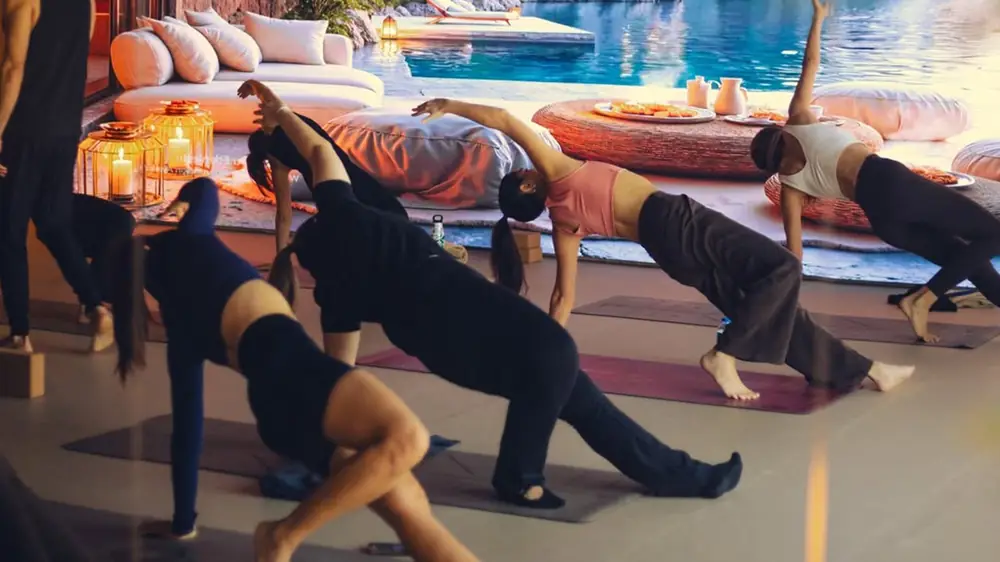
Breathing Techniques (Pranayama): A Guide to Performance and Calm
Breathing exercises (pranayama) support both athletic performance and everyday calm. We explain the basic techniques step by step, their benefits and what to watch out for.
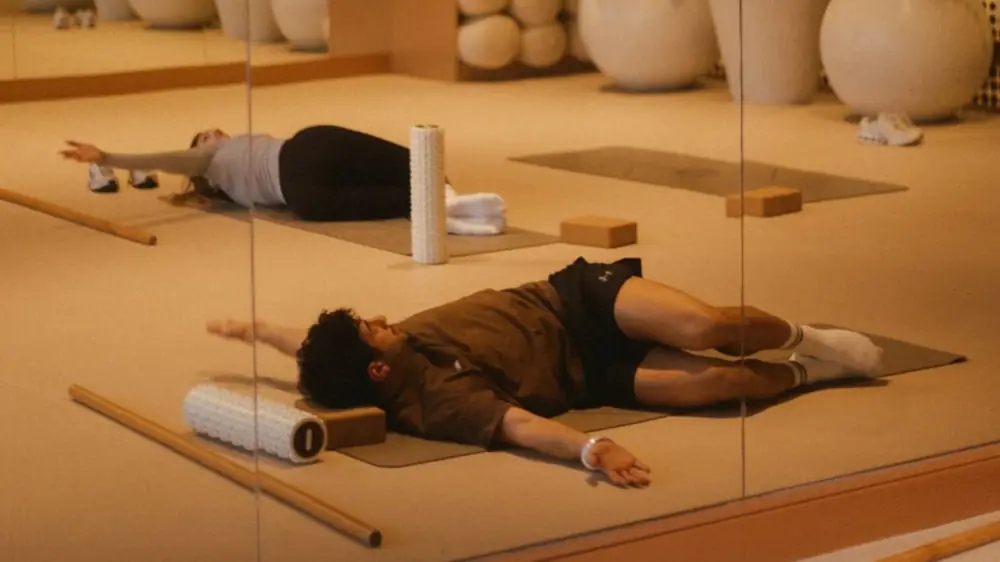
What Is Mobility, and How Does It Differ from Flexibility? Key Concepts for Joint Health
What is mobility and how does it differ from flexibility? In this article you will find the key concepts that support joint health, how to measure them and practical weekly recommendations.

Posture and Breathing on Video Call Days: A Mobility Guide for Eight Hours in Front of a Screen
Back-to-back video meetings push the neck forward, the shoulders inward, and the breath shallow. Posture and breathing habits you can practice unnoticed on camera.
