
What Is Barre? The Effect of Ballet-Based Training on the Muscles
What is barre exercise, how do ballet movements affect the muscles and who does it suit? The structure and levels of the O'Wellness Sky Barre classes and weekly programme recommendations.
Legs trembling at a ballet barre through small, controlled movements: for most people, this is the most familiar image of what a barre workout is. Behind the format, though, there is a clear logic that brings together ballet, Pilates and functional strength training. In this article, we look at how the Barre classes at O’Wellness Sky work, how they affect the muscles and who they suit.
The origins of Barre: from ballet training to group class
The barre format was developed from the warm-up and technique exercises performed at the barre in classical ballet training. Over time it became independent of ballet and evolved into a standalone group class format that combines small-range isometric movements, Pilates-based core work and strength exercises supported by light weights. At O’Wellness Sky, the Barre class is offered in the O’Soul studio, in the same space as the yoga and Pilates classes.
The structure of a Barre class
| Minutes | Section | Content |
|---|---|---|
| 0-8 | Warm-up | Joint mobility, light cardio, postural preparation |
| 8-18 | Leg and glute block | Small-range plié, tendu and leg lift variations at the barre |
| 18-28 | Core and upper body block | Strength exercises with a light weight or a mini ball |
| 28-38 | Isometric endurance block | “Pulse” movements in which the muscle is held at a fixed angle |
| 38-45 | Stretching and cool-down | Static stretching, posture-focused movements |
How barre affects the muscles: small range, big fatigue
The most striking feature of barre is that movements are usually repeated within a very small range (“pulse” movements of a few centimeters). By keeping the muscles in a zone between isometric and isotonic loading, these small-range but high-repetition movements create an intense sense of fatigue in a short time. In general physiology, this effect is associated with muscular endurance and the continuous activation of muscle fibers; it is considered to provide a different stimulus from classic strength training with heavy loads. For this reason, barre is generally described as a format that targets muscle tone and endurance rather than muscle size.
The difference between barre, Pilates and Reformer
Although all three are formats that focus on the core and posture, there are clear differences between them. Mat Pilates focuses on the core with controlled, flowing movements on the floor, while Reformer Pilates uses resistance and support on a spring-based piece of equipment. Barre, on the other hand, is done standing, with the support of the barre, and usually with faster-paced small movements with a high number of repetitions. All three are beneficial for balance and posture, but because barre is performed standing and challenges balance, it may transfer more directly to your posture in daily life.
Variations by level
Beginner level
For beginners, it is recommended to lean on the barre more, keep the range of motion small and reduce the number of repetitions at first. Since balance is not yet fully established, you should not hesitate to use the barre for support.
Intermediate
As balance and muscular endurance improve, barre support is gradually reduced, light weights are added and isometric hold times are lengthened.
Advanced
For experienced participants, barre support is reduced to a minimum, and variations that require single-leg balance and longer isometric blocks can be used. Those who want to further increase their core endurance can add the Crunch & Core class to their weekly schedule.
Common mistakes
- Overloading the barre: The barre is only for balance support; putting most of your weight on it reduces the effect of the movement.
- Leaving the core passive: Most barre movements rely on core stability; not keeping the abdominal muscles engaged puts unnecessary load on the lower back.
- Exaggerating the range of motion: The effect of barre comes from small, controlled movements; enlarging the range both spoils technique and causes the target muscle group to work less.
- Holding your breath: Holding your breath is a common mistake, especially in isometric blocks; breathing rhythmically supports endurance.
- Neglecting posture: Keeping the shoulders down, the chest open and the abdomen slightly drawn in both increases the effect of the movement and reduces the risk of injury.
Who it is not suitable for
Barre is generally a low-impact format and suits a wide audience, but people with serious balance problems, advanced joint instability or an acute lower back or hip injury should consult their physician before starting the class. During pregnancy, it can be continued with a doctor's approval and by leaving out some movements that challenge balance; it is important to share this with your instructor. If you have a diagnosis related to bone density, such as osteoporosis, it is appropriate to get the opinion of your physician and instructor on the choice of movements.
How progress is measured
Progress in barre can be tracked by needing less barre support, being able to extend isometric hold times and feeling less trembling or fatigue in the same set of movements. Improvement in your overall posture (shoulders slipping forward less, using the abdominal muscles more consciously in daily life) is also an important sign of progress, even if it is not numerical.
Fitting it into your weekly programme
Barre is a low-impact format that can be repeated 2-3 times a week. A sample week: Monday Barre, Tuesday O’Ride Cycle, Wednesday Barre, Thursday Vinyasa Yoga, Friday Barre or Reformer Pilates, rest on the weekend. Those who want to support overall strength development can also add the Total Body class to their weekly schedule. Rather than planning all classes at the same intensity within the same week, placing barre days between higher-intensity days for recovery supports muscle repair and makes the weekly program more sustainable.
Why isometric “pulse” movements are so tiring
The “pulse” movements often heard in barre classes involve holding a muscle at a certain angle and working it repeatedly with small movements of a few centimeters. Because the muscle never fully rests at any point in the movement, a feeling of fatigue builds up much faster than with traditional full-range repetitions. This sensation is usually described as “shaking” and is a sign that the muscle is approaching its maximum capacity. This kind of isometric loading is a training principle thought to improve muscular endurance, and it is an effective way to create an intense muscle stimulus without lifting weights.
Its effect on posture and balance
Posture cues that are emphasized throughout barre classes, such as “shoulders down, abdomen in, hips neutral,” aim to build awareness not only for that moment but for daily life as well. People who attend regularly often report noticing that they stand more upright in daily life over time. In addition, movements that require balance on one leg support overall balance by strengthening the small stabilizer muscles around the ankle and hip. This is a valuable gain, especially for reducing the risk of falls as we age; however, for health claims like this, it is always best to discuss your personal situation with your physician, and this should be taken as a general tendency, not presented as a guarantee.
Which goal should you choose barre for
Barre is a suitable choice for people who aim for posture, balance and muscular endurance rather than increased muscle size. It may not be enough on its own for people who aim for high cardio or maximal strength; in that case, complementing barre with O’Ride Cycle -style cardio classes or Total Body -style strength classes gives a more well-rounded result. For those who want a calm, controlled feel similar to Reformer Pilates but prefer a standing, more dynamic experience, barre is a good middle ground and a flexible option that fits easily into a weekly schedule.
Studio and equipment details
At O’Wellness Sky, Barre classes are held in the O’Soul studio using ballet barres, mini balls, light weights and mats. Classes are included in all membership packages; for current days and times, weekly schedule you can review the page. If you would like to see all class formats compared, group class guide.
What to wear to a barre class and how to prepare
Barre classes are usually done barefoot or in non-slip socks; when working at the barre and on the mat, it is important for the sole of the foot to feel the floor for balance, and a non-slip surface strengthens this feeling. Choose fitted athletic wear that does not restrict movement, because the instructor constantly checks visually whether movements are performed correctly and makes corrections when needed. A light warm-up before class is helpful, especially for preparing the hip and leg joints; the warm-up section within the class serves the same purpose and prevents you from starting unprepared.
The mental benefit of barre: focus and awareness
The small, controlled movements of barre require you to continuously direct your attention to the muscle sensation of the moment and to your posture. Many participants describe this as a meditative experience; it can also be seen as a way to calm the mind after a busy workday. The rhythm created by the music and the instructor's counts creates a space of both physical and mental focus and leaves a distinct feeling of relaxation at the end of the class. For this reason, barre can be considered not only a physical class but also one that may contribute to stress management; it can also work like a mental break in the middle of a busy week.
Frequently asked questions
Do you need ballet experience to do barre?
No, barre has evolved into a standalone group class format and does not require ballet experience; the instructor teaches all movements step by step.
Why do I feel so much shaking after a barre class?
Because small-range, high-repetition movements keep the muscles in a zone between isometric and isotonic loading, an intense feeling of fatigue and shaking can develop in a short time; this is a normal response.
Can you lose weight with barre?
Barre on its own is not a cardio class that burns a lot of calories; it focuses on muscle tone and endurance. If you are aiming for weight management, it would be a more effective approach to plan barre together with O’Ride Cycle planning it together with cardio classes such as is a more effective approach.
What times is the Barre class at O’Wellness Sky?
Current days and times are on the weekly schedule page; the facility in Skyland Istanbul, Sarıyer is open 06:00-23:00 on weekdays and 08:00-21:00 at weekends.
I have balance issues; can I join a barre class?
Thanks to the barre support, it is suitable for most people, but if you have a serious balance or joint instability problem, we recommend consulting your physician before starting the class.
To get to know the Barre class with a free trial session and feel firsthand where the shaking comes from, enquiry formall you need to do is fill in the form.
Related posts
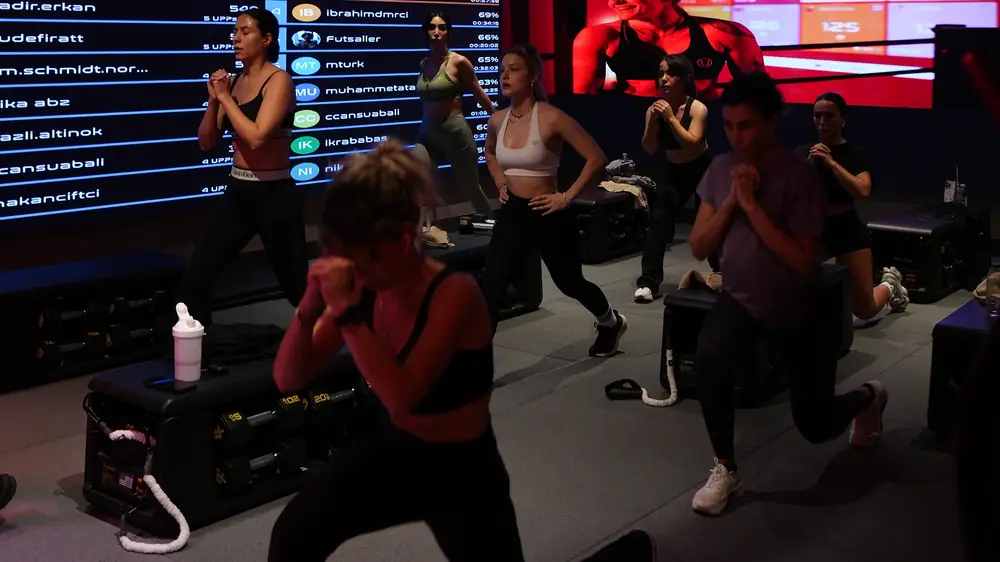
The Tabata Protocol: Can You Really Get Results in 4 Minutes?
What is Tabata, how does the 20-10 protocol work and can a 4-minute block really make a difference? The structure, levels and points to watch in O'Wellness Sky Tabata classes.

Heart Rate Zones: Finding the Right Intensity in Group Classes
What are heart rate zones, how do you calculate them and which group class at O'Wellness Sky corresponds to which zone? A guide to finding the right intensity with heart rate monitoring.
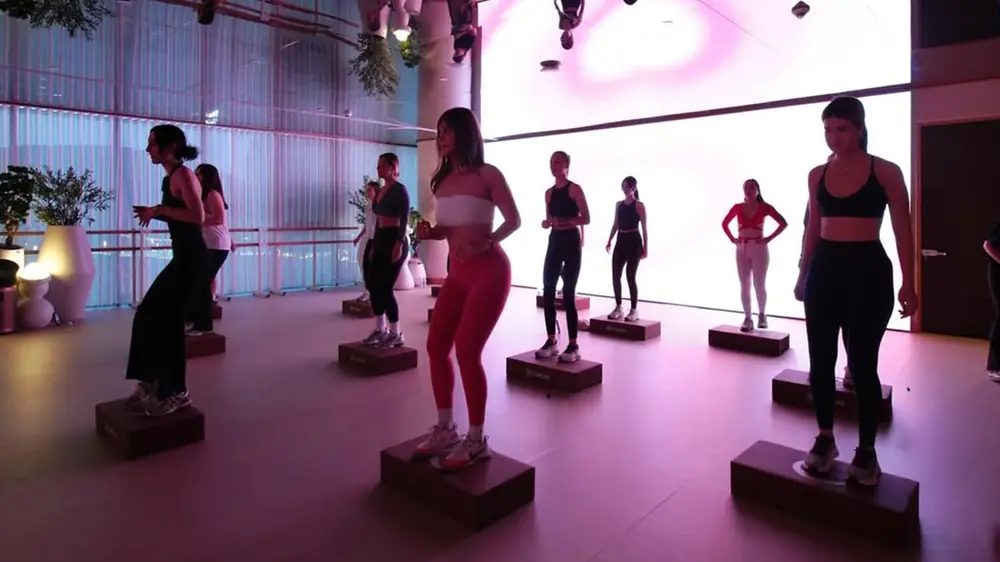
Step Aerobics Is Back: The Benefits of the Step Cardio Class
What are the benefits of step aerobics, and who is the Step Cardio class for? The structure and techniques of the cardio workout done on a step platform at O'Wellness Sky.
