
Hip Mobility: 10 Movements for Desk-Based Workers
Hip mobility exercises can help reduce the stiffness caused by sitting for long periods. You will find 10 movements specifically for desk-based workers and the order to do them in this article.
Hours spent sitting in a chair through the day keep the hip joint chronically at a short angle and can, over time, set the stage for the hip flexors shortening and the hip opening muscles weakening. Hip mobility exercises can help reduce that stiffness and regain the range the hip needs in everyday movement. In this article we share 10 movements chosen specifically for desk-based workers, the right order and a weekly practice recommendation.
The effect of long periods of sitting on the hips
In a seated position the hip stays in around 90 degrees of flexion; the longer that lasts, the more the hip flexors (particularly the iliopsoas) can shorten adaptively. At the same time, as the hip opening and glute muscles stay passive for long periods, their capacity to activate can decrease over time. The combination of these two can make it harder for the hip to work through its full range when getting up and walking or squatting, and can lead to the lumbar spine compensating. Regular hip mobility work is a practical approach to breaking that cycle.
Before you start: warming up
Rather than going into deep movement with cold muscles, a 2-3 minute gentle warm-up is recommended: walking on the spot, gentle hip circles or climbing stairs are enough. A warm-up helps the tissue respond more safely to movement.
10 hip mobility movements
- The 90/90 position: Sitting on the floor with one leg in front and the other to the side at 90 degrees; the trunk leans forward and you move slowly between positions. It works hip internal and external rotation together.
- Hip flexor stretch (half-kneeling): One knee on the floor, the other foot in front; pushing the hips gently forward stretches the hip flexor of the front leg. Hold for 30 seconds.
- Deep squat hold: With the feet shoulder-width apart, hold the deepest squat position you can with your elbows inside your knees for 30-45 seconds.
- Hip circles (standing): Standing on one leg, move the other knee in large circles in both directions, 8-10 repetitions.
- Pigeon pose: One leg bent in front and the other extended behind; leaning the trunk forward stretches the hip external rotators.
- Frog stretch: Knees wide apart, ankles in line with the knees; slide the hips slowly back to stretch the inner hip.
- Lateral lunge: Step wide to the side and bend one knee while keeping the other leg straight; this works the inner hip and the hip abductors.
- Glute bridge: On your back with the knees bent; lift the hips, squeeze for 2 seconds at the top and lower, 12-15 repetitions.
- Standing hip flexion and extension: Holding on to a support, swing one leg forwards and backwards under control, 10 repetitions in each direction.
- Walking knee hug: While walking, pull one knee towards your chest with each step and release; this works dynamic hip flexion.
The order and duration of the practice
| Stage | Movements | Duration |
|---|---|---|
| Warm-up | Walking on the spot, gentle circles | 2-3 min |
| Static opening | 90/90, pigeon, frog, hip flexor stretch | 8-10 min |
| Dynamic strengthening | Bridges, lateral lunges, circles | 6-8 min |
| Integration | Deep squat hold, walking knee hug | 3-4 min |
This 20-25 minute flow can easily be done in your lunch break or after work.
Modifications by level
For beginners, placing a cushion or folded towel under the knees in the pigeon and frog positions reduces pressure on the joint. Anyone with balance difficulties can hold on to a chair or wall during the standing movements. Those practising at an advanced level can increase the load by adding a light weight (a kettlebell or dumbbell) to the deep squat hold, or link the transitions between 90/90 positions more fluidly and quickly. Anyone with a history of knee or hip surgery should keep their range of motion well short of any pain and consult their doctor if necessary.
Common mistakes
- Compensating with the lower back: When the hip does not open enough, the lumbar spine can round excessively; make the movement smaller and focus on initiating from the hip.
- Holding your breath: Holding your breath, particularly in static stretches, makes it harder for the muscle to release; breathe slowly and deeply.
- Pushing your pain threshold: Insisting on going deeper rather than stopping at the point where you feel sharp pain can cause tissue damage.
- Only stretching and skipping strengthening: Without active movements such as the glute bridge, the range you gain may not last.
- Irregular practice: Short daily breaks generally give better results than one long session a week.
Who it is not suitable for / who should approach it carefully
Anyone with a hip replacement or recent hip surgery should only do these movements with the approval of a doctor or physiotherapist and generally in a modified form. Anyone with acute hip or groin pain should avoid deep stretching until the cause of the pain has been established. As the ligaments loosen hormonally in pregnancy, avoiding forcing deep stretch positions and getting your doctor's approval are recommended.
Micro-breaks at your desk
Even if you cannot find time for a full mobility session every day, getting up for 1-2 minute micro-breaks every hour can make a difference. Ten standing hip circles, a few steps or a brief hip flexor stretch can help partly offset the effects of long periods of sitting. Standing between meetings or during a phone call is also a simple but effective habit.
Measuring progress
A simple way of tracking progress is to observe weekly whether your heels stay on the floor in a deep squat hold. If your heels lift at first and you can get them closer to the floor over time, that can be a sign of improving hip and ankle mobility. Comparing how far forward you can lean in pigeon pose over the weeks also gives you an idea.
Combining it with group classes
There are several options at O’Wellness Sky for anyone who wants to turn these movements into a regular routine. Mobility & Stretching The class includes this kind of hip-opening movement in the programme directly. Budokon Yoga The class works hip mobility through flowing transitions, while Deep Stretch Yoga offers a slower, deeper approach. Anyone wanting to strengthen the muscles around the hip can join the Booty Class class. For general mobility concepts, see guide to group classes .
A practical weekly recommendation
| Day | Focus |
|---|---|
| Monday, Wednesday, Friday | The full 10-movement flow (20-25 min) |
| Tuesday, Thursday | Micro-breaks at your desk (1-2 min x several times) |
| Weekend | A group class or free movement |
Hip mobility and sporting performance
The hip is one of the largest and strongest joints in the body; most movements such as running, squatting, jumping and changing direction start with power produced from the hip. When hip mobility is limited, that power production can become inefficient and neighbouring areas such as the knee or lower back can take extra load. It is therefore not only desk-based workers but also people who exercise regularly who should include hip mobility as a regular part of their training programme. A short hip-opening routine before weight training in particular can make it easier to reach a deeper, safer position in movements such as squats and deadlifts.
Using props
Most of these 10 movements require no extra equipment; just a mat is enough. However, a cushion or folded towel placed under the knee improves comfort in the pigeon and frog positions. Anyone wanting to use a resistance band can increase glute activation by placing a band above the knees during the glute bridge. In the lateral lunge, a light dumbbell or kettlebell can be held in front of the chest to add load. All this equipment is available in the group class studios at O’Wellness Sky.
A 4-week progression plan
| Week | Focus | Changes |
|---|---|---|
| Week 1 | Learning the basic movements | All the movements at a low intensity, with short holds |
| Week 2 | Increasing the duration | Static holds are extended from 30 to 45 seconds |
| Week 3 | Adding load | Light resistance is added to the bridge and lateral lunge |
| Week 4 | Integration | The movements are deliberately carried over into everyday activities such as squatting and walking |
This four-week progression offers a good enough start to build a lasting habit; after that it can be turned into a routine weekly practice. Keeping a log while following the programme can help you see which movements you find hardest and in which areas you are making progress; that small habit is also useful for maintaining motivation in the long run.
The link with other joints
Although hip mobility looks like an isolated subject, it is in fact closely related to the ankle and the thoracic spine. If the ankle is not mobile enough, the hip can be forced to compensate more in a deep squat position, so addressing hip work together with ankle mobility offers a more holistic approach. Likewise, stiffness in the thoracic spine can make it harder for the trunk to draw support from the hip in forward-bending movements. A comprehensive mobility practice should therefore consider the whole movement chain rather than a single joint.
The role of recovery and rest
Although mobility work generally looks low-intensity, it can take time for accumulated muscle tension to release. Stiffness felt in the hips and lower back after a busy week at work relates not only to movement but to adequate sleep and overall recovery too. If you would like to address your mobility practice together with your general recovery habits (sleep patterns, hydration, stress management), see recovery guide .
Frequently asked questions
How many minutes a day should I do hip mobility exercises?
A regular practice of 15-25 minutes a day, repeated a few times a week, usually makes a noticeable difference. Short micro-breaks support that effect too.
I feel pain when opening my hips - is that normal?
A mild feeling of tension is expected, but sharp or stabbing pain is not normal; in that case it is important to stop the movement and consult your doctor.
Can I do these movements at work, at my desk?
Standing hip circles and gentle hip flexor stretches can easily be done in an office setting; the floor-based movements need a suitable space.
Are there mobility classes for desk-based workers in Sarıyer?
Yes - at O’Wellness Sky in Skyland Istanbul, the Mobility & Stretching classes are offered at times you can easily attend after work or in your lunch break.
Is there a relationship between hip mobility and lower back pain?
Limited hip mobility can lead to the lumbar spine taking extra load during movement, so improving hip mobility can indirectly support back health. If you have chronic lower back pain, consult your doctor.
For a programme to improve your hip mobility, enquiry form fill in the form and let's identify the right class for you together.
Related posts
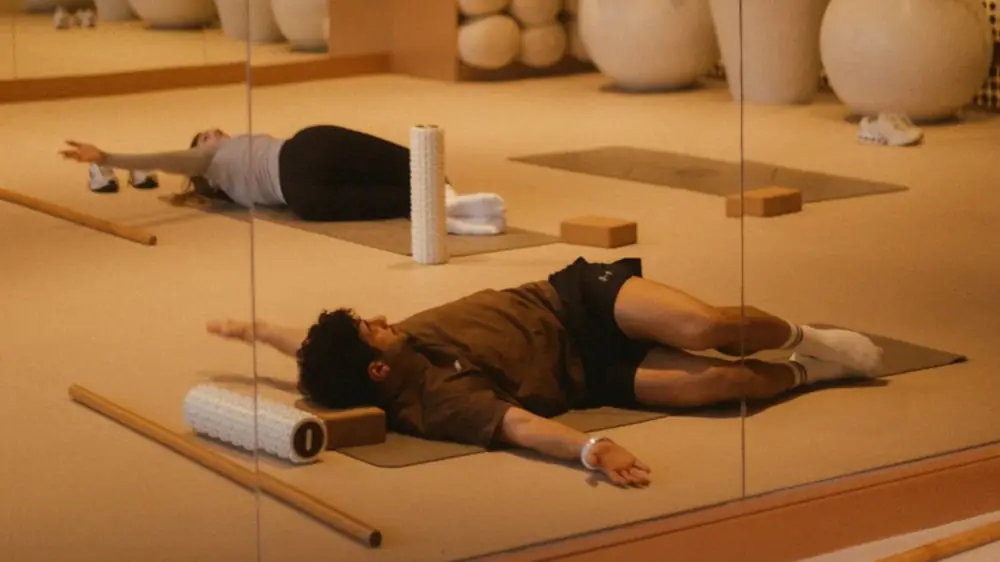
Wrist and Forearm Mobility: From Keyboard Fatigue to Yoga Pose Preparation
A simple mobility routine to ease the wrist tension common in desk workers and to prepare for weight-bearing movements such as yoga, pilates or push-ups.
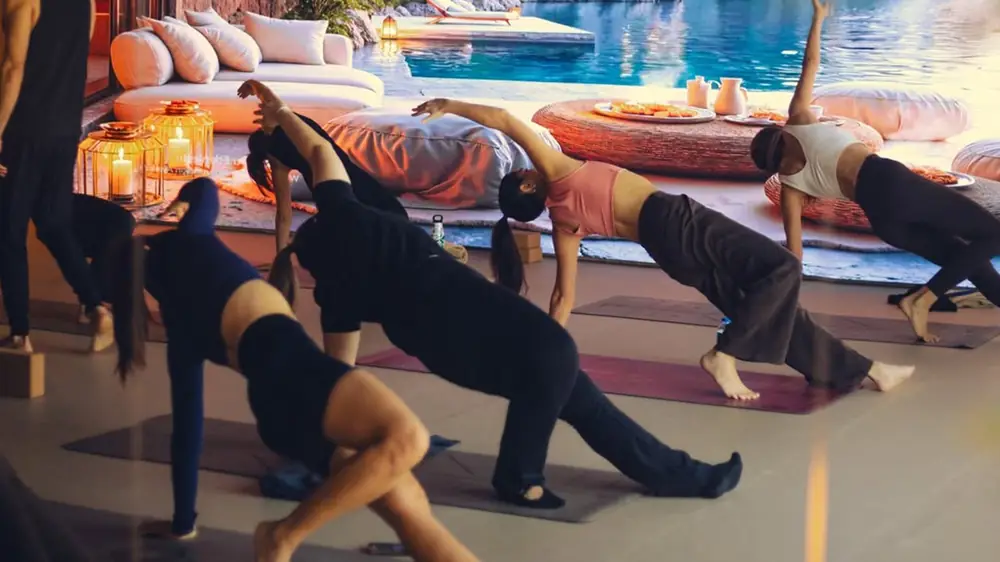
Breathing Techniques (Pranayama): A Guide to Performance and Calm
Breathing exercises (pranayama) support both athletic performance and everyday calm. We explain the basic techniques step by step, their benefits and what to watch out for.
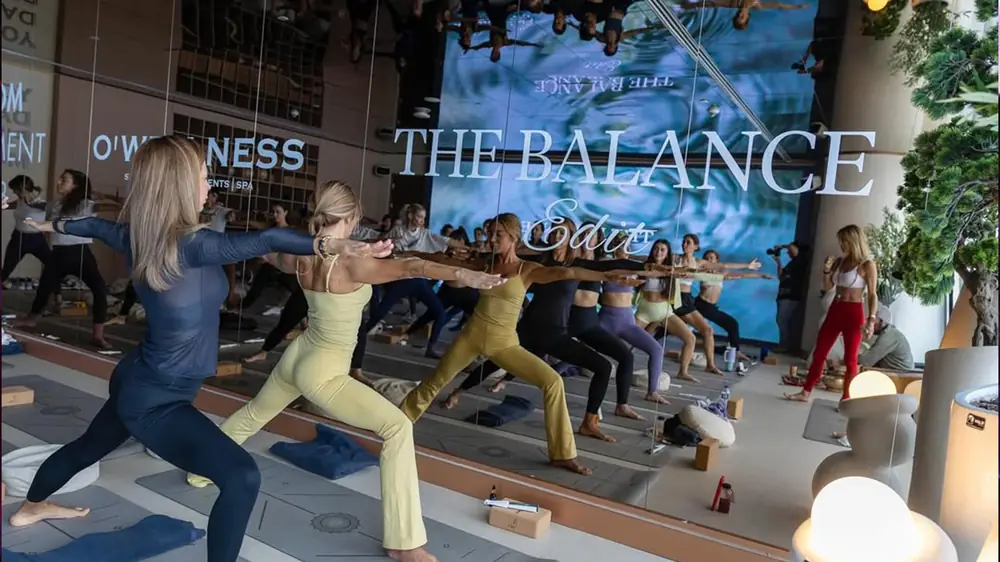
Balanced yoga: the balance between strength and flexibility
Balanced yoga, an approach built on balance, brings dynamic strength work together with flexibility-focused movement in the same class. We explain its structure, its benefits and who it suits.
