
Reformer Pilates vs Mat Pilates: The Differences, the Advantages and Which Should You Choose?
The key differences between reformer Pilates and mat Pilates, the resistance system, who they are for and how to combine them in a programme; a comprehensive comparison to let you decide which suits you.
One of the questions most frequently asked by those new to a studio programme is this: is reformer Pilates or mat Pilates more suitable? Both draw on the same six principles, but their tools, the way they load the body and the experience they create are quite different. In this article we look concretely at the difference between reformer Pilates and mat Pilates, from the mechanics of the equipment to who they are for and from the balance of price and time to the ideal combination.
The basic mechanical difference: spring resistance vs bodyweight
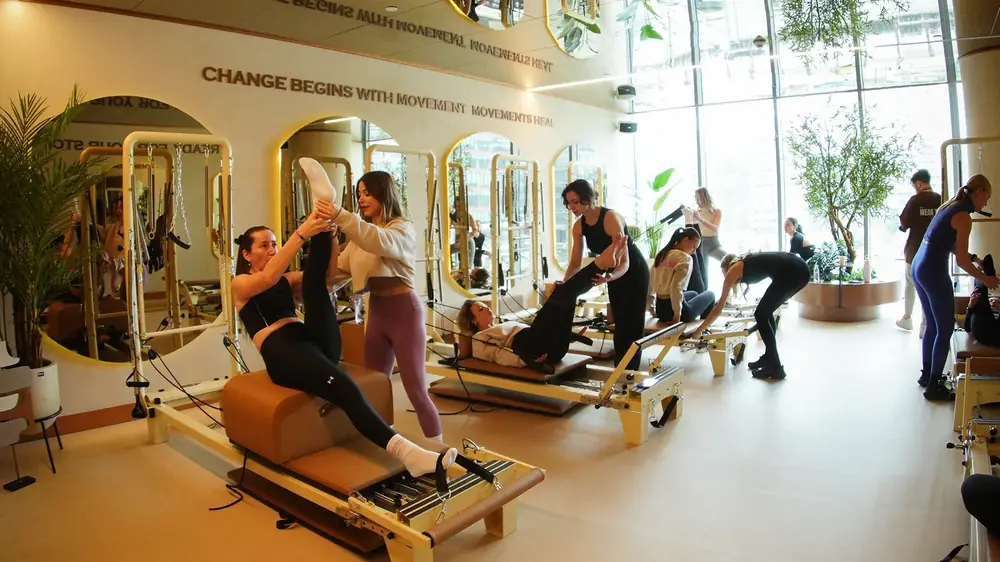
Mat Pilates works on the floor with bodyweight and gravity alone; the resistance is fixed and the difficulty of the movement is adjusted mainly through position and lever length. In reformer Pilates, meanwhile, a moving platform (the carriage), springs of different tensions, a footbar and straps all come into play. By changing the choice of spring you can make the same movement easier or harder within seconds. That makes the reformer a flexible tool for both rehabilitation and advanced-level strength work.
The movement repertoire and variety
In mat Pilates the movements are limited to the floor: there is a classic series done supine, prone, side-lying and seated. On the reformer, meanwhile, thanks to the platform and straps, balance work can be done standing, kneeling, seated, side-lying and even on the footbar; the repertoire extends to more than 250 variations. That breadth is why reformer classes look more varied and visually more dynamic than mat.
Which is more suitable for whom?
| Criterion | Mat Pilates | Reformer Pilates |
|---|---|---|
| Equipment needed | Only a mat | A reformer machine is needed |
| Suitability for beginners | Easily accessible, but core control is harder | Easier to learn with spring support |
| Lower back/neck sensitivity | No support, some movements are challenging | Safe modification with strap and platform support |
| Group size | Generally a busy studio class | A limited number of machines, small groups |
| The pace of progress | Limited by bodyweight | Gradual, rapid progress by changing the springs |
| Personal training | Generally more economical | Higher because of the equipment and small groups |
The difference in muscle activation and feedback
In mat Pilates the feedback rests largely on the trainer's observation; because the floor is fixed, asymmetries can sometimes be hidden. On the reformer, because the platform moves, a right-left imbalance, compensation or loss of control becomes visible immediately: if the platform is wobbling or the spring's return is irregular, the movement is not being done correctly. That means the trainer can make corrections faster and shortens the learning curve.
Gains in core, balance and flexibility
Both methods target the transversus abdominis and the deep muscles supporting the spine; various studies have shown that Pilates reduces pain and functional limitation in chronic lower back pain. The reformer's additional advantage is that it speeds up gains in flexibility by lengthening the muscles under load (eccentric work). Mat Pilates, meanwhile, is a practical option for those who want to develop their sense of balance on a fixed surface and to practise anywhere without equipment. If you are looking for a class focused on balance and mobility, you can also look at our Mobility & Stretching class.
Which should you choose in which situation?
- If you are starting from scratch and have lower back/neck sensitivity: Starting with the reformer is safer and more motivating thanks to the spring support.
- If your budget and time are limited and you also want to practise at home: Mat Pilates is a flexible complement.
- If you are aiming for advanced strength and stability: The reformer's gradual increase in load provides faster progress.
- If you enjoy working with group energy and music: Mat Pilates classes are generally larger and more fast-paced.
In fact these two methods are not rivals but tools that complement each other. At O’Wellness Sky the weekly programme includes both Mat Pilates and Reformer Pilates classes. For more detailed information about what reformer Pilates is, the working principle of the machine and its scientific benefits, you can read our What Is Reformer Pilates? guide.
A suggested combination: using the two together
For most of our members the ideal balance is 2 reformer + 1 mat session a week. While the reformer sessions build strength and control, the mat session consolidates those gains through a wider range of movement. Adding complementary classes such as Barre or Deep Stretch Yoga to your programme also supports muscular balance and flexibility. For example weekly combinations, weekly schedule page.
Equipment and technical details
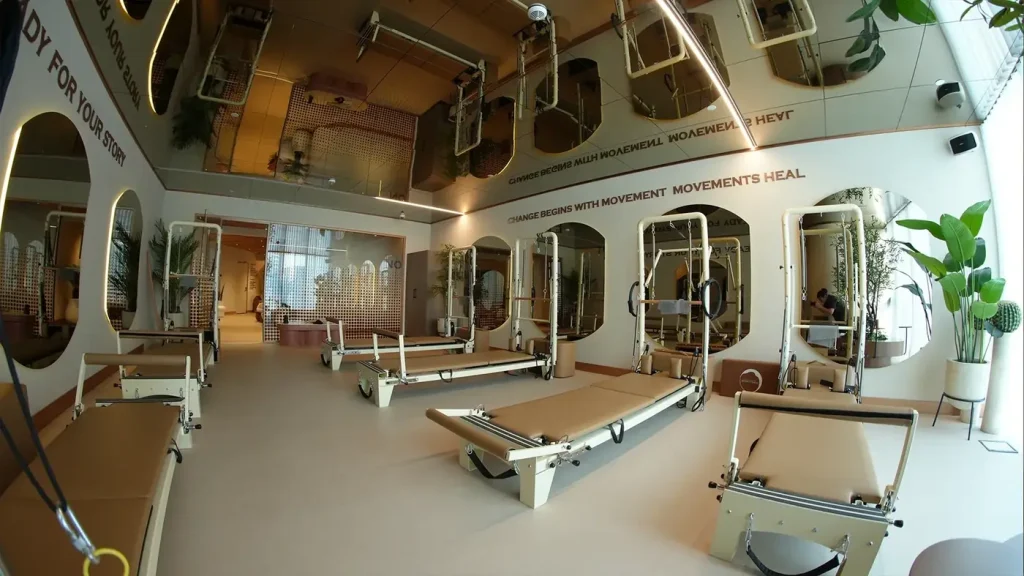
The reformer machine consists of the carriage (the sliding platform), springs with different colour codes, a footbar, shoulder supports and straps. The spring colour generally indicates the resistance level: yellow and red are light resistance while blue and black correspond to heavier resistance. In mat Pilates, meanwhile, the only equipment is your own body; some studios enrich a mat class with small balls, bands or weighted bars, but the basic principle does not change. The O’Wellness Sky Reformer Studio has 8 Balanced Body reformers and every session is limited to a maximum of 6-8 people, which means the trainer can follow every participant's spring setting and alignment individually.
Who they are not suitable for, or who needs to take care
- Those with serious balance problems: The reformer's moving platform can be challenging at first for people with a balance disorder; it should be started gradually with one-to-one sessions.
- Those with an acute lower back or neck injury: Neither method should be started without a doctor's approval; mat movements requiring flexion in particular are not suitable in the acute period.
- Those working with cables and straps for the first time: Using the straps on the reformer can be confusing in the first sessions; it should be learned alongside a trainer.
- People with time constraints: Reformer sessions generally depend on a booking and the studio's hours; mat Pilates can be done flexibly at home too.
If you have any chronic condition, it is important to consult your doctor before deciding which method to start with.
How is progress measured?
In both methods, progress is not limited to “being able to do a harder movement”. The indicators below let you track your progress concretely:
- Spring resistance and number of repetitions (reformer): Being able to do the same movement in a controlled way with a heavier spring over time.
- Range of movement (both): Increasing ease in spinal articulation and hip flexion.
- Control and stability (both): The platform or the body moving without wobbling or jolting.
- Breath-movement synchronisation: Being able to make breathing out at the moment of effort automatic.
- Carrying over into everyday life: Improvement in posture, a reduction in lower back pain, less fatigue in everyday activities.
Common mistakes
The most common fault in mat Pilates is pulling with the neck and holding the breath; trying to lift with the neck muscles rather than the abdominal muscles places unnecessary load on the spine. On the reformer, meanwhile, the most common fault is releasing the spring without control - the platform's return is half as important as the movement, and a noisy, fast return shows a loss of control. In both methods the idea that “heavy/hard = better” is wrong; correct form is far more valuable than weight, and staying at the level your trainer recommends provides faster progress in the long run.
An example member's experience: the decision process
Let us imagine a member who spends long hours in the office and feels mild tightness in the lower back area. In the first assessment the trainer establishes that some mat Pilates movements (particularly things like a supine double leg lift) could place too much load on the spine at this stage and recommends starting with the reformer. With spring support the movements are done in a pain-free range. After four or five weeks, when core control and spinal awareness have improved, one mat Pilates class a week is added to the programme. That gradual transition is a typical example of how the two methods can complement each other.
An example 8-week transition plan
For those wanting to move gradually from the reformer to mat Pilates, or from mat to the reformer, the plan below can be a starting point:
| Week | Focus | The distribution of classes |
|---|---|---|
| 1-2 | Basic form and breathing | 2x Reformer (one to one or small group) |
| 3-4 | Consolidating core control | 2x Reformer + 1x Mat Pilates |
| 5-6 | Broadening the repertoire | 2x Reformer + 1x Mat Pilates + 1x Barre |
| 7-8 | Endurance and flow | 3x Reformer + 1x Mat Pilates |
This plan is not a fixed prescription; your trainers adjust it from week to week according to your feedback and progress. If you want to add a strength component to your programme, you can also consider the Master Fit class.
A comparison in terms of cost and time planning
Reformer sessions generally require a higher membership or package fee than mat classes because of the limited number of machines and the small group format. However, that difference is balanced out by the personalised feedback, the limited group size and the scalable resistance system the machine offers; many members assess that difference against the speed of progress achieved relative to the time spent and say the investment pays off in the long run. In terms of time, meanwhile, mat Pilates is suited to practising at home too as it requires no extra equipment, which is an easy way of maintaining continuity in weeks when you cannot get to the studio. By sharing your budget and your timetable with your trainers, you can plan the combination that suits you best together.
The role of choosing a trainer
Whichever method you choose, the trainer's experience directly affects the result. On the reformer the trainer personalises the spring settings and the use of the straps to your body; in mat Pilates, meanwhile, it matters that they can recommend the right modifications (placing a cushion under the knee, changing the leg angle). At O’Wellness Sky all our trainers are certified and experienced in both reformer and mat formats.
Frequently asked questions
Is reformer Pilates more effective than mat Pilates?
“More effective” is not a one-dimensional concept; while the reformer has the advantage in terms of gradual increases in load and supported movement, mat Pilates offers accessibility and practicality. Depending on your goal, both are effective.
Can I start both together?
Yes - many of our members include both in their weekly programme. If you are a beginner, we recommend gaining basic control with the reformer first and then moving on to mat classes.
Can mat Pilates be done at home, and is a studio essential for the reformer?
Mat Pilates can be done at home; the reformer requires special equipment and so must be done in a studio setting.
Are both classes included in the same membership at O’Wellness Sky?
Our Fitness + Reformer and Full Access membership packages cover both the group classes and reformer sessions. For the details, membership page.
Where can I find both classes under the same roof in Sarıyer?
At O’Wellness Sky in Skyland Istanbul, both our studio with 8 Balanced Body reformers and mat Pilates classes are in the same weekly programme, so you do not need to travel elsewhere.
To decide together which type of Pilates suits you, contact plan your free trial day on our page.
Related posts
Is Muscle Soreness After Reformer Pilates Normal? Recovery Tips
The causes of muscle soreness after reformer Pilates, the difference between normal and worrying pain, and effective recovery methods; explained through our work in Skyland Istanbul.
Reformer Pilates for Golf and Tennis Players: Rotational Power and Shoulder Health
How reformer Pilates contributes to rotational power, shoulder health and balancing asymmetry in sports involving one-sided rotation such as golf and tennis; explained through our work in Skyland Istanbul.
What Is Reformer Pilates? Its Benefits, Who It Suits and a First Session Guide
The working principle of the reformer Pilates machine, how it differs from mat Pilates, its scientific benefits, who it suits and what awaits you in your first session in Skyland Istanbul; a comprehensive guide written by our trainers.
