
Your First Reformer Pilates Class: What to Wear, What to Expect and Which Mistakes to Avoid
A practical guide to what to wear before your first reformer Pilates class, what awaits you in the session and the mistakes beginners make most often.
Dozens of questions come to mind before going to your first reformer Pilates class: what shall I wear, what should I bring, which movements will I encounter? That uncertainty leads many people to postpone their first session or never try it at all; in fact, with the right preparation that experience becomes quite enjoyable and relaxing. In this guide we explain step by step what you will experience in your first reformer Pilates class, how to choose the right clothing and equipment, the mistakes beginners make most often and realistic expectations for the first weeks.
What to wear?
The choice of clothing in reformer Pilates rests on functionality rather than appearance. Choose close-fitting, stretchy leggings and a top so that your trainer can see your movements and muscle activation clearly. Loose, wide-legged shorts or tracksuit bottoms are not recommended, because they can catch in the straps and make it harder for the trainer to see your alignment during movement. Avoid clothing with zips, metal accessories or very large buttons; those details can dig into the skin or damage the straps.
The question of shoes and socks
Reformer Pilates is done without shoes. At most studios Pilates socks with non-slip soles are compulsory; those socks provide both hygiene and a safe grip on the platform. It is possible to slip on the platform in ordinary cotton socks, which creates a safety risk. If you do not have non-slip Pilates socks, you can buy them at the studio.
What to bring and what not to bring?
| Bring | Do not bring |
|---|---|
| Suitable trainers (and consider socks for the reformer) | Heavy jewellery, bracelets, long earrings |
| A small towel | A phone (during the session) |
| Non-slip Pilates socks | Perfume (strong scents can be uncomfortable in the studio) |
| A hair tie (for long hair) | Loose, baggy clothing |
The mat and all the equipment are provided by the studio; you do not need to bring any personal equipment.
How does the first class proceed step by step?
- Welcome and a short conversation (5 min): Your trainer asks about your health history, any injuries and your goals; a health declaration form is filled in.
- An introduction to the machine (5-10 min): The spring colour codes, the footbar, the straps and the basic safety rules are explained.
- Footwork series (10 min): The basic series done lying on your back pushing the footbar; leg alignment and the breathing rhythm become established here.
- Core and upper body work (15-20 min): Basic movements such as the hundred, arm series with the straps and spinal articulation.
- Stretching and closing (5-10 min): The session ends with hip and hamstring stretches and breathwork.
For more comprehensive information about the general working principle and scientific benefits of reformer Pilates, What Is Reformer Pilates? guide.
What should you watch for before your first class?
- Do not come on an empty or very full stomach: A light meal 1-1.5 hours before the session provides comfort during exercise.
- Arrive early: We recommend arriving 10-15 minutes early for your first session in order to fill in the form and get to know the studio.
- Share your health history honestly: Be sure to share any lower back, neck or shoulder problems or a pregnancy with your trainer.
- Keep your expectations low: Do not expect perfect form in your first session; the reformer is a method with a learning curve.
The mistakes beginners make most often
1. Holding your breath
Holding your breath during the effort prevents the core muscles working effectively and creates tension. As a rule you breathe out at the moment of strain and in during the preparation phase.
2. Pulling with the neck
Trying to lift the head with the hands or the neck muscles in abdominal movements leads to neck tension. The correct technique is to lift the rib cage with the abdominal muscles.
3. Releasing the platform without control
The platform's (the carriage's) return against the spring is at least as important a part of the movement as the push. A noisy, fast return is a sign of a lack of control.
4. The idea that “a heavy spring = better”
In some movements a light spring is harder than a heavy one because it requires balance and control. Using the spring your trainer recommends matters for correct muscle activation.
5. Comparing yourself
Seeing the person next to you in a group class moving more fluidly can reduce your motivation. The reformer is an individual learning process; everyone's pace of progress is different.
What can you expect to feel after your first session?
Mild muscle soreness (delayed onset muscle soreness) after the first 1-2 sessions, particularly in the abdomen, inner thighs and hips, is normal; it generally passes within 48 hours. Sharp, stabbing or joint-related pain is not normal; in that case you need to tell your trainer or our sports physiotherapist. Feeling mildly tired after your first session is also natural; drinking plenty of water and light stretching support recovery.
Should you start with one-to-one or a group class?
| Format | Advantage | Who it suits |
|---|---|---|
| One-to-one | Individual feedback, a personalised pace | Those with a history of injury, complete beginners |
| Duo (2 people) | Individual attention + social motivation | Those who want to start together with a friend or partner |
| Group lessons | Economical, an energetic environment | Participants familiar with the basic movements who are looking for motivation |
For complete beginners, starting with a one-to-one or duo format and moving to a group class after a few weeks both increases confidence and means the basic alignment becomes properly established.
Realistic expectations of progress in the first month
In the first week the aim is to get used to the machine and the basic movements. In the second and third weeks breath-movement synchronisation and core control start to become clearer. By the end of the fourth week most participants notice that they can move the platform more quietly and in a more controlled way and feel a slight improvement in their posture. Being patient in that process and focusing on small but consistent improvements rather than expecting rapid results is the most important factor for long-term results.
Particular situations relating to your health status
If you have a herniated disc, a neck problem, a pregnancy or are in a post-surgery period, be sure to share that with your trainer and, if necessary, your doctor before your first class. The movements are modified in line with that information and, if necessary, a starting plan is built together with our sports physiotherapist. If you have a chronic condition, it is important to consult your doctor before starting an exercise programme.
Suggestions for continuing after your first class
After completing your first session, setting a fixed day and time in your weekly programme is useful for maintaining consistency; for the details you can look at our weekly schedule page. Adding your reformer sessions to a complementary class such as Mat Pilates helps you consolidate the movements you have learned. To determine the trainer and the programme that suit you best, you can also look at our trainers page.
The first session experience at O’Wellness Sky
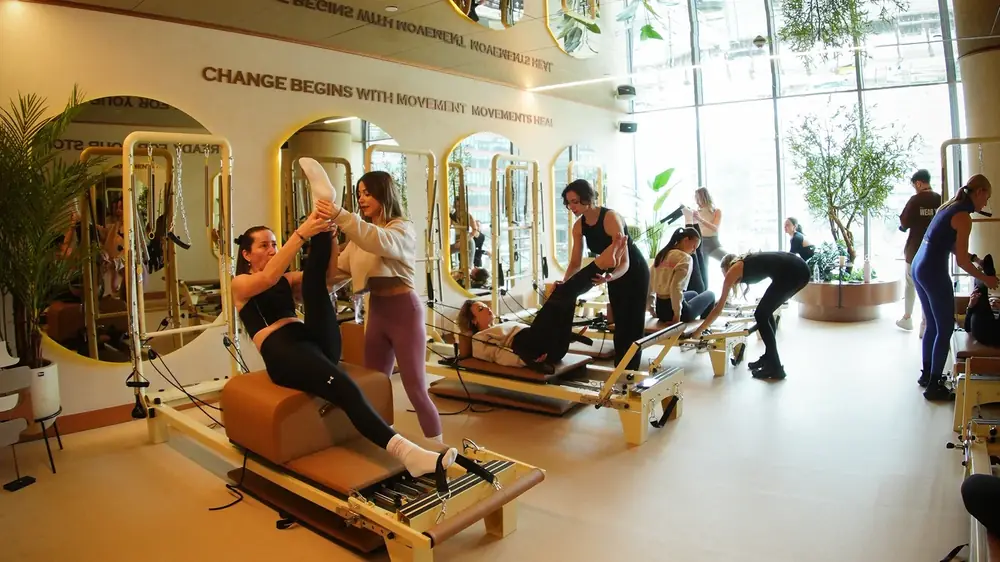
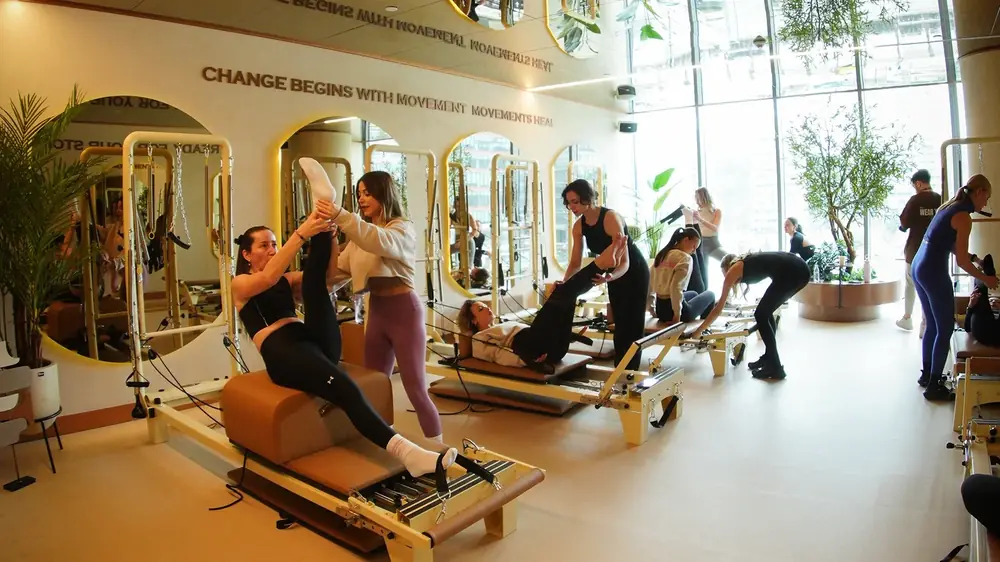
Our Reformer Studio in Skyland Istanbul has 8 Balanced Body reformers and sessions are run in groups of a maximum of 6-8 people, which means the trainer can follow every participant's alignment individually. The free facility tour and 1-day trial session we offer before membership let you experience reformer Pilates in your own body without entering into any commitment. For detailed service information, Reformer Pilates page.
Practical questions people wonder about before their first class
Can I wear make-up?
Light make-up is not a problem, but as heavy sweating is expected we recommend avoiding heavy make-up. As oily formulations of skincare products can cause slipping on the straps, keeping your hands clean and dry is useful.
What happens if I am late for a session?
As reformer sessions start with a warm-up, being late can affect both your safety and the flow of the class. Try to arrive at least 10 minutes early where possible; if you are going to be late, we recommend letting the studio know in advance.
What size groups do you work with?
As the number of reformers is limited, the groups are kept small, which means the trainer can give every participant individual attention. Unlike a crowded studio class, on the reformer the trainer knows you by name and follows your movements closely.
Three things to focus on in your first three sessions
- The breathing rhythm: Try to understand which breath phase each movement is done in; that will become automatic in later sessions.
- Basic alignment: Internalise the basic postural rules such as a neutral spine position and keeping the shoulders away from the ears.
- Platform control: Pay attention to the sound being quiet and smooth while pushing the carriage and bringing it back; that is an indicator of control.
Focusing on these three basic elements rather than trying to move on to advanced movements or heavier springs in your first three sessions means you progress far faster in the long run.
The first class according to differences in age and physical condition
The first class experience will not be the same for a young, active athlete and for someone over 50 who has not exercised for a long time. Trainers adjust the pace and the spring resistance according to age, movement history and current physical condition. In athletes a somewhat more challenging pace may be applied from the first session, for example, while with people who have been inactive for a long time more time is spent on the basic movements. That personalisation is one of the basic reasons why reformer Pilates is safe for people of different ages and levels.
Which class combinations can you move on to after your first class?
Once you have learned the basic movements you may want to vary your programme. You can include classes such as Deep Stretch Yogato support your flexibility and Booty Class to strengthen your hip and leg area in your weekly programme. Combinations of that kind help you carry the core control and awareness of alignment you have learned on the reformer over into your everyday movements and your other classes faster.
The importance of getting feedback after your first session
Do not hesitate to ask your trainer for feedback after a session. Sharing which movements you found difficult and in which areas you felt tightness means the next session can be planned more productively for you. Progress in reformer Pilates depends largely on the quality of the trainer-participant communication; participants who communicate openly generally progress faster and more safely.
Frequently asked questions
I am going to reformer Pilates for the first time - what should I wear?
Close-fitting, stretchy leggings and a top; non-slip Pilates socks are enough. Avoid loose clothing and zips.
At what level do you start in the first class?
Everyone starts with the basic movements; your trainer will adjust the spring resistance and the pace to your experience.
How long does muscle soreness last after the first session?
It generally passes within 48 hours. Sharp joint pain is not normal; in that case tell your trainer.
Where should I start my first reformer class in Sarıyer?
At O’Wellness Sky in Skyland Istanbul you can start with a free facility tour and trial session, and can choose a one-to-one or small group format.
Is it difficult to go to a first class on my own?
No - your trainer will give you a personal welcome and will be with you throughout the whole process. Many of our members come to their first session alone and get used to the studio environment quickly.
For your first reformer Pilates class, contact plan your free trial day on our page.
Related posts

Reformer Pilates close to Maslak and Ayazağa: the studio experience at Skyland Istanbul
The location, session flow and membership options of the O'Wellness Sky studio in Skyland Istanbul for employees looking for reformer Pilates in Maslak.
Reformer Pilates for Poor Posture: Movements for Kyphosis and Lordosis
We explain the reformer movements that target kyphosis and lordosis in the Pilates approach to poor posture, a weekly programme and the points to watch out for.
Reformer Pilates for Runners: Hip Stability and Injury Prevention
We look at the role of reformer Pilates for runners in hip stability, core control and preventing common running injuries, with examples of how it is applied in Skyland Istanbul.
