
What Is the Total Body Class? A Whole-Body Workout in One Session
What is total body training, which muscle groups does one session work and how many times a week should you do it? The structure and levels of the O'Wellness Sky Total Body classes and tips for fitting them into your programme.
If your time is limited and you want to work your legs, back, chest, shoulders and core all in a single session, the answer to the question of what total body training is suits you exactly: unlike split programmes that divide the body into regions and spread them over the week, it is a strength class that works all the major muscle groups with compound movements in every session. In this article, at O’Wellness Sky, Total Body we cover the structure of the classes, who they suit and how to fit them into a weekly programme.
The difference between total body and split training
In split programmes with bodybuilding origins, different days of the week are allocated to different muscle groups (for example chest-triceps on Monday, back-biceps on Tuesday). In the total body approach, squat, push, pull and core movements are combined in every session; the body works as a whole. This approach is a practical solution for people who can devote 2-3 days a week to the gym and want an efficient, balanced stimulus in every session. In the group class format, this structure is applied in the right order and with the right form under the trainer's guidance.
The structure of a Total Body class
| Minutes | Section | Content |
|---|---|---|
| 0-8 | Warm-up | Joint mobility, light cardio, activation movements |
| 8-20 | Lower body block | Squat, lunge and hip thrust variations |
| 20-32 | Upper body block | Pushing (push-up, shoulder press) and pulling (row) movements |
| 32-40 | Core and stability | Plank variations, rotation movements |
| 40-45 | Cool-down and stretching | The heart rate returns to normal, with static stretching |
Which equipment is used
Total Body classes are generally delivered with a combination of dumbbells, resistance bands, kettlebells and bodyweight movements. The choice of equipment may vary according to the muscle group the movement targets and the theme of the class that day; in some sessions weight-focused strength comes to the fore, in others more functional and dynamic movements.
Variations by level
Beginner level
For beginners, it is recommended to focus on movement technique with light weights or bodyweight only. At this stage details such as squat depth and lunge step length matter more than the number of repetitions. Asking the trainer for a form check in the first weeks reduces the risk of injury when the weight is increased later and allows you to progress faster in the long run.
Intermediate
Once the basic movement patterns are established, the aim is to increase the weight gradually while maintaining the number of repetitions. At this stage, intensity-raising techniques such as super sets (two movements performed back to back without rest) may be used by the trainer; these techniques let you do more work in the same time.
Advanced
For experienced participants, intensity can be increased with weight, tempo changes (slow descent, explosive ascent) and shorter rest periods. For those looking for a higher cardiovascular component, Master Fit the class can be considered as the next step combining strength and cardio.
Common mistakes
- Increasing the weight too quickly: Increasing the weight before your form is established creates unnecessary load on the knees and lower back, especially in squat and lunge movements.
- Keeping the core passive: Not keeping the abdominal muscles slightly braced during pushing and pulling movements increases the load on the lower back.
- Mistiming the breath: The general rule is to exhale during the effort phase (lifting, pushing) and inhale during the preparation phase; the opposite habit affects performance and safety negatively.
- Focusing only on favourite movements: Skipping the holistic structure of the class and putting effort only into the parts that feel comfortable leads to unbalanced development.
- Keeping the warm-up short: Starting compound movements directly with heavy loads increases the risk of joint and muscle injury.
Who it is not suitable for
Total Body is a suitable starting or maintenance format for most people, but if you have a herniated disc, a serious shoulder or knee joint problem, uncontrolled blood pressure or a history of recent surgery, you should consult your physician before starting the class. During pregnancy it can be continued with a doctor's approval and with some movements modified (especially core movements performed lying on the back); be sure to inform your trainer about this.
How progress is measured
Progress in Total Body can be tracked through a gradual increase in the weight used, being able to do more repetitions with the same weight, or completing the same set of movements with less rest. In addition, improvement in technical elements such as squat depth and lunge balance is an important indicator of progress even though it is not numerical; such qualitative observations should not be overlooked. Noting the weights and repetitions you use every few weeks lets you see your development over time in concrete terms.
Fitting it into your weekly programme
Total Body is a format balanced enough to be repeated 2-3 times a week. An example week: Monday Total Body, Tuesday O’Ride Cycle, Wednesday Total Body, Thursday Mobility & Stretching, Friday Total Body or Booty Class lower-body focused support with it, at the weekend Vinyasa Yoga recovery with it. Those who want a more personalised strength programme special services can consider the personal training option included in it.
Basic movement patterns: why these four recur
Total Body classes are designed around movement patterns rather than muscle mass. Physiologically, the basic movement patterns the body uses in daily life and in sport fall under four main headings: squatting and hinging for the lower body (hip hinge, for example hip thrust and deadlift variations), and pushing (push-up, shoulder press) and pulling (row, lat pulldown type movements) for the upper body. A Total Body session brings all four of these patterns together, strengthening the movement patterns you use in daily life. This approach aims not only to grow particular muscles but to improve functional strength and movement quality.
How tempo and repetition ranges are determined
How many repetitions a movement is done for and at what tempo varies according to the goal of the day. In a strength-focused block you might work in the 6-10 repetition range with a medium-to-heavy load, while in an endurance-focused block you might work in the 15-20 repetition range with a lighter load. Trainers generally use both approaches in different blocks within one class, offering both the strength and the endurance component together. On tempo, slowing the descent (for example lowering over 3 seconds) increases the time the muscle spends under tension and so provides a different stimulus; this technique is used especially for intermediate and advanced participants.
The effect of Total Body on posture and daily life
It has been reported that doing pulling movements (such as rows) regularly can help to balance the forward-shifted shoulder posture caused by today's desk work and screen use. Similarly, strengthening the core and hip muscles creates a base that supports the lower back in daily movements such as bending and lifting. These effects may vary from person to person, and if you have an existing postural problem or chronic pain, planning your programme together with a sports physiotherapist is a safer approach in terms of adapting the movements specifically to you.
Its relationship with nutrition
For people who want to maintain or increase muscle mass, it is important to support strength-focused classes such as Total Body with sufficient protein intake. Rather than giving an exact figure in grams, a healthier approach is to make use of the dietitian service at the facility for a plan specific to you; consuming a meal containing protein in the first hours after training is a generally accepted practice that supports the muscle repair process.
How to balance Total Body with other classes
Although Total Body provides a general strength stimulus, those who want to focus more on particular regions can add extra classes to their weekly programme. Those who want to give more weight to the hips and hamstrings Booty Classthose who want to increase core endurance Crunch & Coreand those who want to support flexibility and posture Reformer Pilatescan include it in their weekly plan. In this way the general foundation Total Body provides is supported with goal-specific classes for a more holistic result; the important thing is to maintain weekly variety rather than insisting on a single format.
The Total Body experience at O’Wellness Sky
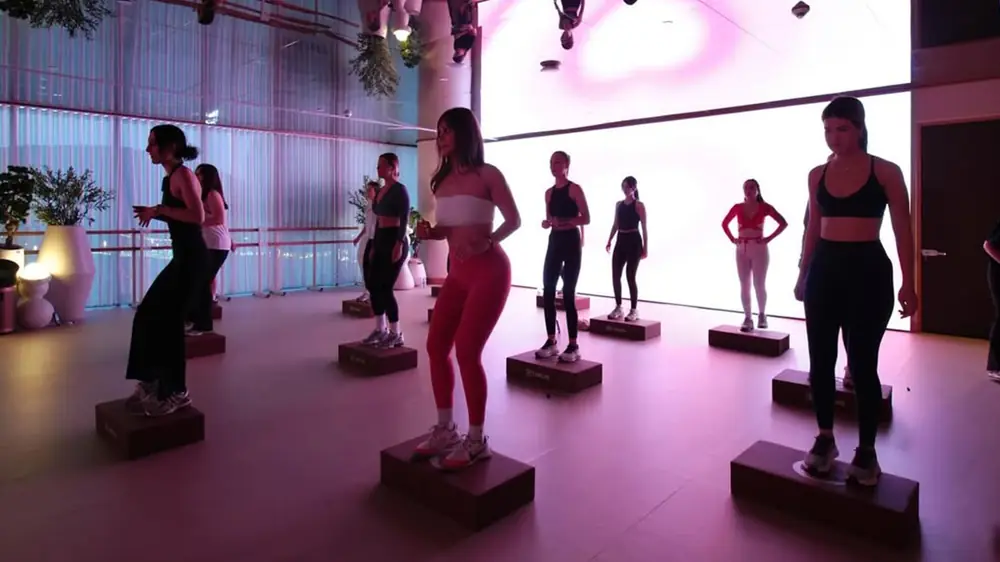
O’Wellness Sky's Total Body classes take place in the O’Rise studio, in an area equipped with strength and core equipment. The classes are included in all membership packages; for current days and times weekly schedule you can review the page. If you would like to see all class formats compared, group class guide.
Adapting to age and fitness level
The Total Body format can be adapted to a wide age range because weight and tempo can be adjusted individually. For middle-aged and older participants, joint-friendly variations (for example a standard lunge instead of a jumping lunge) may be preferred, and the number of repetitions and the weight can be increased gradually. For young and experienced participants, intensity can be increased with super sets, tempo changes and heavier loads. The important thing is to stay faithful to the principle of “struggling in the last few repetitions but not breaking form” when choosing a weight; this principle forms the basis of safe progress regardless of age and experience and delivers consistent development in both strength and movement quality over time.
Frequently asked questions
Which is more effective, a Total Body class or split training?
Both are effective when applied correctly; Total Body is a practical and balanced option for people who can devote few days a week, while split programmes suit those with more weekly training days who want to focus on particular muscle groups.
What clothing and equipment should I bring to a Total Body class?
Sportswear that allows comfortable movement, trainers and a water bottle are enough; weights and other equipment are available in the studio.
What times is the Total Body class held at O’Wellness Sky?
Current days and times are on the weekly schedule They are on the page; the facility is open 06:00-23:00 on weekdays and 08:00-21:00 at weekends.
How long does muscle soreness last, and is it normal?
Next-day muscle soreness, seen especially in beginners or when the weight is increased, is normal and usually subsides within 48-72 hours; if the pain lasts longer than this or becomes sharp in a joint, we recommend resting and consulting your physician if necessary.
Is there any advice for beginners starting the Total Body class?
In the first few classes, focus on technique with light weights or bodyweight only; do not hesitate to ask the trainer for a form check.
To get to know the Total Body class with a free trial session and see how it feels in your own body, enquiry formall you need to do is fill in the form.
Related posts
Dance-Based Classes and Coordination: The Brain-Body Connection
The benefits of dance fitness are not limited to burning calories; how rhythm-based classes that develop coordination, balance and attention contribute to the brain-body connection.

Crunch & Core: Abdominal Myths and Real Core Training
What are the common misconceptions about abdominal exercises? From the myth of spot fat reduction to real core training in the O'Wellness Sky Crunch & Core class.
Cadence, Resistance and Heart Rate in Cycle Class: The Logic of Riding to the Beat
How to read cadence, resistance and heart rate together in a cycle class, the basics of riding efficiently to the music, and adjusting for your level.
